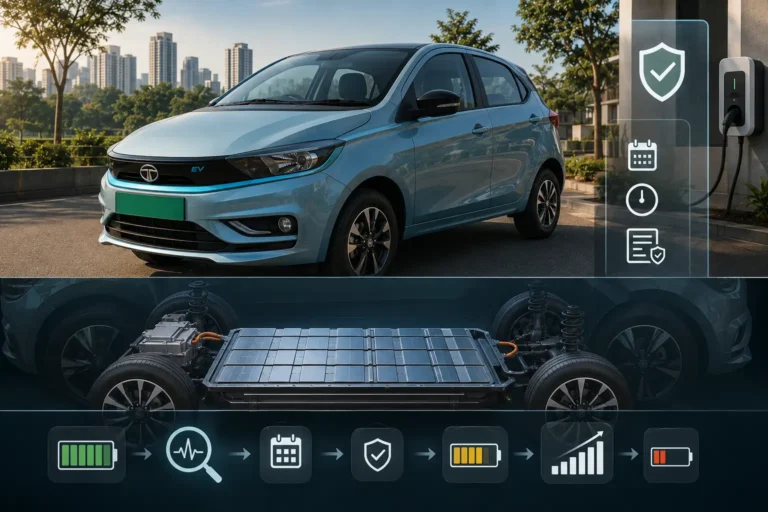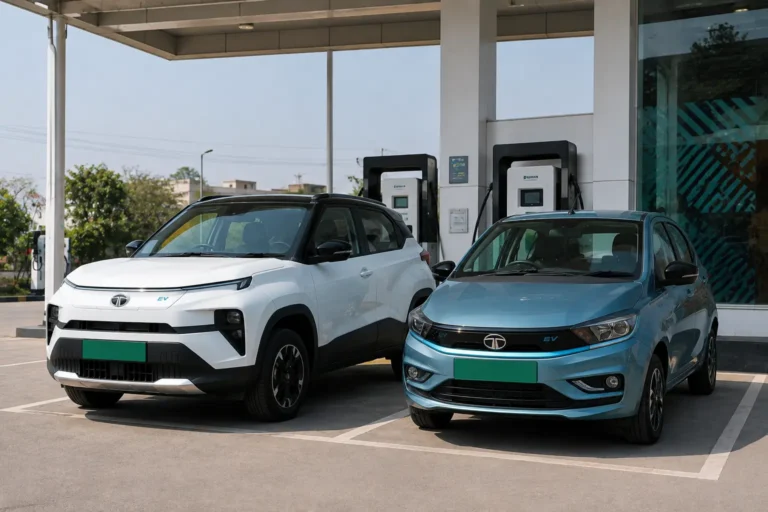



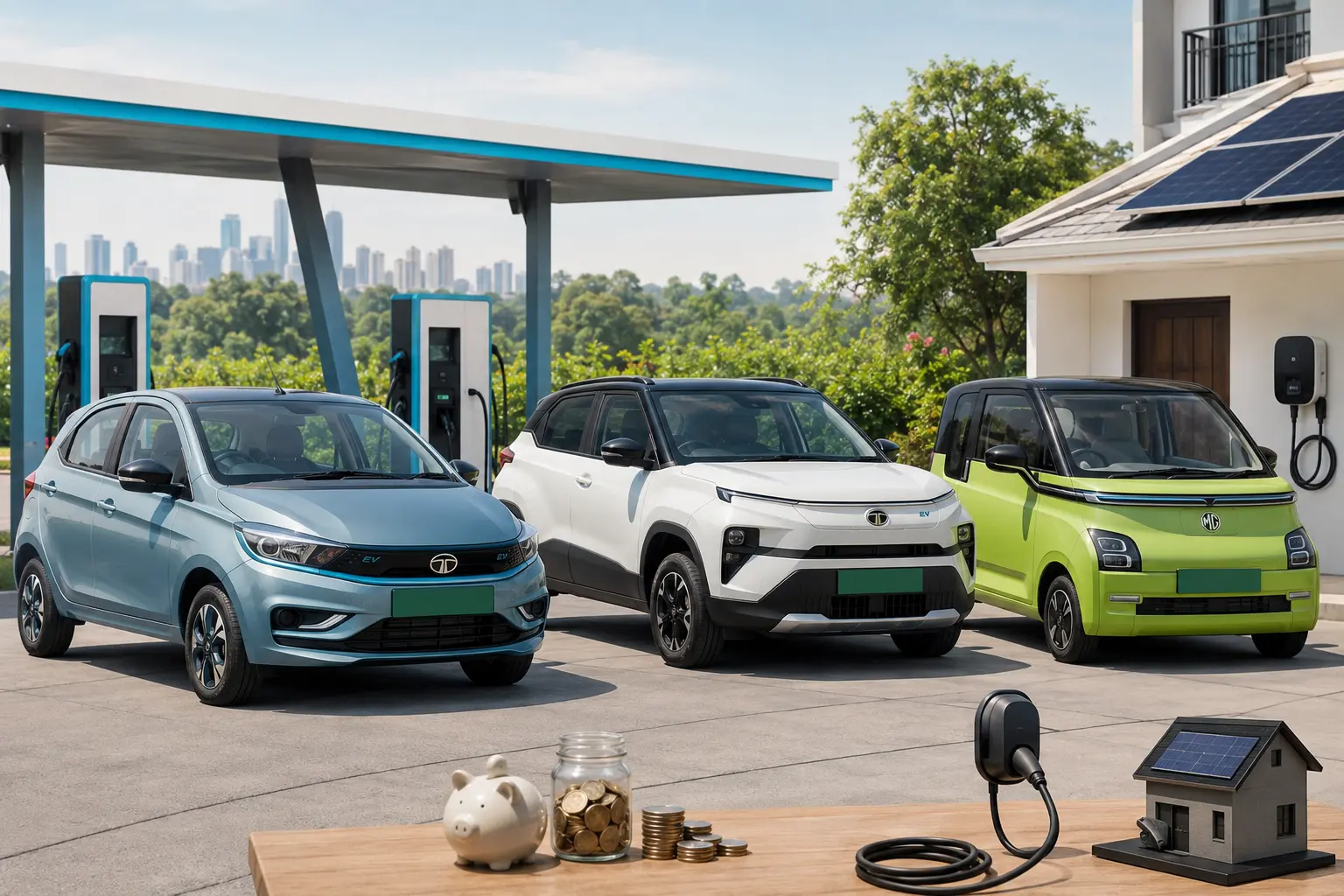
India’s affordable electric-car market has become more competitive in 2026, but the best EV cars in India under ₹10 lakh depend heavily on what a buyer actually needs. The Tata Tiago.ev starts at ₹6.99 lakh ex-showroom, while the new Tata Punch.ev starts at ₹9.69 lakh. The MG Comet EV is another small-city option in this price bracket.
For buyers who want a practical five-seat electric car at the lowest entry price, the Tata Tiago.ev is the strongest starting point. Those who want an SUV-like body and substantially more battery capacity can consider the Punch.ev, although only its entry 30 kWh version begins below ₹10 lakh. The MG Comet EV is more narrowly focused on urban driving, parking convenience and compact dimensions.
If you are comparing the two most relevant Tata options, our detailed Tata Punch EV vs Tiago EV comparison explains where the extra money goes and which car suits different buyers.
Important: Prices below are ex-showroom unless stated otherwise. EV prices, variants and offers can change, so buyers should confirm the final price with the manufacturer or authorised dealer before purchase.
Best EV Cars Under ₹10 Lakh in India
For this guide, the focus is on electric cars whose starting ex-showroom price is within ₹10 lakh. This means a model can qualify even if higher variants cross the ₹10 lakh mark.
| Electric car | Starting price* | Battery | Claimed/official range | Seating | Best for |
|---|---|---|---|---|---|
| Tata Tiago.ev | ₹6.99 lakh | 19.2/24 kWh | Up to 285 km current ARAI P1+P2 | 5 | Budget + daily use |
| Tata Punch.ev | ₹9.69 lakh | 30/40 kWh | Up to 468 km ARAI P1+P2 | 5 | Family + city/highway mix |
| MG Comet EV | Around ₹7–10 lakh range depending on variant | 17.3/17.4 kWh | 230 km | 4 | Urban commuting |
*Starting ex-showroom prices; variant availability and pricing can change.
Tata’s current specifications list the Tiago.ev with 19.2 kWh and 24 kWh battery options. Tata quotes up to 285 km ARAI-certified range for the 24 kWh version on its current product page.
The Punch.ev has 30 kWh and 40 kWh battery options. Tata’s latest support information lists 365–375 km MIDC P1+P2 range for the 30 kWh version and 468 km for the 40 kWh version, while its C75 real-world test figures are substantially lower.
The MG Comet EV uses a 17.3 kWh battery and has a 230 km claimed range. MG positions it primarily as a compact urban EV.
1. Tata Tiago.ev

Best for: Buyers who want an affordable five-seat EV without moving into SUV pricing.
The Tata Tiago.ev remains one of the most accessible mainstream electric cars in India. Its current Tata.ev price page lists the starting price at ₹6.99 lakh ex-showroom, with the range extending upward depending on battery and variant.
The car is available with 19.2 kWh and 24 kWh battery packs. Tata’s current support information lists 261 km MIDC P1 range and 221 km P1+P2 for the 19.2 kWh pack, while the 24 kWh version is listed at 315 km P1 and 275 km P1+P2. Tata’s product page currently markets the 24 kWh Tiago.ev at up to 285 km ARAI-certified P1+P2 range, so buyers should check the exact variant and certification figure when comparing offers.
The 24 kWh version also has an important ownership advantage: Tata says it carries a lifetime HV battery warranty for the first registered owner, defined as 15 years from first registration, subject to the stated terms. The 19.2 kWh battery gets an 8-year/1.6 lakh-km warranty.
For home charging, Tata lists approximately 6.9 hours for the 19.2 kWh battery and 8.7 hours for the 24 kWh battery using a 3.3 kW AC setup. A 7.2 kW AC charger can reduce those times considerably.
Why choose it: Lowest entry price among the main five-seat options, practical dimensions and multiple battery choices.
Watch out for: The highest-range variants cost considerably more than the entry version.
2. Tata Punch.ev

Best for: Buyers who want an SUV-like package, more battery capacity and stronger long-distance potential.
The 2026 Punch.ev is particularly important to this price segment because Tata has repositioned the model with a starting ex-showroom price of ₹9.69 lakh. Tata says the current range runs from ₹9.69 lakh to ₹12.59 lakh across 30 kWh and 40 kWh versions.
That means the 30 kWh Smart version qualifies for a ₹10 lakh ex-showroom budget, while most 40 kWh versions do not.
The Punch.ev’s current specification sheet lists a 30 kWh battery with a 65 kW motor and a 40 kWh battery with a 95 kW motor. Tata also specifies liquid cooling for the battery and motor and IP67 protection.
The 40 kWh version is the more compelling choice if range is a priority. Tata lists a 468 km MIDC P1+P2 figure and a C75 real-world range of around 335–355 km. The 30 kWh version has a C75 range of about 260–275 km.
Tata’s June 2026 launch announcement also highlighted an approximately 355 km real-world range for the new Punch.ev and lifetime battery warranty provisions for the applicable configuration.
Why choose it: More SUV-like practicality, larger battery options and stronger range potential than the smaller Tiago.ev.
Watch out for: The 40 kWh versions move well beyond the ₹10 lakh ex-showroom starting-budget bracket.
3. MG Comet EV

Best for: Dense-city driving, easy parking and buyers who do not need a conventional five-seat car.
The MG Comet EV takes a very different approach from the Tata models. It is a four-seater compact urban EV with a 17.3 kWh battery and a 230 km claimed range.
Its small footprint can be a major advantage in crowded Indian cities where narrow roads, parking spaces and short daily trips matter more than highway range.
MG’s official launch material says the Comet has a 17.3 kWh lithium-ion battery and 230 km range. Its battery warranty was announced at 8 years or 1.2 lakh km.
The trade-off is obvious: the Comet is better thought of as an urban runabout than an all-purpose family car.
Why choose it: Compact dimensions, city-friendly character and easy manoeuvrability.
Watch out for: Four-seat layout and limited suitability for frequent highway trips.
Tata Punch EV vs Tiago EV: Which One Should You Buy?
The choice between the two Tata EVs is less about which car is universally “better” and more about whether you need the Punch.ev’s larger-car advantages.
The Tiago.ev starts much lower at ₹6.99 lakh, making it easier to enter electric mobility without stretching the budget. The Punch.ev starts at ₹9.69 lakh, but offers a more SUV-oriented package and a much larger 40 kWh battery option higher in the range.
The Tiago is the logical choice for a buyer whose priority is value and regular city commuting. The Punch makes more sense for a family that wants more space and expects to combine city use with occasional highway travel.
For a complete comparison of price, battery, range, charging and features, read our Tata Punch EV vs Tiago EV comparison.
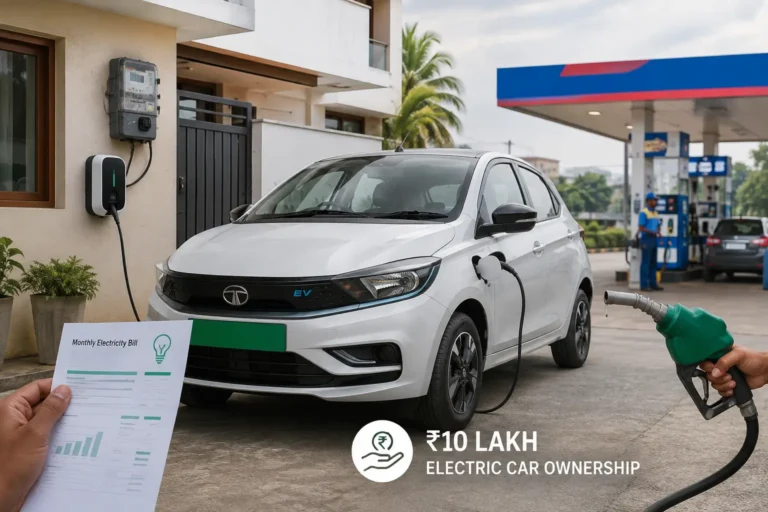
How Much Does an EV Cost to Run?
One of the biggest reasons buyers consider an electric car is the lower energy cost compared with petrol.
The basic calculation is straightforward:
Electricity cost = electricity consumed (kWh) × electricity tariff
For example, if a car effectively consumes 15 kWh from the grid for a particular distance and the household electricity tariff works out to ₹8 per kWh, the energy cost would be about ₹120.
Actual consumption depends on the vehicle, driving style, traffic, weather, air-conditioning use, charging losses and electricity tariff. Therefore, the battery capacity alone should not be treated as the car’s exact running cost.
For a detailed monthly calculation based on daily kilometres and electricity tariffs, see our guide to electric car monthly running cost in India.
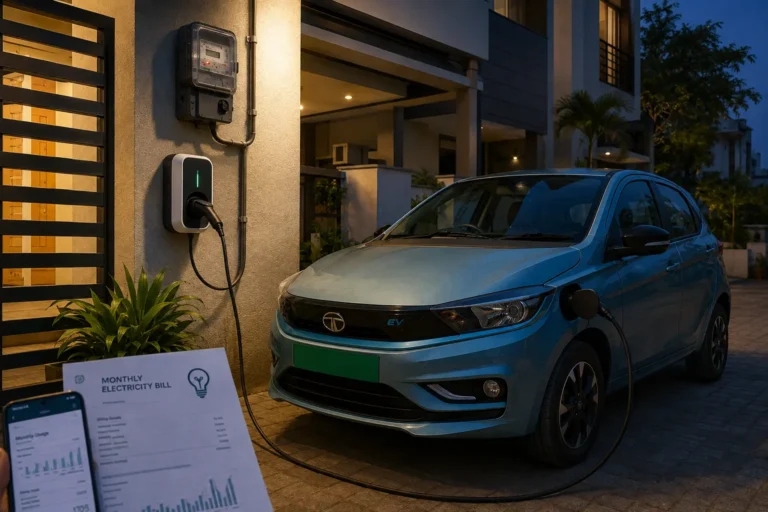
How Much Does EV Charging Cost at Home?
Home charging is usually the most convenient way to charge an EV for regular use.
A simple estimate is:
Charging cost = battery energy used × home electricity tariff
However, the electricity drawn from the wall can be higher than the energy actually stored in the battery because charging involves losses.
For example, a 24 kWh battery does not necessarily require exactly 24 units of electricity from the grid for a full charge from empty. Charger and battery-system losses mean the wall-side consumption can be higher.
This is why buyers should calculate charging costs using actual electricity consumed, rather than simply multiplying battery capacity by the tariff.
Our detailed guide on electric car charging cost at home in India explains the calculation with practical examples.
How Long Does an EV Battery Last?
Modern EV batteries are designed for long-term use, but battery capacity can gradually decline with age, usage, temperature and charging patterns.
The important distinction is between battery life and battery warranty. A warranty period is the manufacturer’s contractual coverage; it does not mean the battery will suddenly stop working after that period.
For example, Tata currently lists an 8-year/1.6 lakh-km HV battery warranty for the 19.2 kWh Tiago.ev, while the 24 kWh version gets a lifetime warranty for the first registered owner under Tata’s stated conditions. MG’s Comet EV battery warranty was announced as 8 years or 1.2 lakh km.
Battery degradation is also different from sudden battery failure. A battery can continue operating while gradually holding less energy than when it was new.
For a deeper explanation of degradation, warranty terms and potential replacement expenses, read our guide to electric car battery life in India.
Which EV Is Best for Different Buyers?
Best affordable five-seat EV: Tata Tiago.ev
For buyers who want to keep the initial purchase price as low as possible while retaining a conventional five-seat format, the Tiago.ev is the most straightforward choice.
Best EV under ₹10 lakh for a larger-car feel: Tata Punch.ev
The Punch.ev’s ₹9.69 lakh starting price puts its entry version inside the ₹10 lakh bracket. Its larger body and available 40 kWh battery make it attractive to buyers willing to spend more for space and range.
Best for dense city driving: MG Comet EV
The Comet’s compact dimensions and four-seat configuration make it particularly suited to short urban journeys and tight parking situations.
Best for range-focused buyers: Tata Punch.ev 40 kWh
If the budget can move beyond ₹10 lakh, the Punch.ev 40 kWh becomes a much more interesting proposition because of its larger battery and higher official range figures. Tata lists 468 km MIDC P1+P2 for this version.
Best first EV for a budget-conscious buyer: Tata Tiago.ev
The Tiago.ev combines a relatively low entry price with five seats and multiple battery choices. It is therefore a sensible starting point for buyers moving from petrol to electric for the first time.
What Should You Check Before Buying an EV Under ₹10 Lakh?
Price should not be the only deciding factor. Check these points before booking:
- Your daily driving distance: A small battery can be sufficient for a short city commute.
- Home charging access: Having a reliable parking/charging point can make EV ownership much easier.
- Real-world range: Do not assume the certified range will be identical to everyday driving.
- Battery warranty: Check duration, kilometre limits and ownership conditions.
- Fast-charging support: Important if you regularly travel outside the city.
- Rear-seat and boot requirements: Particularly important when comparing a Comet with five-seat Tata models.
- On-road price: Registration, insurance and other charges can take the final amount beyond the ex-showroom price.
- Service availability: Check the authorised service network in your city.
FAQ
Which is the best EV car under ₹10 lakh in India in 2026?
For most buyers seeking a practical five-seat EV at the lowest entry price, the Tata Tiago.ev is the strongest option. The Tata Punch.ev is more suitable if you want an SUV-like package, while the MG Comet EV is aimed primarily at urban use.
Which is the cheapest electric car among the main options?
The Tata Tiago.ev currently has a starting ex-showroom price of ₹6.99 lakh on Tata’s official site.
Is Tata Punch EV available under ₹10 lakh?
Yes. Tata’s current Punch.ev price starts at ₹9.69 lakh ex-showroom for the Smart 30 variant. Higher variants, particularly those with the 40 kWh battery, cost more.
Which EV has the longest range under ₹10 lakh?
The answer depends on whether you compare only variants whose prices remain below ₹10 lakh or the maximum range available from a model whose base version qualifies. The Punch.ev offers the highest overall range among the qualifying models, but its 40 kWh version is priced above ₹10 lakh.
Is Tata Tiago EV good for family use?
Yes, particularly for small families that primarily drive in cities. It has five seats and a 240-litre boot according to Tata’s current specifications.
Is MG Comet EV suitable for long-distance travel?
It can be driven outside the city, but its four-seat layout, compact dimensions and 230 km certified range make it more naturally suited to urban commuting.
How much does it cost to charge an EV at home?
There is no single India-wide figure because electricity tariffs vary by state, utility, consumption slab and household. The basic calculation is electricity consumed from the grid multiplied by the applicable tariff.
How long does an EV battery last?
Battery life varies by model, usage, climate and charging conditions. Manufacturers provide warranties that define their coverage. For example, Tata currently provides 8 years/1.6 lakh km coverage for the Tiago.ev 19.2 kWh battery, while its 24 kWh battery has a lifetime warranty for the first owner under specified conditions.
Should I buy an EV if I cannot charge at home?
It is possible, but ownership can be less convenient. A buyer without home charging should first check whether reliable public charging is available near home, work and regular travel routes.
Is an Electric Car Under ₹10 Lakh Worth Buying in 2026?
For buyers with predictable daily driving and convenient home charging, an EV under ₹10 lakh can make practical sense in 2026.
The key is choosing the car according to usage rather than simply choosing the model with the biggest claimed range. A commuter travelling relatively short distances may get better value from the Tiago.ev, while a family wanting more space may prefer the Punch.ev. The Comet EV makes the most sense when compact urban mobility is the primary requirement.
The market is also evolving quickly. Tata’s 2026 Punch.ev update shows how battery technology, pricing and ownership models are changing the entry-level EV segment.
For that reason, buyers should always check the latest manufacturer price, exact variant, battery warranty and charging equipment immediately before booking.