



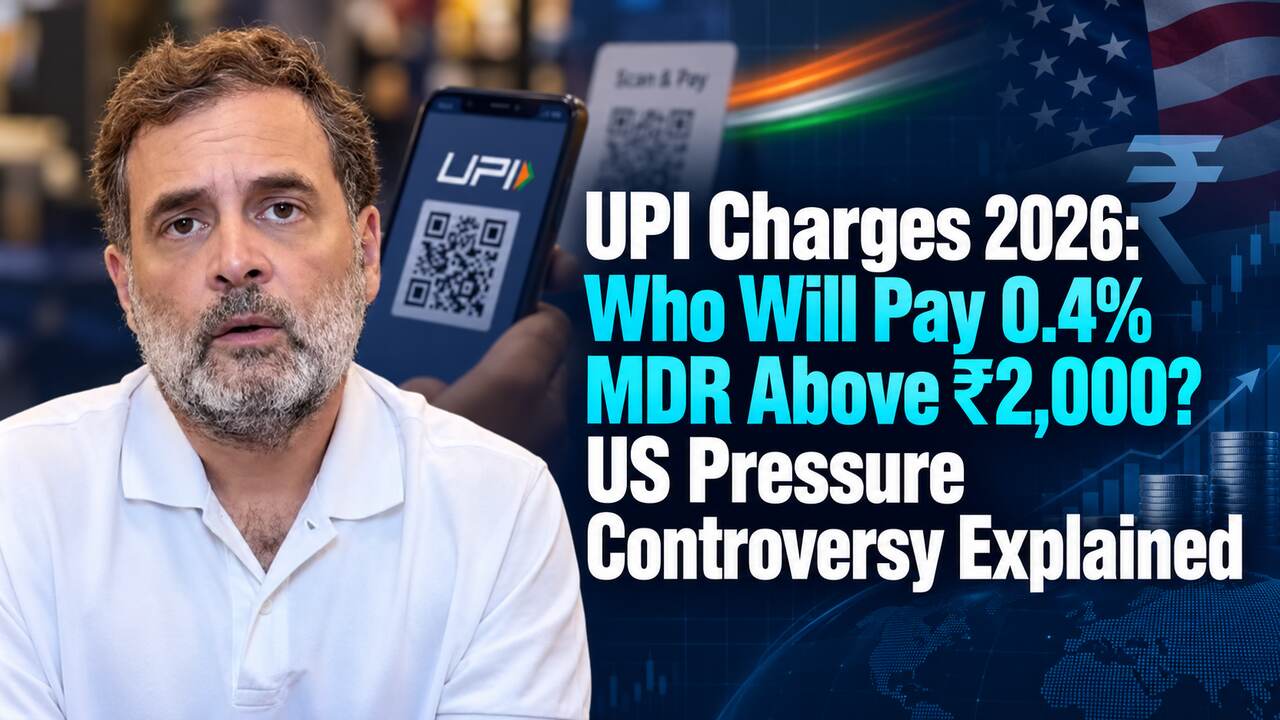
UPI Charges 2026 – From roadside tea stalls to shopping malls and e-commerce checkouts, UPI has moved beyond being just another payment option in India. It is now a daily financial habit for millions of consumers and businesses. That is why any news about UPI charges immediately raises a basic question: will people have to pay extra simply for scanning a QR code? The latest debate began after the government protected UPI and RuPay debit-card payments of up to ₹2,000 from charges. The Congress argued that protecting only this threshold could open the door for a Merchant Discount Rate, or MDR, on higher-value merchant payments. Rahul Gandhi and Jairam Ramesh linked the change to the interests of American payment companies and alleged “US pressure,” warning that a cost imposed on shopkeepers could eventually appear in the prices of products and services. The BJP rejected the initial claim that a 0.5% fee had already been fixed and maintained that users were not being charged. The official framework now provides clearer answers.
According to the Department of Financial Services’ official FAQ, a 0.4% MDR will apply from October 15, 2026, to eligible Person-to-Merchant, or P2M, UPI payments above ₹2,000. The fee will be capped at ₹300 for payments of ₹75,000 or more. Selected categories, including railways, telecom, insurance and fuel, will attract a flat ₹5 MDR on payments above ₹2,000. Most importantly, this is a merchant-side processing charge, not a customer-facing transaction fee. Money sent to a friend, relative or another personal bank account through a Person-to-Person, or P2P, transfer will remain free. Micro-merchants classified under the P2PM system and receiving up to ₹1 lakh per month through UPI QR codes will also retain zero-MDR protection. Therefore, a headline about “UPI charges above ₹2,000” does not mean that an extra amount will automatically be deducted from a customer making a ₹2,001 payment. The real debate has two parts: who should fund UPI infrastructure, fraud prevention and cybersecurity, and whether merchants might indirectly recover their higher operating costs through prices.
The government says merchants cannot pass the MDR directly to buyers and that routine UPI payments will remain free. The Opposition, however, is questioning transparency and the possibility of future policy changes. The “US pressure” argument remains a political allegation. The USTR has documented concerns about India’s digital-payment policies, but publicly available documents do not establish a direct causal link between those concerns and the current MDR decision. For users, the practical response is simple: rely on official updates, check for unexpected surcharges and understand the difference between personal and merchant payments.
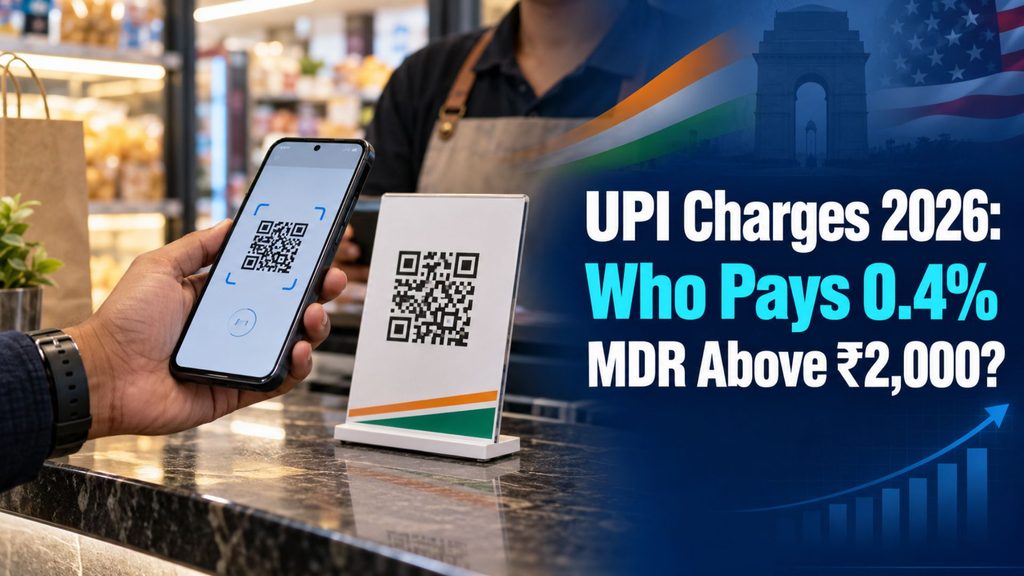
UPI Charges 2026: What Does the New Rule Say?
The ₹2,000 figure is not a new UPI transaction limit. It is the threshold used to determine MDR on eligible merchant payments. UPI remains free for the person making the payment, while an eligible commercial merchant must pay the prescribed processing charge on the full transaction value above the threshold. Separate protections apply to personal transfers and qualifying micro-merchants, limiting the impact on everyday digital payments.
- The new MDR framework takes effect on October 15, 2026.
- P2M payments of up to ₹2,000 will carry zero MDR.
- Eligible P2M payments above ₹2,000 will attract 0.4% MDR.
- The fee will be capped at ₹300 for payments of ₹75,000 or more.
- P2P transfers and qualifying P2PM micro-merchants will remain exempt.
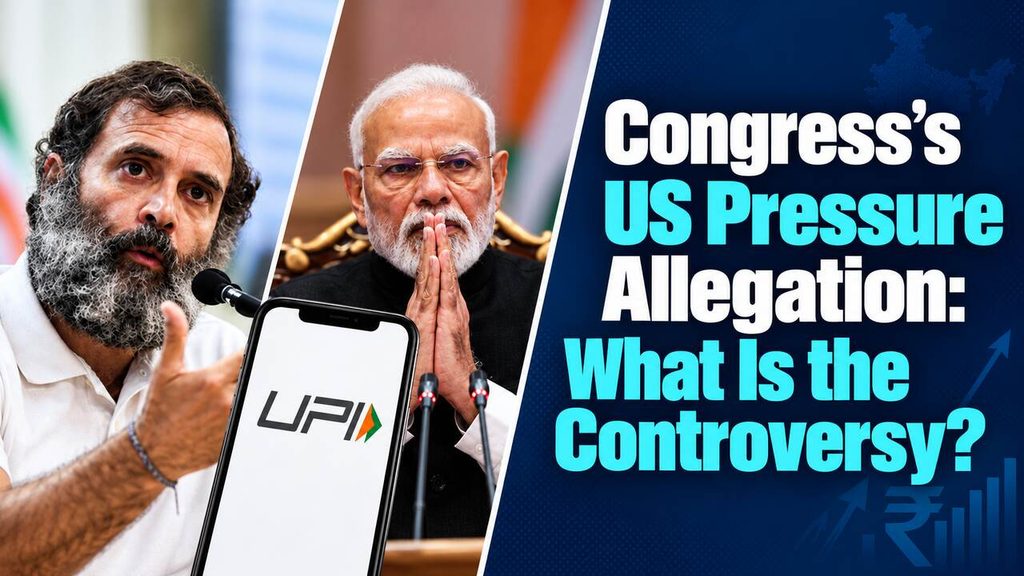
Congress’s US Pressure Allegation: What Is the Controversy?
Congress viewed zero-charge protection only up to ₹2,000 as a gateway for fees on higher-value merchant payments. Rahul Gandhi argued that such payments may form a small share of transaction volume but represent a much larger share of total value, meaning merchants could ultimately recover the cost from customers. He linked the shift to the interests of American payment companies and alleged US pressure. Jairam Ramesh questioned the policy’s transparency and future safeguards. The BJP rejected the circulating 0.5% rate and calculations such as a ₹25 charge on ₹5,000 as imaginary, stressing that users would not pay a fee. The official FAQ now confirms a 0.4%, not 0.5%, MDR on eligible P2M payments. The important nuance is that the USTR’s 2026 report records US concerns about preferential treatment for Indian payment suppliers and market access for American providers. This proves that trade concerns exist, but it does not prove that Washington directed India’s current MDR decision.
Customer vs Merchant: Who Will Pay the Charge?
MDR stands for Merchant Discount Rate—the processing fee charged to a merchant for accepting a digital payment. It should not be deducted separately from the customer’s bank account. The examples below explain who pays under the official framework and how the charge changes according to the type and value of a UPI transaction.
| UPI transaction | Customer charge | Merchant MDR | Important detail |
|---|---|---|---|
| P2P transfer of any permitted amount | ₹0 | ₹0 | Transfers to friends, family and personal accounts remain free |
| P2M payment up to ₹2,000 | ₹0 | ₹0 | Zero MDR for all merchants |
| Regular P2M payment of ₹3,000 | ₹0 | ₹12 | 0.4% charged on the full value |
| Regular P2M payment of ₹50,000 | ₹0 | ₹200 | Payable by the merchant |
| P2M payment of ₹75,000 or more | ₹0 | Maximum ₹300 | Maximum fee cap applies |
| Railway, fuel, telecom or insurance payment above ₹2,000 | ₹0 | Flat ₹5 | Applies to selected categories |
| Payment to an eligible P2PM micro-merchant | ₹0 | ₹0 | Zero MDR up to ₹1 lakh in monthly UPI receipts |
What Is the Practical Impact on Customers and Merchants?
The immediate impact on ordinary customers is limited because no UPI transaction fee should be deducted when they make a payment. However, the concern does not disappear completely. Large merchants may absorb the 0.4% MDR as an operating cost, while the Opposition argues that some businesses could eventually adjust their overall prices. The official framework does not permit merchants to pass the MDR directly to buyers. Therefore, customers should not treat a separate “UPI charge” or QR-payment surcharge on a bill as normal. For merchants, the practical challenges include settlement reconciliation, correct P2M or P2PM classification and margin management. Businesses receiving close to ₹1 lakh per month through UPI should monitor their bank records because exceeding that threshold for three consecutive months may move them into the formal P2M category. Both customers and merchants should rely on updates from the Finance Ministry, RBI or NPCI instead of social-media forwards. This will reduce rumours, incorrect fee calculations and unnecessary switching back to cash.
- Check the final payable amount before approving a UPI payment.
- Merchants should confirm their P2M or P2PM classification with their bank.
- Regularly verify MDR deductions in payment settlement reports.
- Save the bill or a screenshot if a separate UPI surcharge appears.
Is UPI Free or Paid? The Bottom Line
The bottom line is that UPI payments will remain free for users. Paying more than ₹2,000 will not automatically trigger a deduction from the customer’s account, and P2P transfers to friends, relatives or personal accounts will continue without a transaction fee. The change applies on the merchant side of eligible commercial P2M payments: from October 15, 2026, transactions above ₹2,000 will attract 0.4% MDR, payments of ₹75,000 or more will be capped at ₹300, and certain essential categories will carry a flat ₹5 charge. The P2PM exemption protects qualifying micro-merchants. Congress’s allegation of US pressure remains part of the political debate. US trade concerns are documented, but no publicly established evidence directly connects them with this specific MDR decision. Customers should refuse any separately added “UPI fee,” merchants should confirm their category with their bank, and everyone should prioritise official notifications over viral claims.
READ MORE,
FAQs About UPI Charges
1. Will customers be charged for UPI payments above ₹2,000?
No. Customers will not pay a separate transaction fee. The MDR will be paid by eligible merchants.
2. Will sending ₹10,000 to a friend or family member remain free?
Yes. Person-to-Person transactions will remain free for both the sender and recipient.
3. Which transactions will attract the 0.4% MDR?
It will apply to eligible commercial Person-to-Merchant UPI transactions above ₹2,000.
4. Will small shopkeepers also have to pay MDR?
Qualifying P2PM micro-merchants receiving up to ₹1 lakh per month through UPI QR codes will retain zero-MDR protection.
5. Was the UPI MDR introduced because of US pressure?
Congress has made this allegation. US concerns about India’s payment policies are documented, but there is no publicly established evidence proving a direct connection with this MDR decision.