




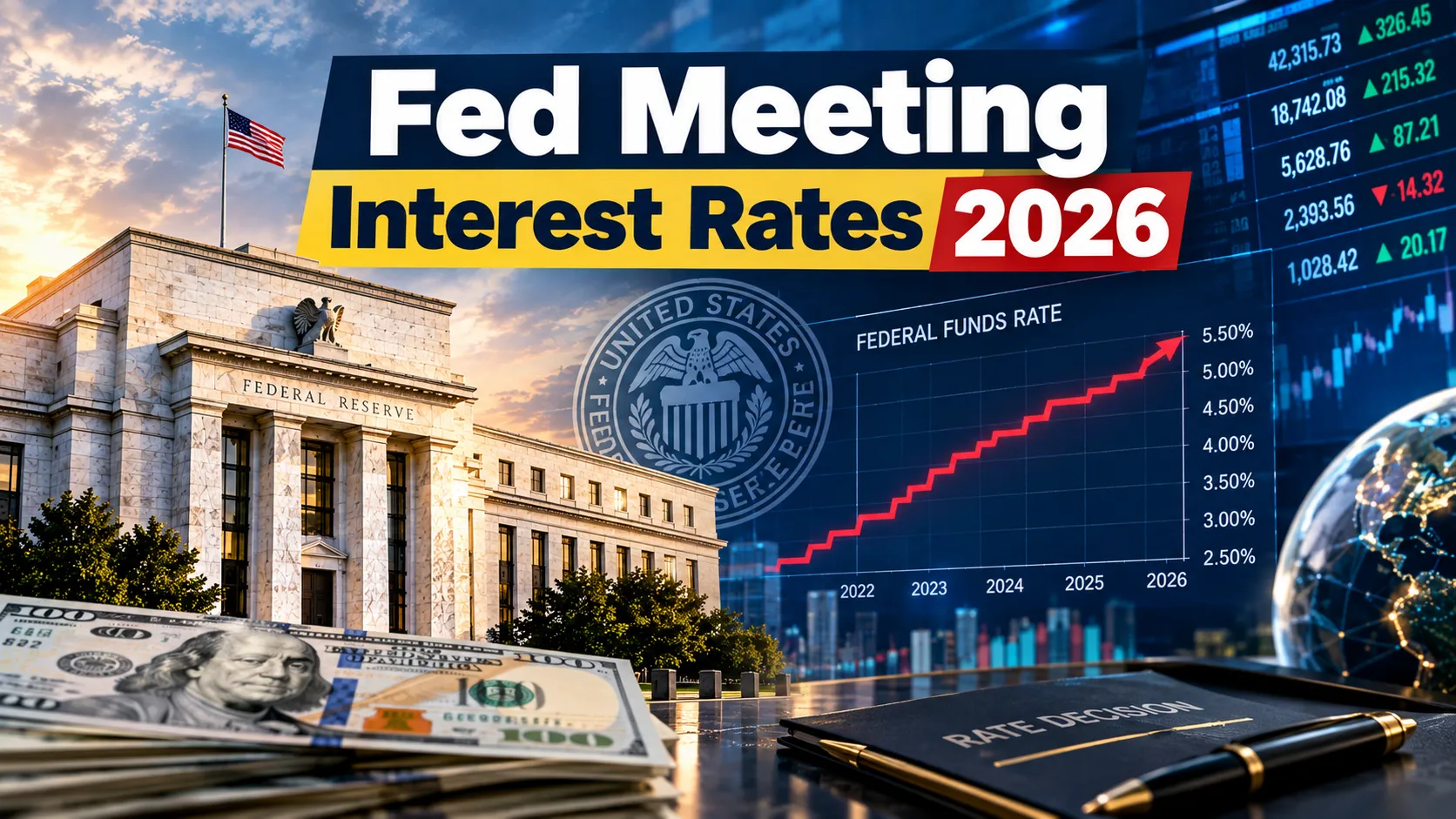
Fed Meeting Interest Rates: The U.S. Federal Reserve has delivered a significant shift in monetary policy. At its September 15–16, 2026 FOMC meeting, the Fed raised the federal funds target range by 25 basis points to 3.75%-4.00%.
The decision was unanimous, with the Federal Open Market Committee voting 12-0 in favor of the increase. The Fed said economic activity was expanding at a solid pace, domestic spending remained resilient and productivity and capital investment were strong, while inflation was still elevated.
The move was the first U.S. rate hike in three years and the first policy-rate increase under new Federal Reserve Chair Kevin Warsh.
More importantly for markets, the Fed’s latest projections indicate that policymakers see another rate increase by the end of 2026, although the actual future path will depend on incoming economic data.
What did the Federal Reserve decide on interest rates?
The Federal Reserve raised the target range for the federal funds rate from 3.50%-3.75% to 3.75%-4.00%.
The decision took effect after the September 15–16 meeting, with the Fed’s implementation note stating that the new target range would apply from September 17. The interest rate paid on reserve balances was also increased to 3.90%.
September 2026 Fed rate decision at a glance
| Item | Latest decision |
|---|---|
| FOMC meeting | September 15–16, 2026 |
| Rate decision | 25-basis-point hike |
| New federal funds target | 3.75%-4.00% |
| Vote | 12-0 |
| Inflation assessment | Still elevated |
| 2026 median PCE inflation forecast | 3.7% |
| 2026 GDP forecast | 2.3% |
| 2026 unemployment forecast | 4.1% |
| Further 2026 hike indicated? | Yes, by policymakers’ median projections |
The Federal Reserve’s official statement said the latest action was intended to support a more timely return of inflation to its 2% goal.
Why did the Fed raise interest rates?
The main issue is persistent inflation.
The Fed said inflation remains elevated even though the U.S. economy continues to expand at a solid pace. Policymakers also pointed to resilient domestic spending, strong productivity growth and robust capital investment.
The latest economic projections show the Fed expects PCE inflation at 3.7% in 2026, up from its June projection of 3.6%.
The central bank now expects inflation to reach its 2% target only in 2029, rather than 2028 as previously projected.
That combination persistent price pressure alongside continued economic and employment resilience—helped explain why policymakers opted for tighter monetary policy.
What does the latest Fed forecast say about another rate hike?
The September projections point toward one more 25-basis-point increase in 2026.
According to the latest dot plot, 16 of the 18 policymakers who submitted rate projections expected at least one additional hike this year, while two expected rates to remain at the current level.
The median projections put the federal funds rate around 4.1% at the end of 2026, compared with the current target range of 3.75%-4.00%.
However, the projections are not a promise of future policy. They represent policymakers’ individual assessments based on information available at the meeting.
Fed Chair Kevin Warsh has also emphasized that he does not intend to provide conventional forward guidance on the precise path of future rates.
What happened to the Fed’s inflation forecast?
The inflation outlook became less favorable.
The September projections show:
- 2026 PCE inflation: 3.7%
- 2027 PCE inflation: 2.3%
- 2028 PCE inflation: 2.1%
- 2029 PCE inflation: 2.0%
The Fed’s median projection therefore indicates a gradual decline in inflation rather than an immediate return to the 2% target.
Core PCE inflation, which excludes food and energy prices, was projected at 3.4% for 2026, before declining to 2.5% in 2027 and 2.2% in 2028.
Why is inflation important for Fed rates?
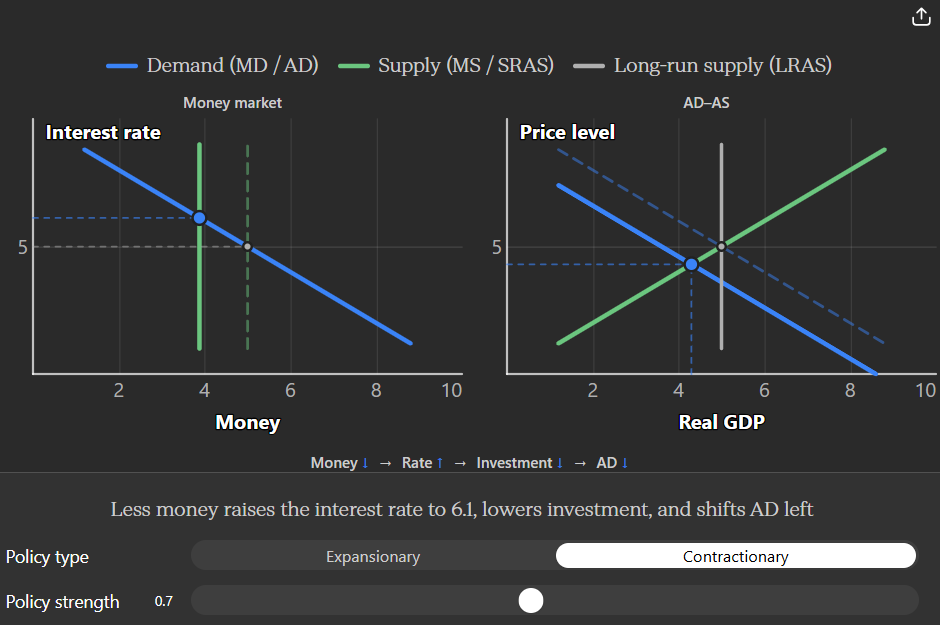
The Federal Reserve has a dual mandate involving maximum employment and stable prices. When inflation remains above the central bank’s objective, higher interest rates can be used to restrain demand and financial conditions.
Higher borrowing costs can affect:
- Mortgages
- Credit cards
- Business loans
- Consumer spending
- Investment
- Bond yields
- Currency markets
The impact does not occur immediately across the entire economy, which is one reason the Fed watches incoming economic data before making subsequent decisions.
Is the U.S. economy strong enough to handle higher rates?
The Fed’s September projections suggest that policymakers continue to see relatively solid economic activity.
The median GDP growth forecast for 2026 was raised to 2.3% from 2.2% in June. The forecast for 2027 is 2.4%.
The unemployment outlook also remained relatively stable. The median forecast puts unemployment at 4.1% at the end of 2026, with the rate projected to remain around that level through 2029.
That matters because a rapidly weakening labor market could make additional rate hikes more difficult, while continued economic resilience gives policymakers more room to focus on inflation.
What does the Fed rate hike mean for the U.S. dollar?
Interest-rate expectations are closely watched by currency markets because higher U.S. rates can increase the relative attractiveness of dollar-denominated assets.
Following the September decision, the U.S. dollar strengthened, while the yield on two-year Treasury notes rose to its highest level in more than two years, according to Reuters.
The market reaction can change quickly, however, because currency and bond markets respond not only to the current rate but also to expectations for future Fed policy.
What could happen to stocks after the Fed rate decision?
The effect on stocks can vary by sector and by how much of the Fed decision was already anticipated by investors.
Higher interest rates generally mean higher financing costs and can put pressure on valuations, particularly when investors reassess expectations for future corporate earnings and borrowing costs.
At the same time, the Fed’s decision came alongside an indication that U.S. economic growth remains solid. That means investors are likely to weigh two competing signals: higher-for-longer borrowing costs versus continued economic resilience.
Reuters reported that U.S. equities pulled back after the September decision while the dollar strengthened and short-term Treasury yields moved higher.
What does the Fed decision mean for gold?
Gold is particularly sensitive to real interest rates, Treasury yields, the dollar and expectations for monetary policy.
When rates and Treasury yields rise, holding a non-interest-bearing asset such as gold can become relatively less attractive. A stronger dollar can also affect gold prices because the metal is primarily priced in U.S. dollars.
However, gold can also receive support from inflation concerns, geopolitical uncertainty and safe-haven demand. Therefore, the Fed’s rate hike alone does not determine the direction of gold prices.
What does the Fed decision mean for India?
The U.S. Federal Reserve’s decisions can have spillover effects on emerging markets, including India.
A higher-for-longer U.S. interest-rate environment can affect:
- The U.S. dollar-Indian rupee exchange rate
- Foreign portfolio investment flows
- Indian bond yields
- Equity-market sentiment
- Gold prices
- The Reserve Bank of India’s policy environment
Following the September Fed decision, Reuters reported that the Indian rupee faced pressure and traders were watching the ₹96-per-dollar level as expectations for further U.S. tightening increased.
That does not mean the Fed decision mechanically determines the rupee. India’s domestic inflation, growth, capital flows, oil prices and RBI policy also matter.
Will the Fed cut interest rates in 2026?
The latest September projections do not show a rate cut as the median policy expectation for the remainder of 2026.
Instead, the median projections indicate another increase, followed by a period of relatively high rates.
The September projections show the median federal funds rate around:
- 4.1% at end-2026
- 4.1% at end-2027
- 3.9% at end-2028
- 3.6% at end-2029
The longer-run median projection was 3.2%.
This represents a significant change from the June projections, when policymakers had anticipated a lower policy rate in 2027.
When is the next Fed meeting?
The September meeting is now complete.
The Federal Reserve’s 2026 calendar shows the next FOMC meeting scheduled for October 27–28, 2026, with the policy statement and press conference scheduled for October 28.
The next meeting will therefore be closely watched for evidence about whether policymakers intend to deliver the additional rate increase indicated by the September projections.
What should investors watch before the next Fed meeting?
The Fed’s future decisions will depend heavily on incoming economic data.
Key indicators include:
Inflation
The PCE price index and other inflation measures will be important because the Fed has made clear that inflation remains above its target.
Jobs data
Employment and unemployment figures will help policymakers assess whether the labor market is still resilient.
Consumer spending
Strong consumer demand could keep upward pressure on prices, while a sharp slowdown could alter the policy balance.
Energy prices
Higher oil and energy costs can complicate the inflation outlook, particularly when geopolitical developments affect supply.
Treasury yields and financial conditions
The Fed also monitors broader financial conditions rather than looking only at its policy rate.
What is the biggest takeaway from the September 2026 Fed meeting?
The September 2026 meeting marked a clear change in the U.S. interest-rate cycle.
The Federal Reserve raised the federal funds target range to 3.75%-4.00%, its first rate increase in three years. The decision was unanimous, and policymakers’ projections point toward another potential hike in 2026.
At the same time, the Fed’s projections show that inflation is proving more persistent than previously expected. The median PCE inflation forecast for 2026 increased to 3.7%, while the return to the 2% target was pushed out to 2029.
For investors and consumers, the key issue now shifts from simply asking whether the Fed will raise rates at the September meeting to watching how long U.S. interest rates remain elevated and whether another hike actually occurs later in 2026.
That decision will depend on inflation, employment, economic growth, energy prices and broader financial conditions rather than the September dot plot alone.
FAQ
Did the Federal Reserve raise interest rates in September 2026?
Yes. On September 16, 2026, the Federal Reserve raised the federal funds target range by 25 basis points to 3.75%-4.00%. The FOMC approved the decision unanimously.
What is the current Federal Reserve interest rate?
Following the September 2026 decision, the federal funds target range is 3.75%-4.00%.
Will the Fed raise interest rates again in 2026?
The September projections indicate that another hike is expected by the end of 2026 by the median of policymakers’ projections. Sixteen of the 18 policymakers who submitted rate forecasts projected at least one additional hike.
Why did the Fed raise rates?
The Fed said inflation remains elevated, while economic activity, domestic spending, productivity and capital investment remain resilient. The rate increase was intended to support a more timely return of inflation to the Fed’s 2% target.
What is the Fed’s inflation forecast for 2026?
The September 2026 median projection puts PCE inflation at 3.7% for 2026, up from the 3.6% forecast issued in June.
When is the next Fed meeting?
The next scheduled FOMC meeting is October 27–28, 2026, with the decision and press conference on October 28.
What does a Fed rate hike mean for India?
A higher U.S. policy rate can influence the dollar, rupee, foreign investment flows, bond yields and global risk sentiment. The actual effect on India also depends on domestic economic conditions and RBI policy.
“Must Read” – Northern Ireland and Widow’s Bay Trending: Why Are They Suddenly Popular on Google?