



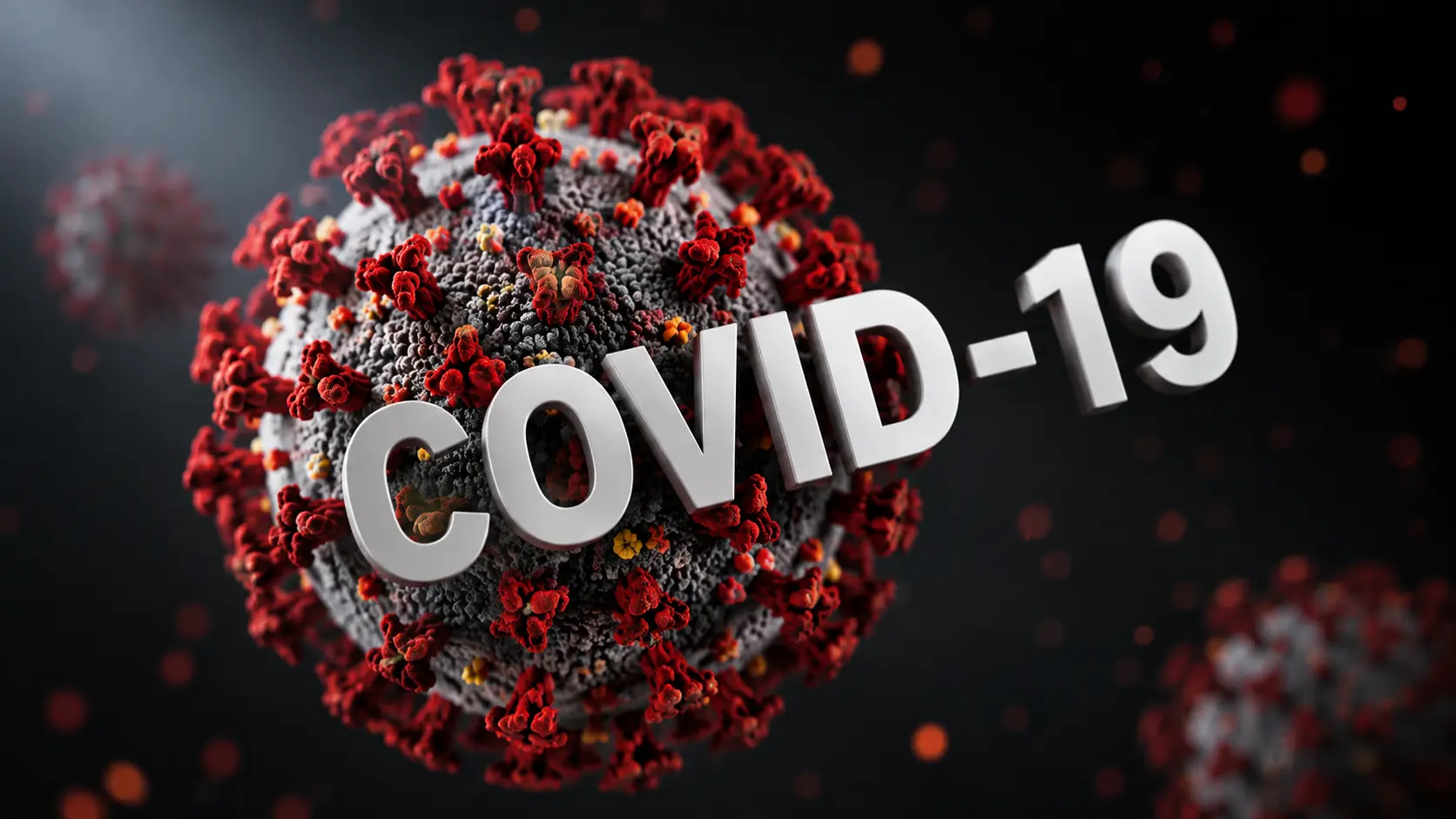
A large U.S. study has found that COVID-19 can coincide with the reactivation of viruses that have remained under control in the body for years. The finding adds another layer to scientists’ understanding of severe COVID-19 and raises new questions about why some people experience persistent symptoms after the infection.
Researchers analyzed longitudinal data from 1,154 people hospitalized with COVID-19 at 20 U.S. hospitals, using blood, nasal swabs and, for mechanically ventilated patients, airway samples. The participants were enrolled between May 2020 and March 2021 and were followed for up to 12 months.
The study, published in Nature as “Virus reactivation in acute and long COVID-19,” found evidence of reactivation involving members of the herpesvirus and anellovirus families. The researchers also found that viral activity was associated with disease severity and certain longer-term outcomes.
The finding does not mean COVID-19 directly causes another viral infection, nor does it establish that reactivated viruses are responsible for severe COVID-19 or Long COVID. That distinction is central to interpreting the results.
What researchers mean by a virus “reactivating”
Some viruses can remain in the body after the initial infection without continuously producing large amounts of virus. The immune system normally keeps them under control.
When the body experiences major physiological stress, however, a previously controlled virus can begin producing viral material again. This process is known as viral reactivation.
Epstein-Barr virus (EBV), cytomegalovirus (CMV) and herpes simplex virus are among the viruses capable of establishing long-term infections.
The new study is notable because researchers did not rely only on antibody levels to look for reactivation. They used RNA sequencing and several other biological measurements to identify viral transcripts and examine how viral activity changed over time.
That approach allowed the researchers to examine the body’s wider “virome” rather than looking only for SARS-CoV-2.
Nearly half showed evidence of another virus becoming active
Among participants with sufficient data, 47.9% showed evidence of at least one additional virus during the acute phase of COVID-19, according to the study.
The viruses did not all appear at the same time.
EBV was detected relatively early in the illness, while CMV and HSV-1 tended to appear later. Anelloviridae signals were also prominent during the acute period and showed their own pattern over the course of hospitalization.
The researchers detected viruses including:
- Epstein-Barr virus (EBV)
- Cytomegalovirus (CMV)
- Herpes simplex virus 1 (HSV-1)
- Herpes simplex virus 2 (HSV-2)
- Human herpesviruses
- Anelloviridae
- Some Enteroviridae
This matters because it suggests that the biological effects of severe COVID-19 may extend beyond the direct interaction between SARS-CoV-2 and the immune system.
Instead, COVID-19 may occur alongside a broader disruption in the balance between the immune system and viruses already present in the body.
The immune system appears to be part of the story
One of the study’s more significant findings was that viral reactivation was not simply associated with obvious immune suppression.
Researchers found relationships between viral reactivation and immune activity, including changes in inflammatory cytokines and activated immune-cell populations. Some of these associations remained after accounting for COVID-19 severity and SARS-CoV-2 viral load.
That challenges the simple idea that a dormant virus becomes active only because the immune system has been broadly weakened.
The researchers instead describe a more complicated interaction involving inflammation, immune activation and the physiological stress of acute illness.
Does this explain Long COVID?
This is where the findings become particularly interesting — but also where caution is needed.
The researchers found that persistent Anelloviridae reactivation during recovery was associated with post-acute sequelae of COVID-19 (PASC), particularly measures involving physical function and fatigue.
Long COVID, also called PASC, can involve a wide range of symptoms, including fatigue, cognitive problems, breathing difficulties and reduced physical capacity. Scientists have been investigating several possible biological mechanisms, including persistent SARS-CoV-2 material, immune dysregulation and reactivation of other viruses.
A 2026 review in Communications Medicine similarly describes chronic viral reactivation as an active area of Long COVID research while emphasizing that the mechanisms are not yet fully established.
The new study therefore provides another piece of evidence, rather than a definitive explanation.
Association is not proof of cause
This distinction is crucial.
The study was observational. Researchers identified relationships between viral activity, COVID-19 severity and later outcomes, but that does not demonstrate that the reactivated viruses caused those outcomes.
There are several possible explanations. Severe COVID-19 could create conditions that allow dormant viruses to reactivate. Viral reactivation could contribute to inflammation or illness severity. Or both processes could be influenced by another biological factor.
The study itself does not resolve that question.
That means it would be premature to conclude that treating these viruses would necessarily prevent severe COVID-19 or Long COVID.
Why the study is important
The scale of the research is one reason it deserves attention.
The IMPACC cohort included more than 1,000 hospitalized patients and generated a large collection of biological measurements over the course of a year. Researchers combined viral sequencing with immune-cell analysis, cytokine measurements, proteomics and metabolomics.
This makes the work different from smaller studies that focus on a single virus or use only antibody tests.
It also gives researchers a more detailed view of when different viruses become detectable and how those changes correspond with the patient’s clinical course.
That timing could eventually prove useful. If future studies establish that particular patterns of viral reactivation contribute to specific complications, viral markers might potentially help identify patients at higher risk.
For now, however, that remains a research possibility rather than an established clinical application.
“Sources Used“
Nature / study: Virus reactivation in acute and long COVID-19 — the primary research discussed in the article.
What happens next?
The biggest unanswered question is causality.
Researchers will need to determine whether viral reactivation is primarily a consequence of severe COVID-19, a contributor to disease, or part of a feedback loop involving inflammation and immune dysfunction.
More research will also be needed to determine whether the same patterns occur in people who have mild COVID-19 rather than requiring hospitalization.
The study’s participants were hospitalized and were enrolled during the first year of the pandemic, before COVID-19 vaccination was widespread. That limits how directly the findings can be applied to people experiencing infections under today’s conditions.
For patients and the general public, the study does not mean that COVID-19 has “awakened” dangerous viruses in everyone who becomes infected. Instead, it shows that viral reactivation can be common during serious COVID-19 and may be connected to the complex biology of recovery.
The more important question now is whether those reactivated viruses are merely witnesses to the body’s response to severe illness or whether some of them are active participants in what happens next.
“Must Reads”
Circadian Oncology: Could the Time of Day Change How Cancer Treatment Works?
Coffee Consumption Linked to Leaner Body Composition and Distinct Hormone Patterns in Men and Women
New Malaria Strategy Uses Controlled Parasite Exposure to Build Longer-Lasting Immunity in Mice