



The Africa gold mine collapse in the Central African Republic has become one of the region’s deadliest recent mining disasters, with more than 100 people reported dead after an artisanal gold-mining site collapsed in the western part of the country.
The disaster occurred on August 18, 2026, at a gold-mining site near Zamboye village in Nana-Mambéré prefecture, close to the border with Cameroon. Rescue workers and local residents have continued searching the collapsed site, while authorities investigate what caused the disaster and whether safety rules were violated.
The death toll remains subject to verification because authorities and local sources have reported different figures as bodies are recovered. A Central African Republic mining minister said on August 20 that 49 deaths had been officially confirmed at that point, while local officials, Red Cross volunteers and other sources reported that the number of people killed had risen above 100.
That difference is important: the latest reported toll is above 100, but the government-confirmed figure was lower while identification and recovery operations continued.
What Happened in the Central African Republic Gold Mine Collapse?
The accident happened at an artisanal gold mine in Zamboye, a village in western Central African Republic near the Cameroon border.
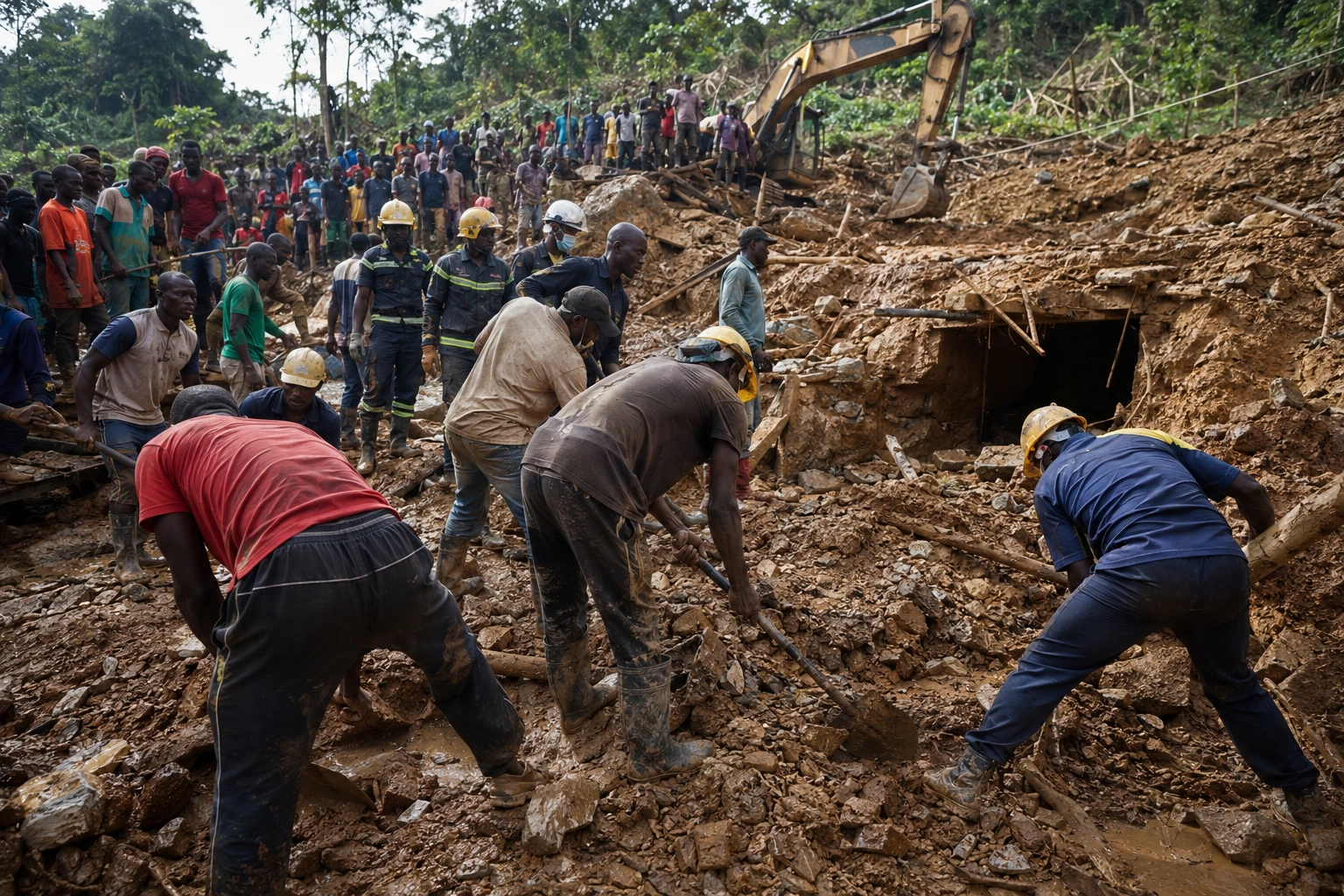
Hundreds of artisanal miners were reportedly working at the site when part of the mine collapsed. Reports indicate that a landslide and heavy rainfall contributed to the disaster, burying miners beneath soil and debris.
Local sources described a major collapse at the mining site, with rescue teams attempting to recover people trapped underground.
The mine was an informal or unregulated operation, where miners worked with relatively basic equipment and limited safety infrastructure.
How Many People Died in the Africa Gold Mine Collapse?
More than 100 people have been reported dead, according to local officials and rescue sources.
However, the exact final death toll remains uncertain.
On August 20, Central African Republic Mines and Geology Minister Rufin Benam-Beltoungou gave an officially confirmed figure of 49 deaths at that stage. He said the victims included Central Africans, Cameroonians and Chadians, while search operations continued.
At the same time, local Red Cross volunteers and other officials reported that more than 100 bodies had been recovered or that the death toll had exceeded 100. The Associated Press reported that the toll had risen above 100 as rescuers continued recovering victims.
This means readers should be cautious with a single number until authorities complete the recovery and identification process.
Current death toll at a glance
| Update | Reported figure |
|---|---|
| Initial local reports | Dozens to around 100 |
| Government-confirmed figure on Aug. 20 | 49 |
| Local officials/Red Cross reports | More than 100 |
| Latest reported toll | More than 100 |
| Final official toll | Still being established |
The discrepancy is largely due to the difficulty of recovering and identifying victims at the remote mining site.
Where Did the Gold Mine Collapse Happen?
The collapse occurred in Zamboye village, in the Nana-Mambéré prefecture of the Central African Republic.
The location is in western CAR, close to the Cameroon border.
The remote location has complicated rescue and recovery efforts. Limited equipment and difficult terrain have made it harder for rescuers to reach miners who may remain buried.
What Caused the Gold Mine Collapse?
Heavy rainfall and unstable mining structures are among the factors being examined.
Reports said heavy rain preceded the collapse, while the mine consisted of low-tech, artisanal workings that did not have the safety protections normally associated with large industrial mines.
Authorities have opened an investigation to determine the exact cause.
The investigation is also expected to examine whether the site was operating illegally or outside the country’s mining regulations and whether operators failed to provide adequate protection for workers.
It would be premature to say that one factor alone caused the disaster until investigators complete their work.
Were the Miners Working in an Illegal Mine?
Reports have described the Zamboye operation as an illegal, informal or unregulated artisanal gold mine.
Artisanal mining is widespread across parts of Central Africa because gold provides an important source of income for communities with limited employment opportunities.
However, informal mines often operate without:
- Proper structural engineering
- Protective equipment
- Professional geological surveys
- Adequate ventilation
- Reliable emergency systems
- Formal worker training
- Effective monitoring of underground tunnels
These conditions can make mine collapses particularly deadly.
Are Miners Still Trapped?
Yes, some people were still reported missing or potentially trapped as rescue operations continued.
Local officials and Red Cross volunteers said rescuers were continuing to recover bodies from the collapsed mine. The number of people still buried remained uncertain.
The lack of accurate records at informal mining sites makes it difficult to determine exactly how many people were underground when the collapse occurred.
That uncertainty is also one reason the final death toll could rise.
How Are Rescue Teams Searching for Victims?
Local rescuers, miners, residents and aid workers have been involved in the search.
The operation has been complicated by the unstable condition of the collapsed site and limited rescue equipment.
Heavy machinery has been brought in to help remove debris, but rescuers have also faced a difficult decision: machinery can accelerate recovery but may reduce the possibility of finding survivors in fragile areas beneath the rubble.
Local volunteers have played an important role because they understand the terrain and the mine’s structure.
Were Foreign Nationals Among the Victims?
Yes.
Reports indicate that some of the victims were Cameroonian and Chadian nationals, in addition to Central African citizens.
The Central African Republic’s mining minister said the 49 officially confirmed deaths included Central Africans, Cameroonians and Chadians.
The presence of workers from neighbouring countries reflects the movement of people across borders in Central Africa’s artisanal mining sector.
Why Is Artisanal Gold Mining So Common in Africa?
Artisanal and small-scale mining provides income to millions of people across Africa.
Gold is particularly attractive because even small quantities can generate income in areas where formal employment opportunities are scarce.
For many miners, however, the choice is not between a safe mining job and an unsafe one. It can be between risky informal mining and having very few other sources of income.
This economic pressure contributes to the continued growth of unregulated mining operations.
But the Zamboye tragedy demonstrates the potentially devastating consequences when workers operate in unstable underground or open-pit environments without sufficient safety systems.
Why Are Gold Mine Collapses So Dangerous?
Mine collapses can happen within seconds.
Once a tunnel or pit gives way, miners can become trapped under tonnes of soil and rock.
The immediate dangers include:
- Crushing injuries
- Suffocation
- Lack of oxygen
- Further tunnel collapses
- Flooding
- Difficult access for rescuers
In artisanal mines, the risks can be even greater because tunnels may be dug manually and structural supports may be inadequate.
Reports about the Zamboye mine indicate that the operation was low-tech and lacked many of the safeguards associated with modern industrial mining.
Central African Republic Has Seen Other Mining Disasters
The Zamboye collapse is not an isolated event.
Earlier in 2026, another artisanal mining accident in the same broader region reportedly killed at least eight people and left more than a dozen missing.
The recurring disasters highlight the wider safety problem surrounding informal mining in the Central African Republic.
The country’s mineral-rich areas attract miners seeking gold, but weak regulation and limited resources make it difficult to enforce safety standards across remote sites.
What Is the Government Doing After the Mine Collapse?
Authorities have taken steps to close the affected mining site while the investigation continues.
The government ordered the Zamboye artisanal mining site closed, and officials said activity would remain suspended following the disaster.
Authorities are also investigating:
- What caused the collapse.
- How many people were actually working at the site.
- Whether the mine was operating legally.
- Whether safety regulations were violated.
- Who was responsible for operating the site.
- Whether criminal liability should be considered.
The investigation will determine whether additional measures are needed.
What Happens Next in the Investigation?
The next major step is establishing the final death toll and exact cause of the collapse.
Authorities will need to identify recovered victims and determine whether additional miners remain buried.
Investigators are also likely to examine the mine’s structure, operating practices and licensing status.
The Central African Republic prosecutor’s office has opened an investigation into the disaster, including potential responsibility for the mine’s operation.
The findings could influence how authorities regulate artisanal gold mining in the region.
Could the Death Toll Rise Further?
Yes.
Rescuers were still recovering bodies and some people were believed to be missing or trapped.
The absence of reliable records about the number of miners underground makes it difficult to establish a definitive toll.
Local officials and Red Cross volunteers have warned that the number of victims could increase as recovery work continues.
For that reason, “more than 100” should be treated as the latest reported figure rather than necessarily the final confirmed death toll.
Does the Mine Collapse Affect Global Gold Prices?
The disaster itself is unlikely to have a major direct impact on global gold prices because the affected operation is a small artisanal mine relative to worldwide gold production.
However, the accident highlights the human and environmental risks behind part of the global gold supply chain.
For readers following gold prices, the bigger drivers include:
- Central-bank gold purchases
- US interest rates
- Inflation expectations
- Geopolitical tensions
- US dollar movements
- Investment demand
- Mine production and supply
- Global economic uncertainty
For a broader look at the international gold market, readers can explore Gold Price Today: What Is Driving the Global Gold Market in 2026?.
That context is important because a single artisanal mine disaster does not normally move international gold prices significantly.
Africa Gold Mine Collapse: Latest Timeline
| Date | Development |
|---|---|
| August 18, 2026 | Gold mine collapse occurs at Zamboye in western Central African Republic. |
| August 19 | Reports emerge of dozens to around 100 deaths as rescue efforts begin. |
| August 19 | Local sources report that more than 100 people may have died. |
| August 20 | Central African Republic mining minister confirms 49 deaths at that stage. |
| August 20 | Government orders the mining site closed. |
| August 20–21 | Rescuers continue recovering bodies from the site. |
| August 21 | Reports indicate the death toll has risen above 100, while the final official toll remains under determination. |
| August 21 | Investigation into the cause and possible responsibility continues. |
Africa Gold Mine Collapse: Key Facts
| Detail | Information |
|---|---|
| Country | Central African Republic |
| Village | Zamboye |
| Region | Nana-Mambéré |
| Date of collapse | August 18, 2026 |
| Mine type | Artisanal/informal gold mine |
| Reported deaths | More than 100 |
| Government-confirmed deaths on Aug. 20 | 49 |
| Other victims | Cameroonian and Chadian nationals reported |
| Possible contributing factor | Heavy rainfall |
| Rescue operation | Ongoing |
| Mine status | Ordered closed |
| Investigation | Ongoing |
Why This Disaster Matters
The Zamboye tragedy is more than a single mining accident.
It highlights a difficult problem facing many African countries: how to regulate a mining sector that provides livelihoods to large numbers of people while protecting workers from potentially fatal conditions.
Gold remains economically valuable, and the continued rise of artisanal mining reflects strong demand for the metal.
But the people extracting that gold often work far from formal safety systems.
The tragedy therefore raises broader questions about:
- Mining regulation
- Worker safety
- Informal employment
- Gold supply chains
- Poverty and rural livelihoods
- Cross-border migration
- Government enforcement
The challenge for authorities is to improve safety without eliminating the livelihoods on which mining communities depend.
What Is the Latest Death Toll in the Africa Gold Mine Collapse?
The latest reports say more than 100 people have died in the Zamboye gold mine collapse in the Central African Republic.
However, the Central African Republic’s mining minister had officially confirmed 49 deaths on August 20, while local officials and Red Cross sources reported that the overall death toll had already passed 100. Rescue operations were continuing, meaning the final number remained uncertain.
The difference between the figures reflects the difficulty of recovering and identifying victims at the remote artisanal mine.
Readers should therefore expect the official death toll to be updated as authorities complete recovery operations.
FAQ
What happened in the Africa gold mine collapse?
An artisanal gold mine in Zamboye, western Central African Republic, collapsed on August 18, 2026, burying miners beneath soil and debris. More than 100 deaths have been reported.
How many people died in the gold mine collapse?
More than 100 people have reportedly died. However, the government had officially confirmed 49 deaths as of August 20, while rescue teams continued recovering bodies.
Where did the mine collapse happen?
The disaster occurred at Zamboye village in Nana-Mambéré prefecture in western Central African Republic, near the Cameroon border.
What caused the mine collapse?
Heavy rainfall is believed to have contributed to the collapse, but authorities are conducting an investigation to determine the exact cause.
Are people still trapped in the mine?
Some people were still reported missing or potentially buried as rescue and recovery operations continued.
Were foreign nationals among the victims?
Yes. Officials said the confirmed victims included citizens of the Central African Republic, Cameroon and Chad.
Was the mine legal?
Reports describe the site as an illegal, informal or unregulated artisanal mining operation. Authorities have ordered the site closed while investigations continue.
Will the mine collapse affect gold prices?
The disaster is unlikely to have a significant direct effect on global gold prices because the mine represents only a tiny share of global production. Broader factors such as interest rates, central-bank purchases, geopolitical risk and investment demand have a much greater influence.
“Sources Used“
https://apnews.com/article/mine-collapse-central-african-republic-cameroon-b401a828ab1b66c671dbdde83138e77a
https://ae.marketscreener.com/news/central-african-republic-closes-informal-gold-mine-after-collapse-kills-at-least-49-ce7859d3dc88f624
https://www.aa.com.tr/en/africa/nearly-50-killed-in-gold-mine-collapse-in-central-african-republic/
Bottom Line
The Africa gold mine collapse in the Central African Republic has killed more than 100 people according to the latest reports, making it one of the country’s deadliest recent mining disasters.
The collapse occurred on August 18 at an artisanal gold mine in Zamboye, near the Cameroon border. Heavy rainfall is believed to have contributed to unstable conditions, while the informal nature of the mine meant that workers faced significant safety risks.
A key point is that the final death toll has not yet been established. While local officials and rescue sources reported more than 100 deaths, the government had officially confirmed 49 victims as of August 20.
Rescue teams continue to search the site, and authorities have ordered the mine closed while an investigation examines the cause of the collapse and possible responsibility.
The disaster also highlights the wider dangers of unregulated artisanal mining across Africa and the urgent need for stronger safety standards for workers who depend on gold mining for their livelihoods.