

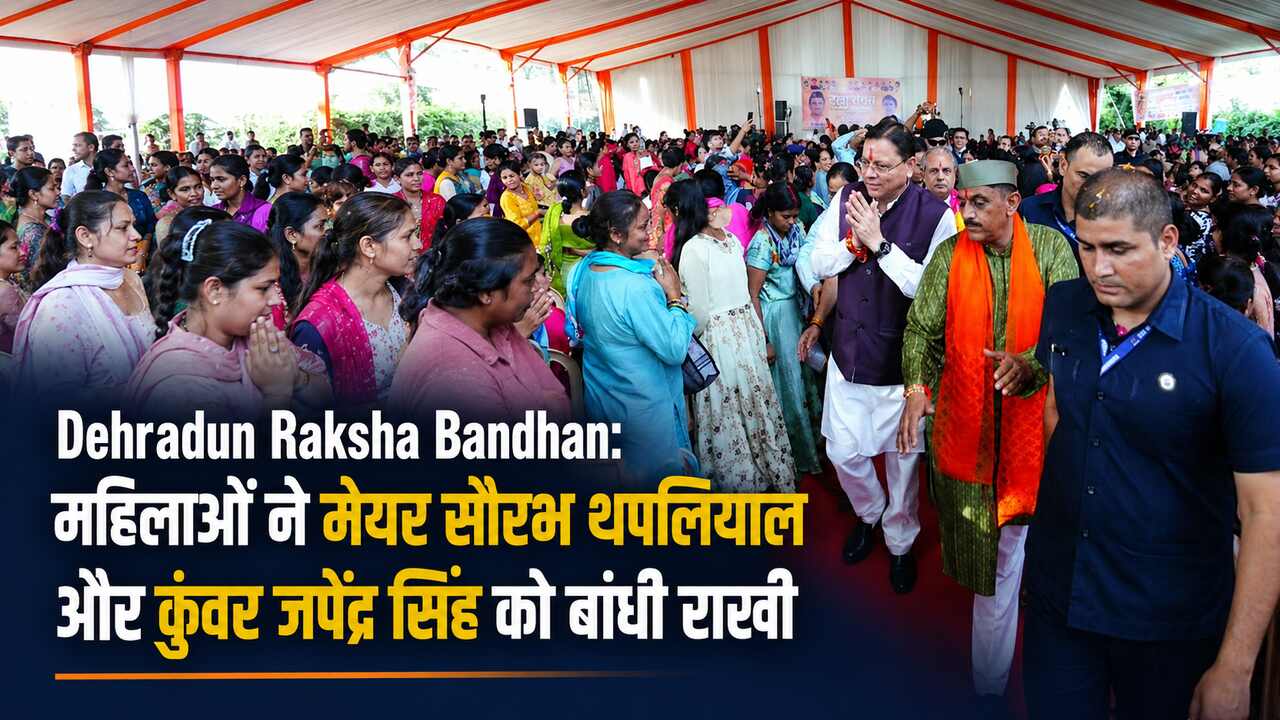
Dehradun Raksha Bandhan – भाई-बहन के अटूट प्रेम और स्नेह का पर्व रक्षाबंधन देहरादून में हर्षोल्लास के साथ मनाया गया। भाजपा के वरिष्ठ नेता एवं प्रदेश प्रवक्ता कुंवर जपेंद्र सिंह की ओर से आयोजित कार्यक्रम में देहरादून के महापौर सौरभ थपलियाल ने भी शिरकत की। कार्यक्रम में पहुंची महिलाओं ने महापौर सौरभ थपलियाल और भाजपा प्रदेश प्रवक्ता कुंवर जपेंद्र सिंह को राखियां बांधकर रक्षाबंधन की शुभकामनाएं दीं और भाई-बहन रक्षाबंधन देहरादून के पवित्र रिश्ते के प्रति अपना स्नेह एवं विश्वास प्रकट किया। इस दौरान दोनों नेताओं ने महिलाओं को रक्षाबंधन की शुभकामनाएं देते हुए उनके सम्मान, सुरक्षा और सशक्तिकरण के लिए निरंतर कार्य करने का संकल्प दोहराया।
नगर निगम देहरादून की आधिकारिक वेबसाइट पर सौरभ थपलियाल को शहर का महापौर बताया गया है। ऐसे में यह कार्यक्रम केवल एक सांस्कृतिक आयोजन नहीं, बल्कि महिलाओं और स्थानीय नेतृत्व के बीच संवाद का अवसर भी बना। अब जरूरत इस बात की है कि मंच से किए गए सम्मान और सुरक्षा के वादे शहर की रोजमर्रा की व्यवस्था में भी दिखाई दें।
कार्यक्रम की Main Highlights क्या रहीं?
रक्षाबंधन कार्यक्रम में परंपरा और सामाजिक संदेश दोनों देखने को मिले। महिलाओं ने राखी बांधकर नेताओं के प्रति अपना विश्वास जताया, वहीं मेयर और भाजपा प्रदेश प्रवक्ता ने उनके सम्मान तथा सुरक्षा के लिए काम करते रहने की बात कही।
- जीएमएस रोड पर रक्षाबंधन कार्यक्रम आयोजित हुआ।
- कुंवर जपेंद्र सिंह ने कार्यक्रम का आयोजन किया।
- मेयर सौरभ थपलियाल ने कार्यक्रम में शिरकत की।
- महिलाओं ने दोनों नेताओं को राखियां बांधीं।
- महिला सम्मान और सशक्तिकरण का संकल्प लिया गया।
Traditional Rakhi और Public कार्यक्रम का संदेश
घर में मनाए जाने वाले रक्षाबंधन और सार्वजनिक कार्यक्रम की भावना एक ही है, लेकिन दोनों का दायरा अलग होता है। घर की राखी निजी रिश्ते का प्रतीक है, जबकि सार्वजनिक आयोजन सामाजिक जिम्मेदारी का संदेश देता है।
| पहलू | पारंपरिक रक्षाबंधन | सार्वजनिक रक्षाबंधन कार्यक्रम |
|---|---|---|
| रिश्ता | भाई और बहन के बीच | महिलाएं और जनप्रतिनिधि |
| मुख्य भावना | प्रेम और पारिवारिक भरोसा | सम्मान और सामाजिक विश्वास |
| वचन | बहन का साथ निभाना | महिलाओं के हित में काम करना |
| दायरा | परिवार तक | समाज और शहर तक |
| अपेक्षा | निजी सुरक्षा और सहयोग | सार्वजनिक सुविधाएं और जवाबदेही |
read more,
FAQs: Dehradun Raksha Bandhan Program
1. रक्षाबंधन कार्यक्रम का आयोजन किसने किया?
कार्यक्रम का आयोजन भाजपा प्रदेश प्रवक्ता कुंवर जपेंद्र सिंह की ओर से किया गया।
2. कार्यक्रम में कौन मुख्य रूप से शामिल हुआ?
देहरादून के मेयर सौरभ थपलियाल ने कार्यक्रम में शिरकत की।
3. महिलाओं ने कार्यक्रम में क्या किया?
महिलाओं ने दोनों नेताओं को राखियां बांधीं और रक्षाबंधन की शुभकामनाएं दीं।
4. नेताओं ने क्या संकल्प लिया?
उन्होंने महिला सम्मान, सुरक्षा और सशक्तिकरण के लिए काम करते रहने का संकल्प दोहराया।
5. कार्यक्रम कहां आयोजित हुआ?
कार्यक्रम देहरादून के जीएमएस रोड क्षेत्र में आयोजित किया गया।