



Ebola: is making its outbreak in the manner in the country Democratic Republic of the Congo with a new variant named Bundibugyo. This has affected the country in the manner since May 2026. Additionally, the tragic thing is that there is no reliable vaccine, and treatment is not available to fight this pandemic.
Why Is the Outbreak Spreading?
I notice factors that make the response difficult. Many communities affected by the outbreak are remote. People move between towns and provinces for work, trade, and family reasons. The remote nature of these communities makes it harder for health teams to identify contacts and to monitor contacts. The situation is making itself in the worst by the insecurity by the citizens. Also, WHO highlighted this serious concern for the transmission of infections among several health workers.
With delayed diagnosis, there are core problems. The health workers who are trapped in Ebola: The simple answer is that early symptoms looked like those of diseases in the region, such as malaria, and by the time the correct diagnosis was made, there was no time left to prevent further transmission.
What Makes Bundibugyo Virus Different?
Unlike previous Ebola outbreaks in the DRC, the current epidemic is being caused by the Bundibugyo species of Ebola virus. The virus was first identified during an outbreak in Uganda in 2007–2008. Has caused outbreaks elsewhere in Central Africa.
The DRC previously recorded a Bundibugyo outbreak in 2012. However, the current outbreak is far larger. One of the challenges is the lack of a vaccine specifically licensed for Bundibugyo virus, as well as the absence of an approved treatment designed specifically for this species. Supportive care remains a part of treatment.
Vaccination and Treatment Efforts
There has been some progress in recent weeks. On August 27, the DRC began vaccinating frontline healthcare workers with Ervebo, a vaccine licensed for the Zaire species of Ebola. Then 50,000 doses reportedly arrived.
However, scientists do not yet know whether Ervebo protects people against Bundibugyo virus. A clinical trial is therefore being used to gather evidence about its effectiveness.
Researchers are also testing treatments. The PARTNERS clinical trial, which began enrolling patients in July, is evaluating treatment options for people infected with Bundibugyo virus. Then, 250 confirmed patients had reportedly been enrolled by the latest WHO update.
More Treatment Capacity Needed
Healthcare facilities are under pressure. On August 28, Médecins Sans Frontières (MSF) announced the opening of an Ebola treatment centre in Beni, North Kivu. The centre is intended to provide beds and improve access to care.
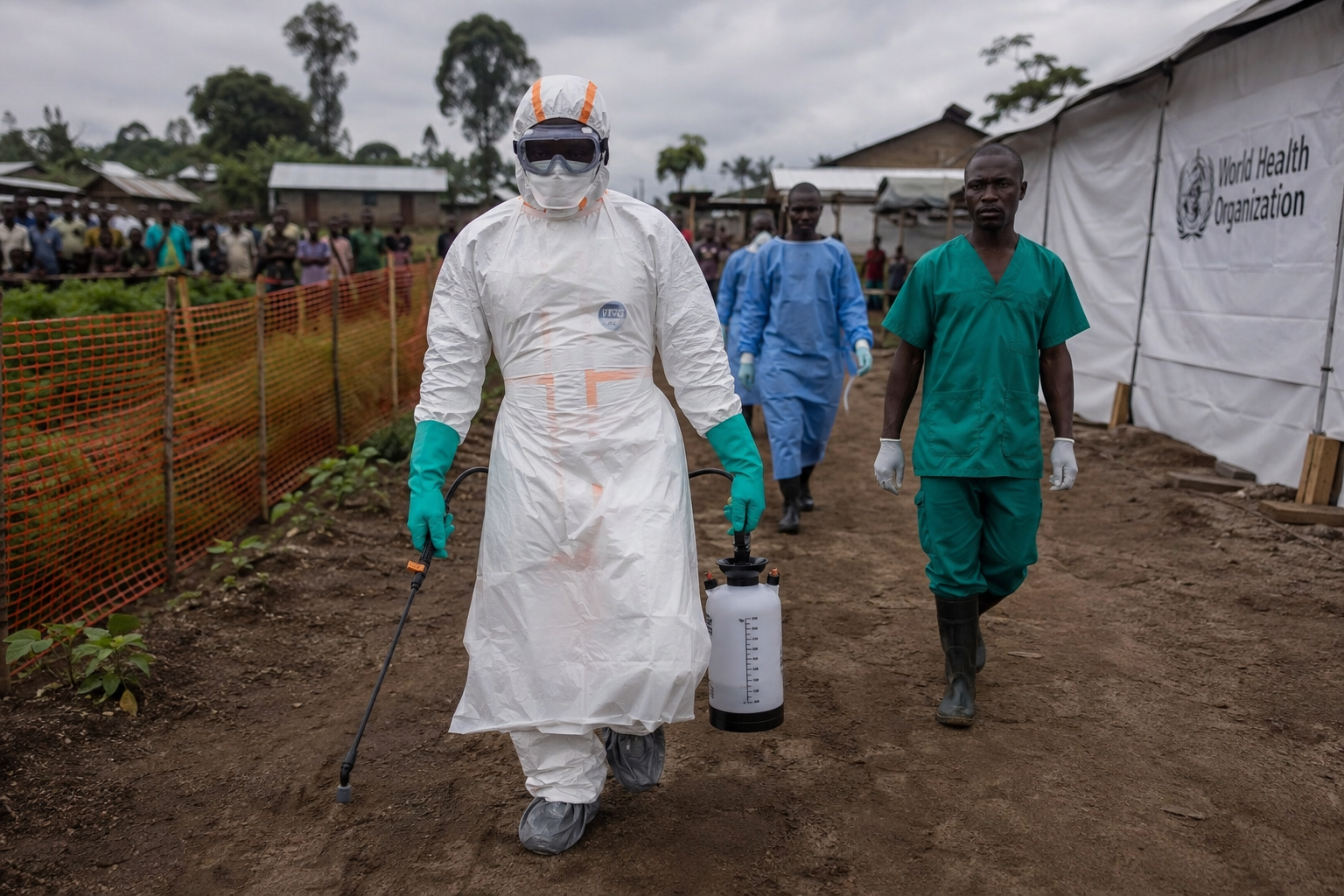
Protecting healthcare workers is equally important. Doctors, nurses, laboratory staff, ambulance workers and burial teams can face exposure to the virus. Vaccination, equipment, rapid testing and strong infection-prevention procedures are essential to reducing these risks.
Regional Risk
The outbreak also poses a risk to countries because of cross-border movement. WHO considers the risk to countries sharing land borders with the DRC to be high because of population mobility and differences in preparedness. Uganda, South Sudan and the Central African Republic are among the countries requiring attention.
At the time, WHO currently considers the global risk low and does not recommend general restrictions on travel or trade.
What Happens Next?
For now, the priority is to slow transmission. That means detecting cases, tracing contacts, expanding testing,g protecting health workers,s and increasing treatment capacity. Building trust within communities will also be crucial.
The 2026 Ebola outbreak has already changed the history of Ebola in the DRC. With thousands of cases and deaths, the coming weeks will be critical. Vaccination research, clinical trials, and stronger healthcare capacity could provide tools, but authorities still face an urgent race to bring transmission under control.