




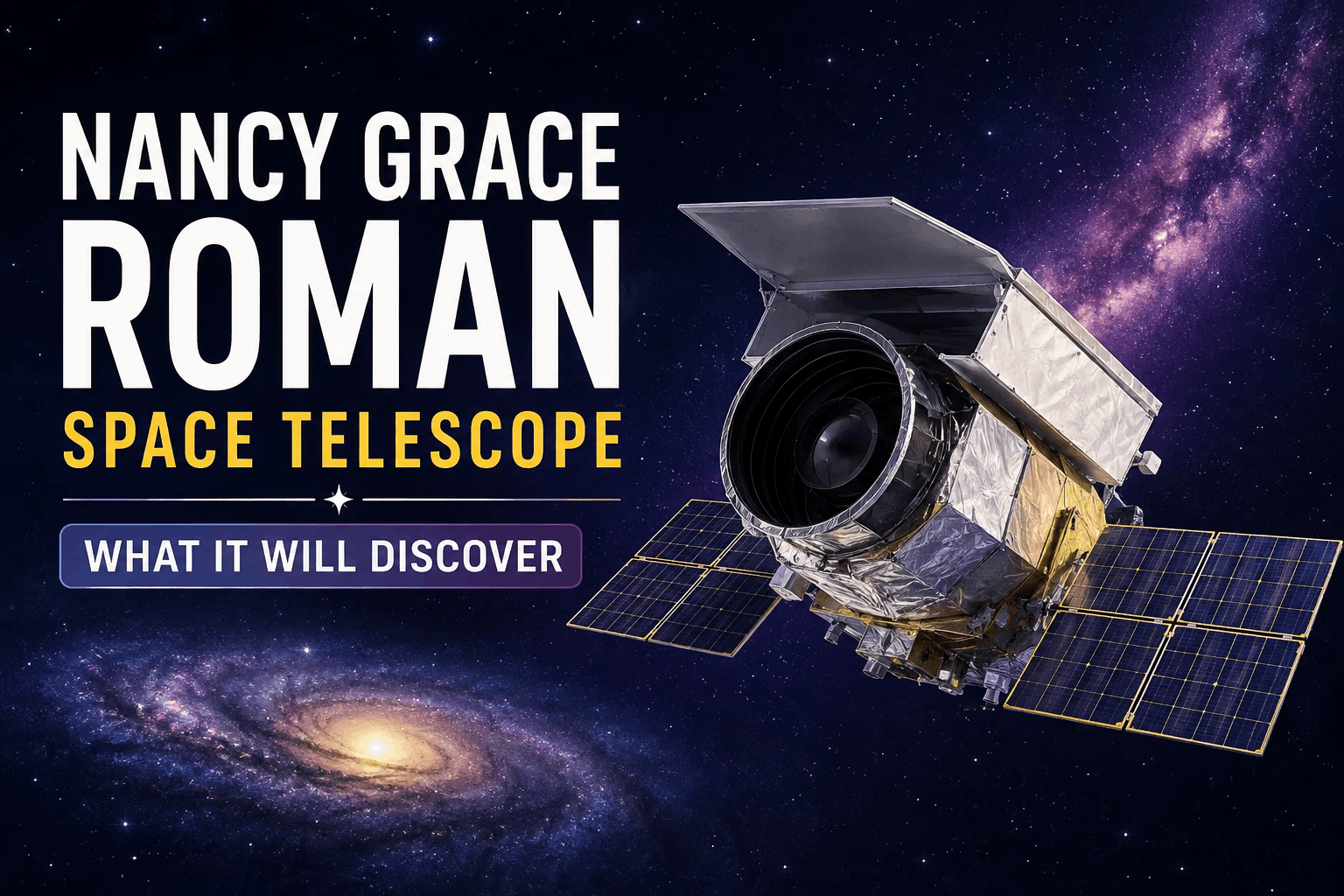
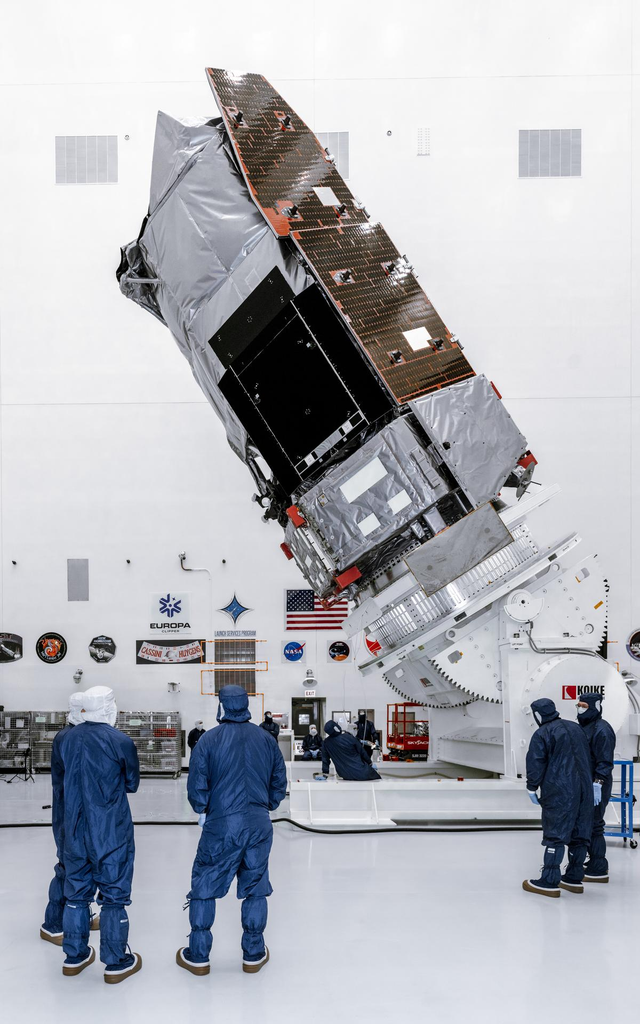
Launching on a SpaceX Falcon Heavy rocket on Thursday from Kennedy Space Center, Fla., in two years, NASA’s Nancy Grace Roman Space Telescope will tackle some of astronomy’s greatest unknowns – dark energy and dark matter, how galaxies form, and how common other planets outside our solar system are. “Roman offers a capability with the advantage of both a large field of view and very high resolution in an infrared space survey,” Roman Principal Investigator and MIT graduate Dr. Paul Hertz said in a statement.
With a field of view that is about 100 times larger than Hubble, in approximately a day the telescope will observe as much sky as Hubble has in 20 years of observations, and provide vast data to literally billions of observers for many decades to come.
What Is the Nancy Grace Roman Space Telescope?
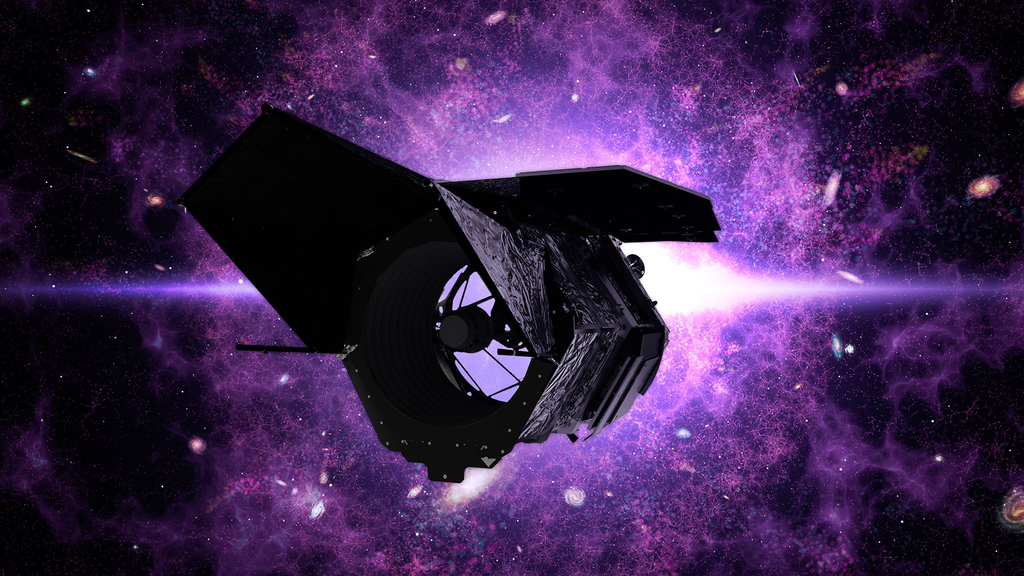
The Nancy Grace Roman Space Telescope is a NASA space observatory launched by NASA’s. Its main purpose is to research Dark energy and Dark Matter, and search for Exoplanets as well as investigating infrared astrophysics.
The observatory itself is named after Nancy Grace Roman, the first chief astronomer at NASA.
It possesses a main mirror of 2.4-metres in diameter the same as the main mirror on Hubble, however, Roman has not been given a bigger mirror, it does not have the required abilities for such things. Roman’s advantage instead, is that its mirror will view over 100 more of the sky that Hubble’s at one time.
Roman Space Telescope Launch: What Happened?
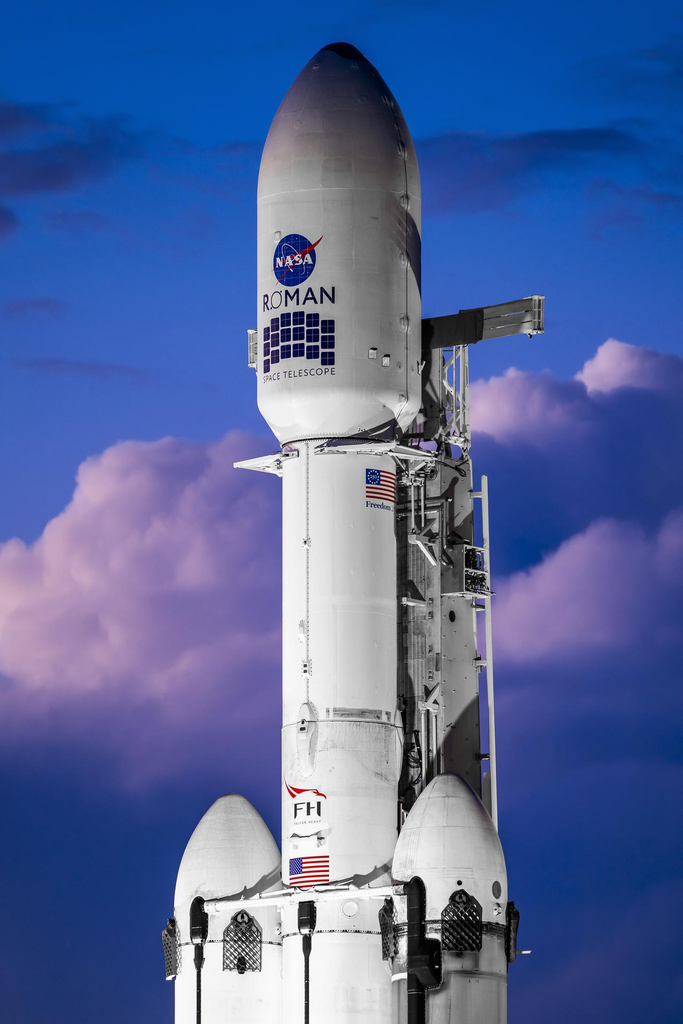
The August 30, 2026 August 30 launched Roman Space Telescope arrived at orbit via NASA’s SpaceX Falcon Heavy mission to space on Aug. 30 from Kennedy Space Center in Florida – on behalf of NASA – via Launch Complex 39A at 7:26 a.m.
EDT to continue on the trek toward the second Sun-Earth Lagrange point, commonly referred to as the L2 point. Both the Hubble Space Telescope and its predecessor, James Webb are biting near this region of space.
A “wide-field view observatory” the Roman telescope will use a combination of survey capabilities and sensitivity to infrared light to peer farther out into the universe than previously possible.
What Will the Roman Space Telescope Discover?
Roman’s mission is broader than simply taking new pictures of space. Scientists will use its observations to investigate how the universe behaves and changes over cosmic time.
Its major scientific goals include:
- Understanding the mysterious force known as dark energy.
- Mapping the distribution and effects of dark matter.
- Finding and studying large populations of exoplanets.
- Investigating how galaxies form and evolve.
- Studying stars and planetary systems in the Milky Way.
- Exploring black holes and other astrophysical phenomena.
- Creating enormous astronomical datasets that may reveal previously unknown objects and phenomena.
1. Roman Will Investigate Dark Energy
For Roman, one of the chief goals will be to probe dark energy – an obscure agent responsible for the accelerating expansion of the cosmos. The challenge is: physicists know the universe is expanding faster, but they haven’t yet determined what ultimately drives that acceleration. Roman will tackle that question through several different types of astronomical measurements: he will build on studies of distant galaxies and supernovae, and he will chart out the evolution of matter in the universe.
He’s not just out to confirm the accelerating expansion; he wants to see if the nature of dark energy behaves the same way it did in the universe’s infancy or if it evolves along with the rest of the cosmos.
The stakes could be nothing less than figuring out what dark energy is and what it means for cosmology.
2. Roman Will Map Dark Matter
As Dark matter isn’t able to take on the emission or absorption of light it isn’t able to see us. Astronomers have come up with various methods of calculating gravitational forces of the particles of dark matter. The vast number of galaxies counted as well as the minute lensing effect by invisible matter via robotic mission of the roman observatory will provide vital data with information regarding dark matter distribution throughout the cosmos based on the emission of light of the gravitating galaxies. The compilation of results gained across a substantial cosmic field will give insights into dark matter’s relationship with galaxies and larger structure scale.
3. Roman Could Discover Thousands of Exoplanets
5 of 10 NASA: Roman Will also brings an extremely powerful instrument into operation to search for exoplanets. A significant observation technique used by Roman will be gravitational microlensing. It involves a foreground star passing in front of a background star, where the gravity of the front star acts as a magnifying lens and enhances the light of the background star.
If the front star has a planet orbiting it, it could briefly cause an additional brightness change.
This smallest effect in the brightness change could possibly detect planets very difficult by various methods. NASA believes the Roman survey would census the statistics in the statistical population of planetary systems within our milky way and possibly find thousands of such additional planets.
4. Roman Will Study How Galaxies Evolve
Roman’s enormous field of view will allow astronomers to observe large populations of galaxies rather than concentrating on relatively small patches of sky.
This matters because galaxies evolve over billions of years.
By observing galaxies at different distances—and therefore at different stages in cosmic history—scientists can investigate questions such as:
- How did the first galaxies grow?
- How did galaxies acquire their shapes?
- When did galaxies form most of their stars?
- How do galaxies interact with their surroundings?
- What role do dark matter and black holes play in galaxy evolution?
Roman’s wide-field surveys are particularly valuable because they can connect observations of individual galaxies with the larger cosmic environment surrounding them.
5. Roman Will Explore the Milky Way
However, Roman will also scan for stars in our galaxy. Repeating those scans will also allow it to flag stars whose brightness is varying and provide a time history of transient events and possibly undiscovered worlds.
Because it will track so many stars over long periods, the telescope should be especially good at finding such short-lived events and at creating a more comprehensive inventory of planetary systems and the populations of stars in the galaxy.
6. Roman May Make Unexpected Discoveries
“For me, maybe the most exciting part of Rome is that we don’t know all the things that it’s going to find” astronomers can’t say with absolute certainty everything that the space telescope will discover.
These large surveys do turn up surprises, things we weren’t necessarily planning to look for,” astronomers discover something during surveys, which is also an astronomical surprise.
Given that Roman’s mission is to stare at lots of the sky, in high resolution and with a high sensitivity,
it’s possible that in the huge data set we can expect, there will be:
- Previously unknown types of stars.
- New transient events.
- Unexpected galaxy populations.
- Unusual planetary systems.
- Previously unidentified black holes.
- Rare gravitational-lensing events.
- Phenomena that challenge existing astronomical models.
This is one reason NASA describes Roman as a potential “discovery machine.”
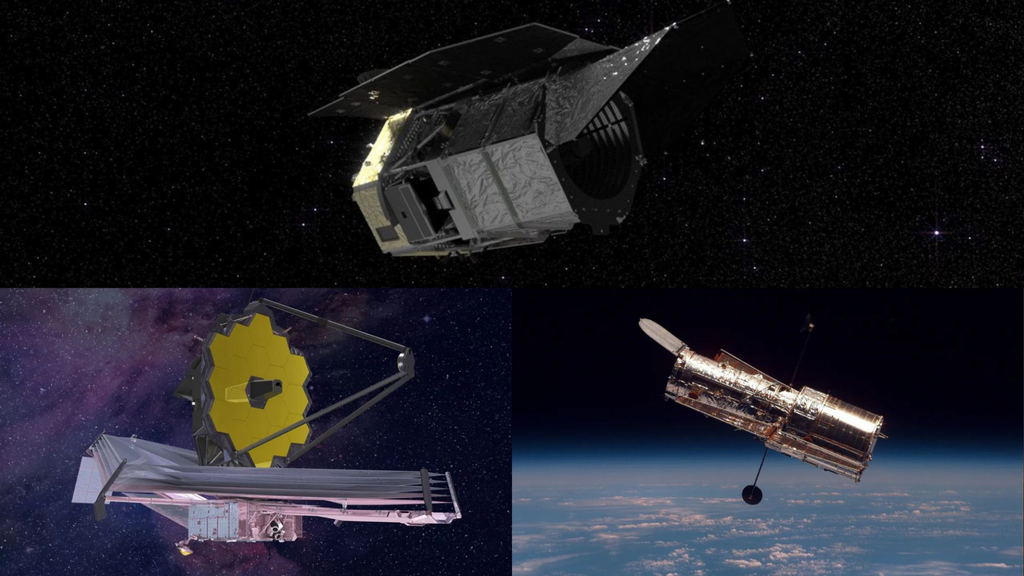
Roman Space Telescope vs Hubble
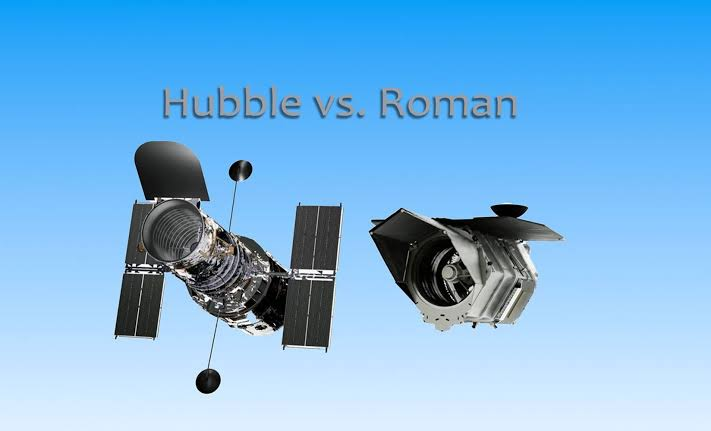
Roman is not simply a replacement for Hubble.
| Feature | Roman | Hubble |
| Primary strength | Wide-field surveys | High-resolution observations |
| Primary mirror | 2.4 m | 2.4 m |
| Field of view | At least 100× larger than Hubble’s | Much narrower |
| Infrared capability | Major component of mission | More limited |
| Survey speed | Designed for very rapid wide surveys | Optimized for targeted observations |
| Main science goals | Dark energy, dark matter, exoplanets, astrophysics | Broad astrophysics and detailed imaging |
| Relationship | Complementary | Complementary |
NASA says Roman can survey the sky up to 1,000 times faster than Hubble while maintaining similar sensitivity and infrared resolution.
That means astronomers can use Hubble for detailed observations of selected targets while Roman surveys much larger areas to discover and characterize populations of objects.
Roman vs James Webb Space Telescope
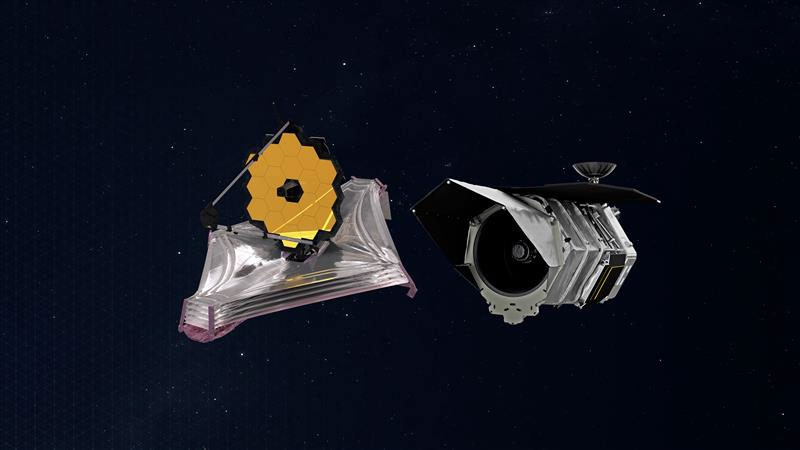
Roman and the James Webb Space Telescope both operate in infrared astronomy, but they are optimized for different jobs.
| Feature | Roman | James Webb |
| Main approach | Extremely wide surveys | Deep, detailed observations |
| Field of view | Very large | Deep, detailed observations |
| Key strengths | Cosmology, surveys, exoplanet populations | Smaller |
| Infrared science | Yes | Yes |
| Primary science style | Survey the universe broadly | Examine selected targets deeply |
In simple terms, Webb is particularly powerful when scientists want to study a specific cosmic target in extraordinary detail, while Roman is designed to survey enormous areas of the universe efficiently.
The two observatories can therefore complement each other rather than compete.
What Instruments Does Roman Carry?
Roman’s main scientific instruments are the Wide Field Instrument (WFI) and the Coronagraph Instrument (CGI).
Wide Field Instrument
The Wide Field Instrument is Roman’s primary camera.
It will capture wide-field observations in optical and near-infrared wavelengths and is designed to survey enormous areas of the sky.
NASA says its detector system contains 18 detectors and a roughly 300-megapixel focal plane.
Coronagraph Instrument
The Coronagraph Instrument is a technology demonstration focused on high-contrast observations of exoplanets.
A coronagraph can suppress the overwhelming glare of a star, making it easier to study fainter objects close to it.
Roman’s coronagraph technology could allow astronomers to directly image selected exoplanets and investigate their atmospheres.
Where Will the Roman Space Telescope Operate?
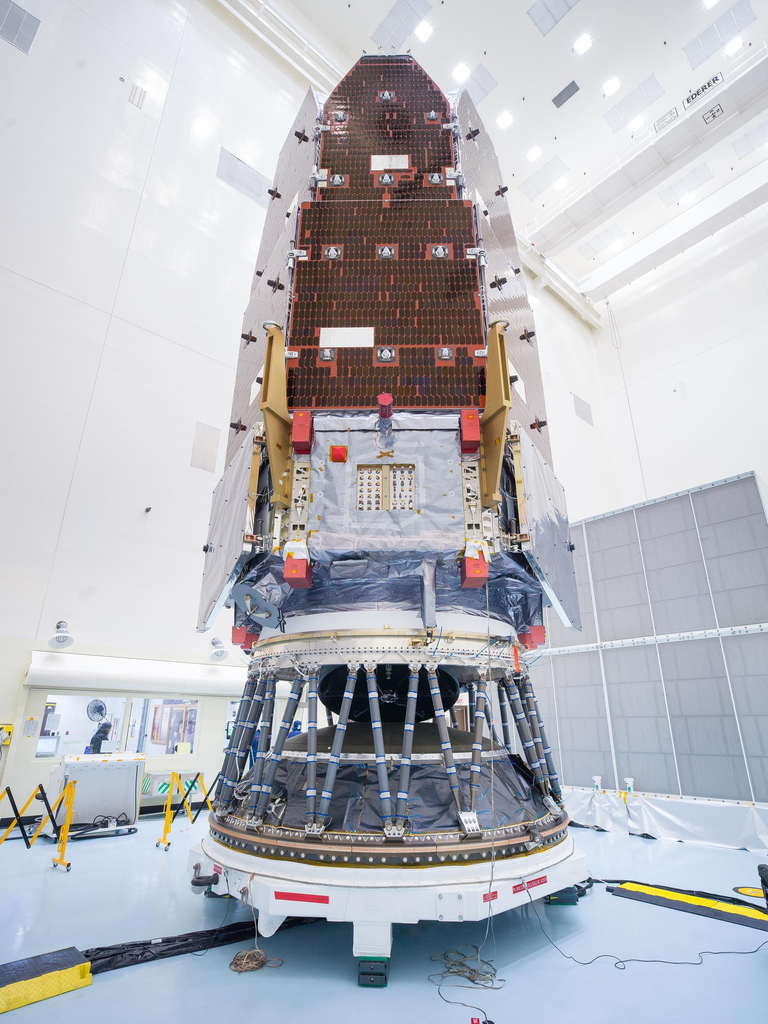
Rome is moving in the direction of orbit about the Sun, near the Sun-Earth L2 point, located about 1.5 million km from Earth.
This is the region about where the Webb Space Telescope will fly in the Webb science orbit. The observing advantages of operating near the Sun-Earth L2 region, according to JWST’s designers, involve a stable observing environment, where the two satellites may keep very stable attitudes relative to the Sun and Earth:
Can the Roman Space Telescope Find Alien Life?
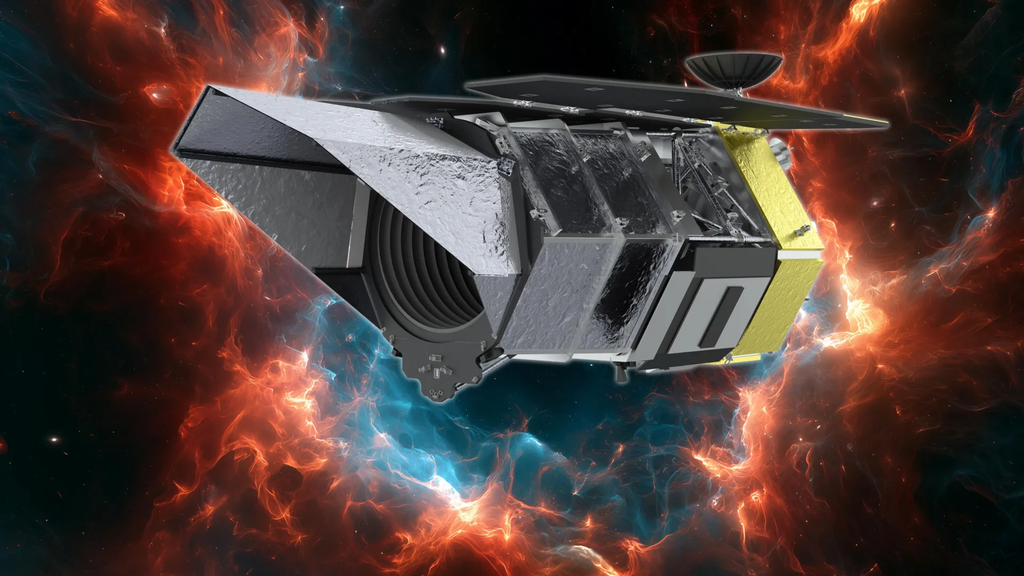
Roman is not primarily a life-detection mission.
Its exoplanet observations can expand scientists’ knowledge of planetary systems and, through its coronagraph technology demonstration, provide new information about selected planets and their environments.
However, discovering life requires much more than detecting a planet.
Scientists would need evidence about a planet’s atmosphere, chemistry, environment and potential biological signatures. Roman’s broader contribution is to expand our knowledge of where planets exist and how planetary systems are structured.
In that sense, Roman can help build the scientific foundation for the broader search for life beyond Earth.
Why Is the Roman Space Telescope Important?
Roman’s biggest advantage is scale.
Hubble revolutionized astronomy by providing exceptionally detailed observations from space. Webb opened new windows into infrared astronomy and the early universe.
Roman adds another capability: surveying enormous regions of the sky quickly while maintaining powerful infrared observing capabilities.
NASA estimates that Roman could measure light from around a billion galaxies over its mission lifetime.
That scale could transform astronomy from a discipline dominated by individual objects into one increasingly driven by enormous statistical datasets.
Key Facts About NASA’s Roman Space Telescope
- Full name: Nancy Grace Roman Space Telescope
- Organization: NASA
- Launch date: August 30, 2026
- Launch vehicle: SpaceX Falcon Heavy
- Launch site: Kennedy Space Center, Florida
- Primary mirror: 2.4 meters
- Major instrument: Wide Field Instrument
- Technology demonstration: Coronagraph Instrument
- Primary science: Dark energy, dark matter, exoplanets and infrared astrophysics
- Planned operating region: Near the Sun-Earth L2 point
- Field of view: At least 100 times larger than Hubble’s
- Expected survey scale: Light from roughly one billion galaxies over the mission lifetime
Frequently Asked Questions
What is the Nancy Grace Roman Space Telescope?
The Nancy Grace Roman Space Telescope is a NASA space observatory designed to study dark energy, dark matter, exoplanets, galaxies and other astronomical phenomena using wide-field optical and infrared observations.
When did the Roman Space Telescope launch?
NASA launched the Roman Space Telescope on August 30, 2026, aboard a SpaceX Falcon Heavy rocket from Kennedy Space Center in Florida.
What will the Roman Space Telescope discover?
Roman is expected to investigate dark energy and dark matter, discover large numbers of exoplanets, study galaxy evolution and identify many other astronomical objects and transient events.
How is Roman different from Hubble?
Roman has a field of view at least 100 times larger than Hubble’s and is designed to conduct extremely wide and rapid surveys. Hubble remains highly valuable for detailed observations of individual targets.
Is Roman better than James Webb?
Neither telescope is simply “better.” Webb is optimized for deep, detailed observations of selected targets, while Roman is designed for very large surveys. Their capabilities are complementary.
Will Roman find Earth-like planets?
Romans can discover and study large populations of exoplanets, including planets using gravitational microlensing. However, finding an Earth-sized planet is not the same as proving that it is Earth-like or inhabited.
Can Roman detect alien life?
Roman is not primarily designed as a life-detection mission. Its observations will nevertheless improve our understanding of exoplanets and planetary systems, supporting the broader scientific search for potentially habitable worlds.
Where will Roman operate?
Roman will operate near the Sun-Earth L2 region, roughly 1.5 million kilometers from Earth, after completing its journey and commissioning.
Why is Roman important for dark energy research?
Roman will survey huge numbers of galaxies and use multiple cosmological measurements to investigate how the expansion of the universe has changed over time. These observations could help scientists determine the properties of dark energy.
The Bottom Line
The Nancy Grace Roman Space Telescope will change the way astronomers look out at the universe. “Instead of spending much of its time and effort studying a few very targeted targets, Roman is built to explore a tremendous expanse of sky and capture a monumental amount of cosmic information,” said Richard Strauss, an astronomer based at NASA’s Goddard Space Flight Center in Greenbelt, Maryland, who led the scientific planning for the telescope.
Its study of this astronomical archive of the universe could help us understand dark energy; map dark matter; find thousands of worlds in outer space; follow galaxies through the eons of history; discover yet unimagined objects and more.
With launch anticipated on Aug. 30, 2026, this mission’s results will have the potential to reform not just one but a number of fields within the study of modern astronomy.
For More: Latest News