

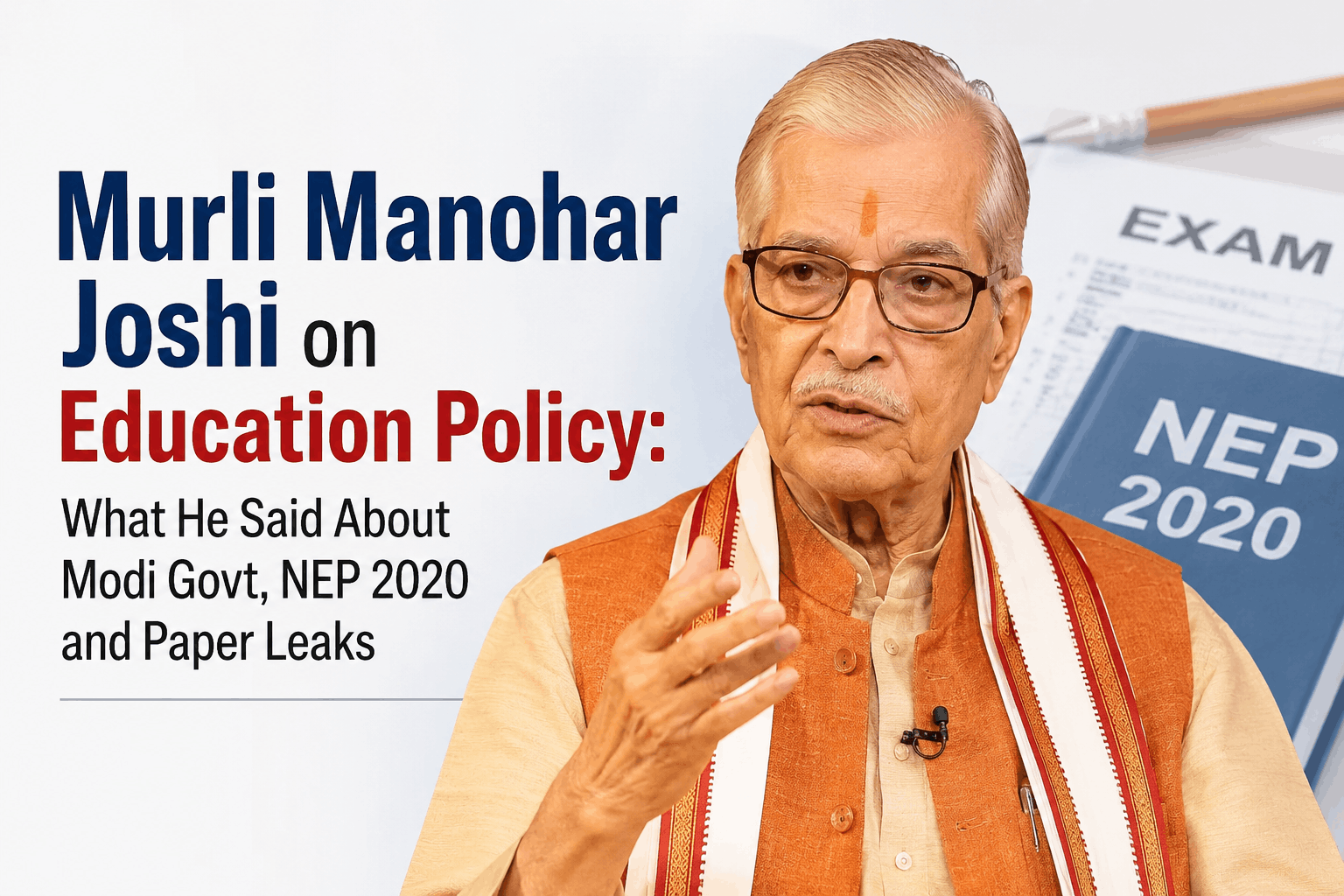
Former Union human resource development minister Murli Manohar Joshi has raised questions about the Murli Manohar Joshi education policy perspective on India’s education priorities, including examination paper leaks, employment opportunities, privatisation and the direction of education under the Narendra Modi government. His remarks have also renewed debate over access, employability, equality and public investment in India’s education system.
What did Murli Manohar Joshi say about India’s education system?
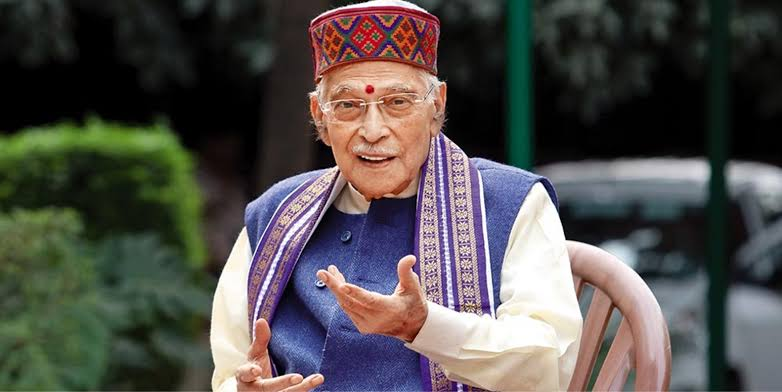
Murli Manohar Joshi, who was previously a Union HRD minister and a former BJP president, was quoted by Amar Ujala as criticising aspects such as exam paper leak, funding for education, the manner in which it has been commercialised, state schools, and the connection between education and employment.
The former Minister also opined that problems like malpractice during exams “should not be seen in isolation, but in the broader context of society and governance.
“Whether increased establishment of colleges and universities translates into increased opportunities for graduates,” he asked according to the report by The Wire, after having been in the conversation about education with Amar Ujala.
Key points from Murli Manohar Joshi’s education-policy criticism
Joshi’s comments can broadly be grouped into six areas:
- Examination integrity: He connected paper leaks and cheating with wider concerns about corruption and institutional credibility.
- Education funding: He questioned whether education is receiving adequate priority.
- Education and employment: He argued that educational expansion must be connected to real economic opportunities.
- Commercialisation: He opposed treating education primarily as a commercial activity.
- Equality: He advocated a more uniform schooling system in which children from different economic backgrounds could study together.
- Education policy: He questioned the need for replacing the earlier education policy rather than modifying it where necessary.
These are Joshi’s views and criticisms; they should not be presented as independently established facts about government wrongdoing without supporting evidence.
Paper leaks: why Joshi linked examinations to wider governance
“I think one of the most persuasive parts of the whole argument Joshi presented was to do with exam integrity,” observed Gaur, referring to The Indian’s former Op-ed and commentary editor . “Instead of focusing on individual incidents [of leaked question papers] as an isolated exam management issue, what they are saying is that students are swayed by the actions of others within their environment.
”Their larger argument was that the spread of corruption, or at least, a belief that the system is unfair, will erode public confidence in merit based education, and this is particularly relevant in India as success on competitive exams can lead to admission to institutions and jobs in the public sector.
That being said, claims to the existence of particular question paper leaks need to be assessed for their individual merits; in this instance, the National Testing Agency declared that there had been no leak of the NEET-UG 2024 paper, and that any investigation against individuals involved in unfair-means cases would be aided by the agency.
Joshi’s argument: education must lead to employment
The other major issue raised by Mr Joshi is that of education versus work and job. At the root of his complaint lies the dichotomy between qualifications earned and employment opportunities created.
India may have broadened access to colleges and professional institutions, but the weightage of a degree still depends on one’s capacity to convert education into a meaningful career.
This explains why the argument between college education and employment does not just relate to government jobs.
A modern education system must consider:
- Foundational literacy and numeracy
- Professional and vocational skills
- Digital and technological capabilities
- Critical thinking
- Research and innovation
- Industry requirements
- Entrepreneurship
- Employability and career guidance
The government’s own 2026–27 education budget announcements place considerable emphasis on skills and the transition from education to employment and enterprise. The Ministry of Education says a high-powered committee has been proposed to examine the impact of emerging technologies, including AI, on jobs and skill requirements.
This provides an important contemporary context for Joshi’s argument.
What did Joshi say about NEP 2020?
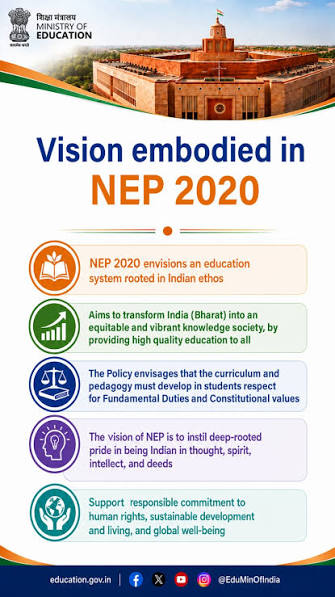
Joshi also questioned the rationale behind replacing the previous education policy.
According to the account of his interview, he argued that the earlier policy, formulated during the Rajiv Gandhi government and subsequently modified, contained elements that could have continued to be used rather than being replaced wholesale.
The government’s account of the NEP 2020 process is different in emphasis.
The Ministry of Education says the previous National Policy on Education dated from 1986 and was modified in 1992. It says the government began a new policy-making process because India’s social, economic and technological circumstances had changed substantially over the intervening decades. The ministry describes the process as involving consultations with states, experts and other stakeholders, with around two lakh suggestions received on the draft policy.
NEP 2020 was subsequently approved by the Union Cabinet on 29 July 2020.
What is NEP 2020 designed to change?
The National Education Policy 2020 proposes a significant restructuring of India’s education system.
Among its major features is the replacement of the traditional 10+2 school structure with a 5+3+3+4 pedagogical and curricular structure covering ages 3 to 18.
The policy also emphasises:
- Foundational literacy and numeracy
- Conceptual understanding instead of rote learning
- Critical thinking and creativity
- Multidisciplinary education
- Vocational education
- Multilingualism
- Technology in education
- Equity and inclusion
- Teacher development
- Research and innovation
The official policy describes education as a public service and calls for a strong public education system alongside appropriate private and community participation.
This creates an important distinction between the objectives of NEP 2020 and the debate over how effectively those objectives are being implemented.
Is India’s education budget increasing?
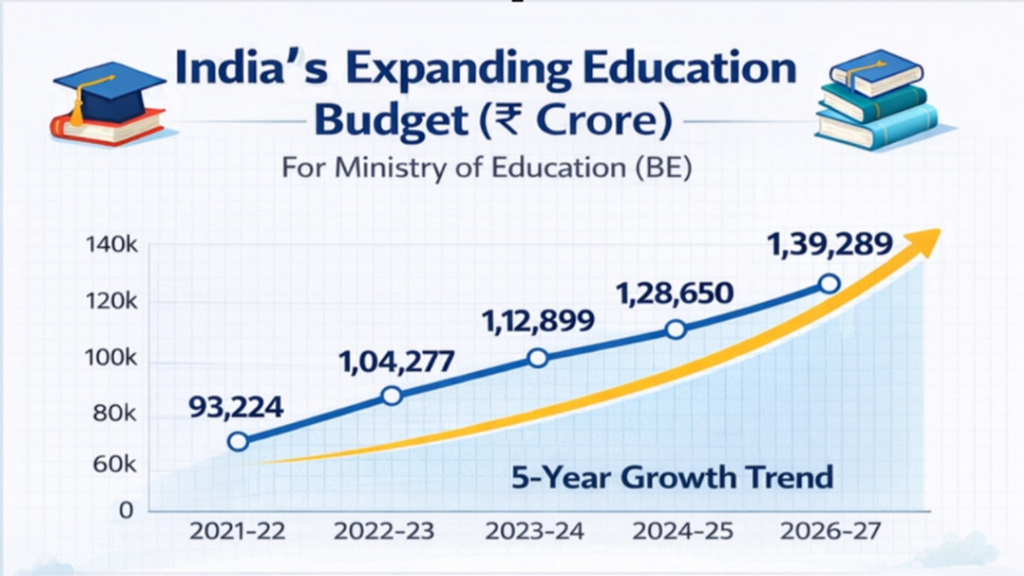
Yes. At the Union level, the Ministry of Education’s allocation in the 2026–27 Budget Estimate is ₹1,39,289.48 crore, compared with ₹1,28,650.05 crore in the 2025–26 Budget Estimate.
That represents an increase of 8.27%.
The allocation is divided between:
- Department of School Education and Literacy: ₹83,562.26 crore
- Department of Higher Education: ₹55,727.22 crore
The Ministry says the school-education allocation increased by 6.35%, while the higher-education allocation increased by 11.28% compared with the respective 2025–26 Budget Estimates.
Therefore, a claim that education funding is simply “shrinking” requires qualification. The more useful question is whether the size, composition and outcomes of spending are sufficient for India’s educational requirements.
Education spending is more complicated than one budget number
A budget increase does not automatically mean every education challenge has been solved.
Education outcomes depend on how money is distributed and implemented across areas such as:
- Teachers and teacher training
- School infrastructure
- Higher education
- Research
- Scholarships
- Digital learning
- Vocational education
- Examination systems
- Student support
- State-level implementation
India’s education system is also a shared responsibility because education is on the Concurrent List, meaning both the Union and state governments have important roles.
Consequently, assessing education policy requires more than looking at the Union government’s headline allocation.
Joshi’s neighbourhood-school idea
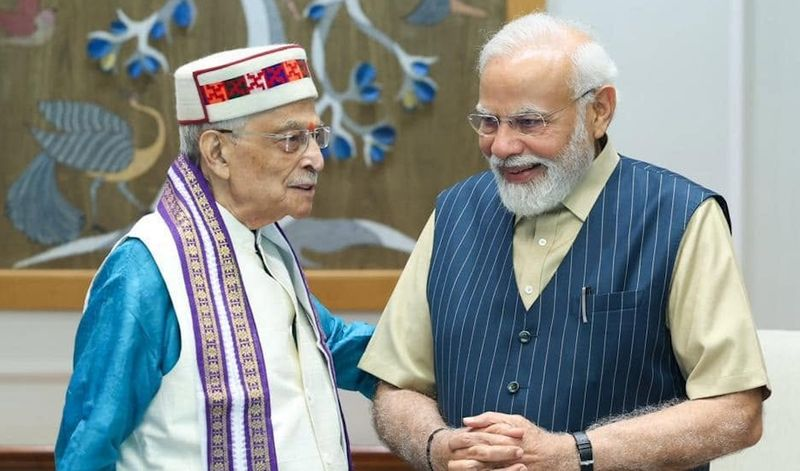
Joshi has also advocated a more equal schooling structure based around neighbourhood schools.
His basic argument is that children should ideally receive their schooling within their local community rather than being separated primarily by economic status. In the interview reported by The Wire, he supported the idea of a common schooling environment for children from rich and poor families and argued for equal access to education at least through secondary schooling.
The proposal connects to a much older question in Indian education: should a child’s educational opportunities depend heavily on their family’s income and ability to choose a school?
There are practical questions around such a model, including school quality, parental choice, transportation, teacher availability and differences between urban and rural areas.
Nevertheless, the principle behind the argument is straightforward: quality education should not become a privilege available only to families that can afford it.
Education and commercialisation
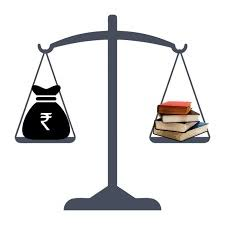
Joshi has also expressed concern about the growing commercialisation of education.
The debate is not necessarily about whether private institutions should exist. India’s education system includes a substantial private sector, and private institutions can contribute capacity, innovation and specialised programmes.
The more difficult question is how to balance private participation with:
- Affordability
- Quality
- Transparency
- Student protection
- Regulation
- Equal opportunity
- Public investment
NEP 2020 itself describes education as a public service while also supporting appropriate private and community participation.
That means the current policy debate is less about a simple public-versus-private choice and more about what standards and safeguards should apply across the education ecosystem.
Why Joshi’s comments matter now
Joshi’s comments also bear notice simply because he is a foreigner offering comments on education policy. He was formerly Minister of Human Resource Development (India) in the NDA government of Atal Behari Vajpayee, during which term he presided over numerous education-related activities and controversies.
As such, his remarks have their political weight to be sure.
He is hardly one, however, who should wear his former government position like a badge, and his recent remarks, like his past pronouncements, ought to stand as political policy arguments and be tested against government statistics, documents, and any impartial evidence.
The bigger question: what should India’s education system deliver?
However the argument spurred by Joshi’s comments isn’t about one particular politician or one particular regime. The country requires an education system that could meet simultaneous and somewhat contradictory challenges, namely access, affordability, quality, equity, skills, employment and intellectual advancement. NEP 2020 seeks to promote a paradigm shift from rote to conceptual learning, from rigidity to flexibility and from subject-specific, to multi-disciplinary and vocational learning, encouraging a higher degree of criticality and reflection in students.
The key here lies in execution.
Any policy can have the loftiest goals possible; the results however, lie with our classrooms, our teachers, institutions, assessments and ultimately, in their outcomes. That is how the argument initiated by Joshi is really effective: is our system yielding the kind of education, opportunities and social movement that we want it to give, as opposed to just right and wrong answers from any individual.
Frequently Asked Questions
What did Murli Manohar Joshi say about the Modi government’s education policy?
Murli Manohar Joshi criticised several aspects of India’s education system, including examination paper leaks, education priorities, commercialisation, employment opportunities and the direction of education policy. His comments were reported following an interview with Amar Ujala.
Did Murli Manohar Joshi criticise NEP 2020?
Yes. Joshi questioned the need for replacing the earlier education policy and argued that existing policy could have been modified rather than replaced. The government’s position is that NEP 2020 was developed after extensive consultations because India’s educational and economic circumstances had changed.
What is NEP 2020?
The National Education Policy 2020 is India’s current national education-policy framework. It proposes reforms covering school education, higher education, vocational learning, teacher development, research and technology. It introduced the proposed 5+3+3+4 school structure for ages 3–18.
How much did India allocate to education in Budget 2026-27?
The Ministry of Education received a total Budget Estimate of ₹1,39,289.48 crore for 2026–27, according to the ministry’s budget document.
Did the education budget increase in 2026-27?
Yes. The Ministry of Education says its 2026–27 allocation increased by 8.27% compared with the 2025–26 Budget Estimate.
What did Joshi say about paper leaks?
Joshi connected examination paper leaks with broader concerns about corruption and institutional values. His argument was that students are influenced by the ethical environment around them. Specific paper-leak allegations, however, need to be evaluated individually based on evidence.
What is neighbourhood schooling?
Neighbourhood schooling is an approach in which children attend schools located close to where they live. Joshi has advocated a more equal schooling system in which children from different economic backgrounds could study in their local communities
Why is education linked to employment?
Education provides knowledge and skills, but its social and economic value is also influenced by whether students can access meaningful work or further learning. This is why skills, vocational education, industry requirements and career pathways have become increasingly important parts of India’s education debate.
Is education only the responsibility of the central government?
No. Education is a subject on India’s Concurrent List, meaning both the Union and state governments have responsibilities. Education policy and outcomes therefore depend on cooperation between multiple levels of government and educational institutions.
What is the main issue raised by Joshi’s criticism?
At its core, the debate is about what India’s education system should prioritise: equitable access, quality, public investment, examination integrity, employability, social values and long-term human development. These goals are interconnected rather than mutually exclusive.
Conclusion
Murli Manohar Joshi’s sharp criticism of India’s education policy must go beyond the political rhetoric of a Modi government at work. His points concerning fairness of the examination system, job skills, commodification and equitable access must be weighed against the government’s aspirational agenda for the NEP 2020, and, more critically, its spending on education.
We already see some useful details in the official data – the budget allocated to the Ministry of Education in 2026-27 has risen while the NEP 2020 chart is a master plan to revamp Indian education.