

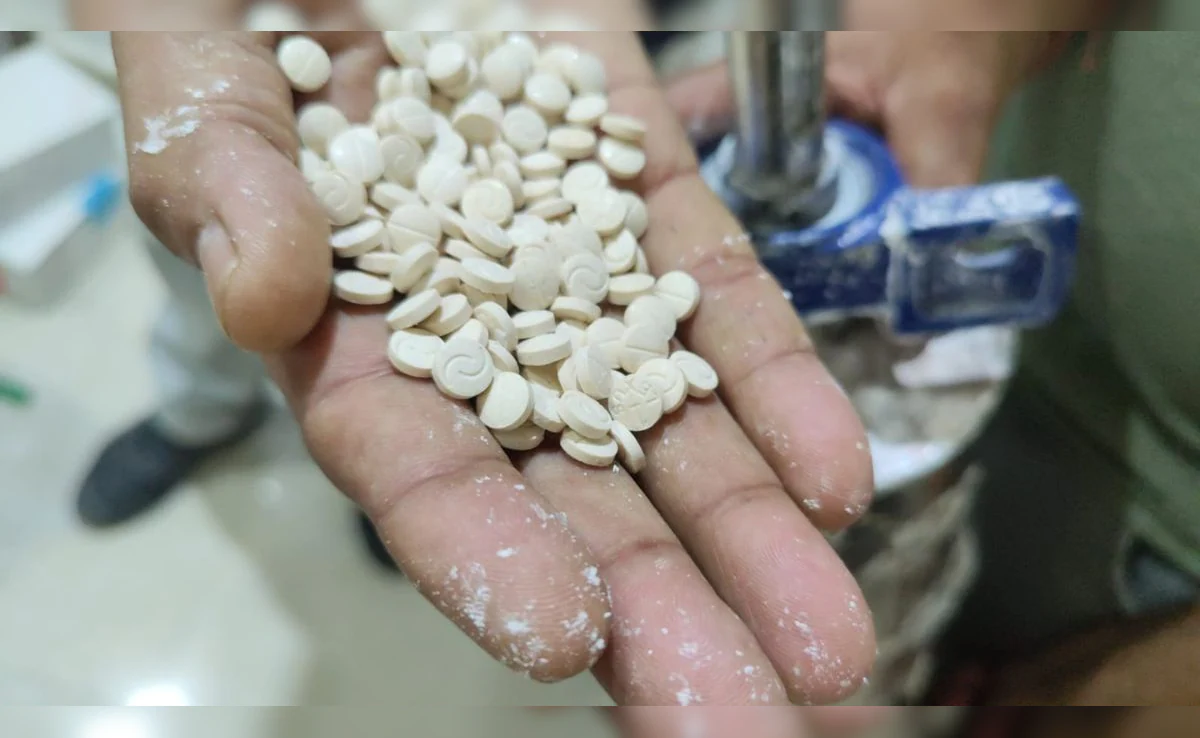
Bangalore, August 19, 2026: Authorities in Bengaluru have seized expired medicines, pharmaceutical products bearing allegedly forged maximum retail price (MRP) labels, and injection vials valued at around ₹3.38 crore, raising concern over the circulation of potentially unsafe and illegally relabelled medicines in the city.
The seizure part of the enforcement action is aimed at protecting the expired and improperly labelled pharmaceutical medicine supply chain. The recovery of injection vials and other necessary medicine products has also raised concerns over the handling, storage, and distribution of medicines whose labels may have been altered.
Officials are examining the seized stock to establish its source, intended destinations, and the circumstances under which the products where alleged relablled. Further investigation is expected to determine medicines wheter the medicines were being prepared for sale through pharmacies, distribution, or other channels.
Expired Medicines Raise Patient Safety Concerns
The presence of expired medicines is a serious public-health concern because medicines must be used within their approved shelf life and stored according to prescribed conditions. The expiry date, batch number, and MRP printed on pharmaceutical packaging provide important information for consumers, pharmacists, and regulators.
The National Pharmaceutical Pricing Authority (NPPA) has previously highlighted the importance of consumers checking the MRP, batch number, and expiry date before purchasing medicines. Its studies have also pointed to concerns surrounding the handling and timely removal of expired medicines from retail channels.
In the Bengaluru seizure, products allegedly carrying forged MRP labels add another layer to the investigation. Altering information on pharmaceutical packaging can make it difficult for consumers and authorities to determine the original price and other details associated with a product.
Investigation Into Forged Labels
Investigators are expected to examine the packaging of the medicines and whether their labels are correct or not. The authorities may also trace the batch numbers, manufacturers, distributors, and supply records associated with the seized medicines.
The investigation could help establish whether the products were merely stored illegally or whether there was an organized operation that involves the collection, relabelling, and distribution of expired or improperly labelled medicines.
The seizure of injection vials is particularly significant because injectable medicines require strict quality control, proper storage, and careful handling. Any uncertainty regarding their expiry, authenticity, labelling, or storage conditions can create additional risks if such products reach patients.
Authorities Step Up Checks on Drug Supply Chains
The seizure comes amid continuing efforts to control the supply chain of the drug. Experts have repeatdely have stressed that expired medicines should be removed from sale and disposed of through appropriate procedures. The NPPA has previously noted concerns about inadequate mechanisms for timely exchange and removal of expired medicines in some parts of the pharmaceutical distribution system.
For consumers, officials and health experts generally recommend checking the medicine name, manufacturer, batch number, expiry date and MRP before purchasing pharmaceutical products. Consumers should also obtain a bill or cash memo, which can provide an important record if a product is later found to be defective or improperly labelled.
Further Action Likely
The authorities are expected to continue examining the seized medicines for safety concerns and protect the rights of the consumers. If violations are established, action should follow against those responsible personnel.
The ₹3.38-crore seizure in Bengaluru underscores the importance of stronger monitoring across the pharmaceutical supply chain. Ensuring that medicines reaching patients are genuine, properly labelled, within their expiry period, and stored under appropriate conditions remains critical to protecting public health.
Read More..
दून अस्पताल में दवाइयों की उपलब्धता: 300 प्रकार की Medicines और Anti-Rabies Vaccine पर बड़ा अपडेट