



Ladakh is famous for places that barely need an introduction: Pangong Lake, Nubra Valley, Khardung La, Magnetic Hill and the monasteries around Leh.
But there is another Ladakh that is much easier to miss.
It begins when the standard itinerary ends.
There are villages where the road suddenly becomes almost empty, monasteries reached on foot through mountain valleys, ancient painted caves hidden behind ordinary-looking settlements, and high-altitude landscapes where the biggest attraction after sunset is the sky itself.
That is where the hidden places in Ladakh become interesting.
For this guide, “hidden” does not mean completely unknown or literally undiscovered. Some of these destinations are now appearing in travel blogs, Instagram posts and traveler communities. The distinction is that they remain far less mainstream than Ladakh’s headline attractions and often require more time, a detour, a trek or a willingness to travel slowly.
Ladakh Tourism itself now promotes experiences beyond the classic circuit, including remote valleys, rock art, trekking, wildlife, astro-tourism and eco-tourism.
After comparing current tourism information with recent traveler reports and community discussions, these seven stand out as particularly worthwhile secret places in Ladakh for travelers who want something different.
1. Phuktal Monastery: The Cave Monastery You Have to Walk To

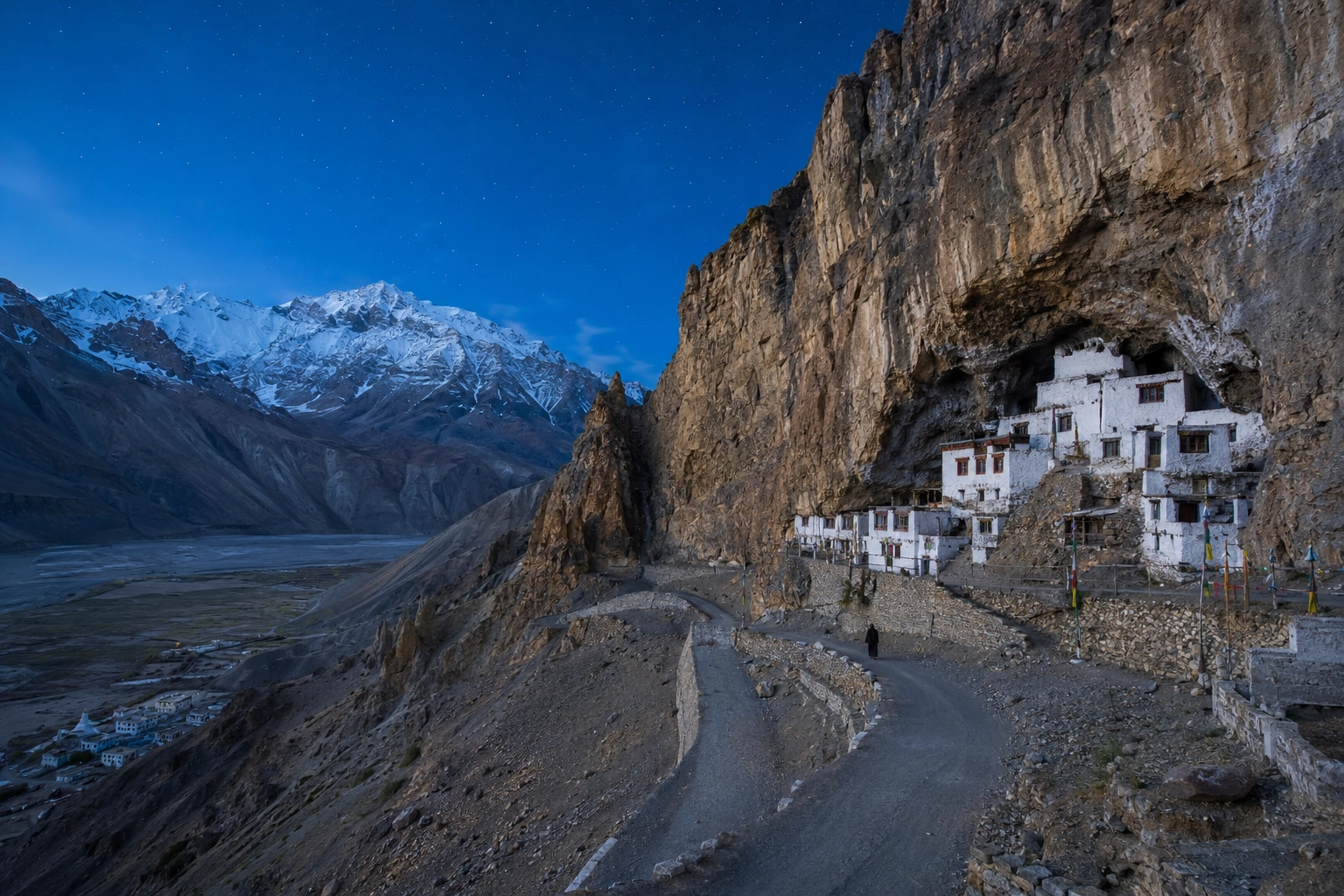
If one destination deserves the word “hidden,” it is Phuktal Monastery in the remote Lungnak Valley of Zanskar.
Phuktal, also written Phugtal, is built into the mouth of a natural cave on a dramatic cliff face. The monastery is part of Zanskar’s historic Buddhist landscape and is officially documented by the Ladakh administration as one of the region’s notable cave monasteries.
What makes Phuktal different is not simply its appearance.
There is no normal road that takes you directly to the monastery.
A traveler has to walk into the valley.
A 2026 traveler report on Reddit described the hike from Purne to Phuktal as roughly 2–3 hours each way and emphasized that the experience feels very different from the usual vehicle-based Ladakh circuit.
That difficulty is part of the attraction.
The remoteness also remains a practical reality. In 2025, a rockfall damaged parts of the monastery, and the administration subsequently assessed restoration requirements. Officials have also discussed road connectivity, solar power and other infrastructure needs around Phuktal.
Why Phuktal belongs on a hidden-Ladakh list
- Cliffside cave architecture
- Remote Lungnak Valley setting
- Historic Buddhist heritage
- Trek-based access
- Very different from the standard Leh sightseeing circuit
- Excellent choice for slow travel and serious photographers
Best for
Trekkers, photographers, heritage travelers and repeat Ladakh visitors.
Important reality check
Do not treat Phuktal as a quick sightseeing stop.
This is one of the offbeat Ladakh destinations where the journey is part of the destination.
2. Sumda Chun: A Thousand-Year-Old Heritage Site Most Road-Trippers Miss

Sumda Chun is the kind of place that explains why some of the best underrated places in Ladakh do not become famous overnight.
The village is associated with an early Tibetan Buddhist temple attributed to the period of Lotsawa Rinchen Zangpo, whose name is also connected with major heritage sites such as Alchi and Mangyu. The Sumda Chun temple contains historic Buddhist artwork and sculptures and has been the subject of conservation work.
The village itself is tiny.
That matters because Sumda Chun does not feel like a conventional tourist attraction. It feels like a living settlement with a historic religious site rather than a large commercial destination.
One particularly interesting piece of local history is that Sumda Chun remained without electricity until 2017. A road connection has since improved access, but the destination still retains a remote character.
The village is also officially present in Ladakh’s current administrative records, confirming that this is a real inhabited settlement rather than an internet-only “secret spot.”
What makes Sumda Chun special?
The attraction is the combination:
small village + ancient art + remote landscape + living Buddhist heritage.
Instead of spending an entire day moving between crowded viewpoints, Sumda Chun rewards travelers who are interested in history and local architecture.
Best for
Heritage travelers, photographers, architecture lovers and travelers who prefer cultural experiences over tourist attractions.
Travel note
Do not assume every historic site in Ladakh can be treated like a photo stop. Religious spaces are living places. Follow local instructions, ask before photographing people or interiors and avoid touching murals or sacred objects.
3. Rangdum: The Wild End of the Suru Valley

Rangdum is one of the strongest answers to the search for secret places in Ladakh if your definition of hidden is “far away from the standard tourist circuit.”
The Ladakh administration describes Rangdum as an ideal camping location in the Himalayan wilderness and identifies its 18th-century monastery as the area’s main attraction.
Rangdum sits deep in the Suru Valley on the road toward Padum and Zanskar.
The landscape changes dramatically as you approach it.
The greener sections of Suru Valley give way to a much harsher high-altitude landscape, with colorful mountains, rocky terrain and glaciers surrounding the broad Rangdum plateau.
Recent 2026 travel reporting continues to describe Suru Valley as a place many travelers simply pass through on their way toward Zanskar.
That is exactly why Rangdum works for an offbeat itinerary.
What you can experience around Rangdum
- Rangdum Monastery
- High-altitude valley landscapes
- Mountain and glacier views
- Camping and basic stays
- Access toward Pensi La and Zanskar
- A much quieter road experience than Ladakh’s major tourist corridors
The official Kargil tourism information places Rangdum about 130 km from Kargil and identifies it as a base for trekking routes.
Why Rangdum feels different
Rangdum is not designed around a single Instagram viewpoint.
The destination works because of the scale of the landscape and the feeling of isolation.
If Pangong is about the lake, Rangdum is about the valley itself.
Best for
Road-trippers, bikers, photographers, campers and travelers heading toward Zanskar.
4. Hanle: India’s Dark-Sky Destination That Still Feels Remote
Hanle is no longer a secret among serious astrophotographers, but it remains one of the most compelling hidden places in Ladakh for mainstream travelers.
Located roughly 4,500 metres above sea level and around 260 km from Leh, Hanle is known for extremely clear skies and low light pollution. The district administration describes it as an important astronomical location and home to the Indian Astronomical Observatory.
Ladakh Tourism now explicitly promotes astro-tourism and highlights Hanle among the region’s dark-sky experiences.
But the real-world experience is even more interesting than the tourism description.
Recent 2026 Reddit posts show astrophotographers repeatedly traveling to Hanle specifically to photograph the Milky Way. One June 2026 post received hundreds of positive reactions, while another described waiting through clouds before getting a short clear window for astrophotography.
That community feedback reveals something useful for travelers:
Hanle is not simply a place where you arrive and automatically get a perfect Milky Way photograph.
Weather matters.
Cloud cover matters.
Moon phase matters.
And patience matters.
What makes Hanle special?
During the day, the landscape can appear almost starkly empty.
At night, the attraction moves overhead.
The Indian Astronomical Observatory, high-altitude environment and low light pollution make Hanle particularly valuable for astronomy and astrophotography. The Ladakh administration also highlighted Hanle and the Indian Astronomical Observatory during its 2026 tourism promotion efforts.
Best for
Astrophotographers, stargazers, photographers, couples seeking quiet landscapes and travelers looking for a completely different Ladakh night experience.
One important warning
Do not plan Hanle around a single night if seeing the stars is the main reason for your trip.
Recent traveler reports show that clouds can completely change the experience.
5. Dha-Hanu: A Cultural Side of Ladakh Most Visitors Never Reach
If your idea of an offbeat Ladakh destination is more about people and culture than dramatic landscapes, Dha-Hanu deserves serious attention.
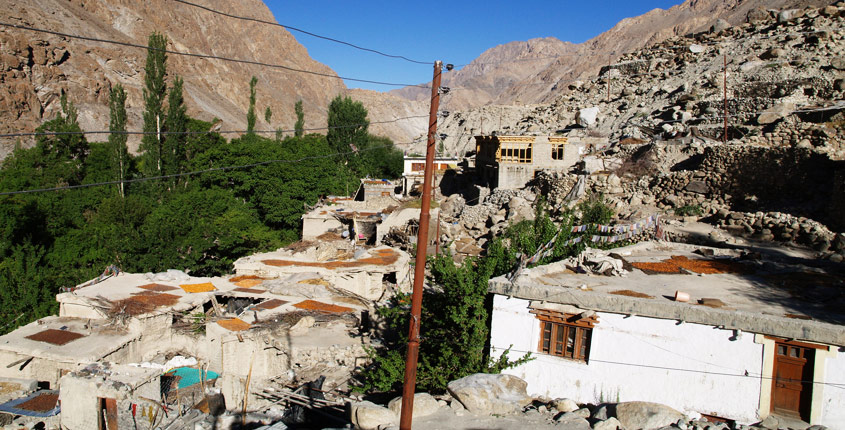
Dha and Hanu are part of the Dardic cultural landscape of western Ladakh and are among the villages recognized by the administration for their distinctive ethnographic and cultural significance. The official tourism circuit includes Dha, Hanu and other villages in the area.
The attraction is not a giant lake or a famous mountain pass.
It is the village itself.
Traditional dress, agricultural life, local festivals, architecture, orchards and community traditions make the area very different from the commercial side of Leh.
In April 2026, an Apricot Blossom Festival at Dha-Bema Lasthang brought together local performers and visitors from India and overseas, showing that the area is gradually becoming more visible as a cultural tourism destination.
The Kargil district also maintains a museum in Garkon focused on preserving local cultural heritage, including traditional objects, agricultural tools, clothing and religious artifacts.
Why Dha-Hanu is different
Most Ladakh itineraries ask:
“What can I see?”
Dha-Hanu asks:
“How do people live here?”
That makes it one of the more meaningful underrated places in Ladakh.
Best for
Cultural travelers, photographers, anthropologists, history enthusiasts and slow travelers.
Travel etiquette
This is a living community, not an open-air museum.
Ask before photographing residents, homes or ceremonies. Do not treat traditional clothing or religious practices as props for social media.
6. Saspol Caves: Ancient Paintings Hidden Behind a Village

Saspol is another excellent example of why the most interesting hidden places in Ladakh are sometimes much closer to the main road than travelers realize.
The Saspol Caves, also known as the Gon-Nila-Phuk cave temples, are located in the hills behind Saspol. Several caves contain historic paintings, with some dating to the late 14th or 15th century.
That is the kind of historical detail that can completely change how you look at the landscape around Leh.
From the road, the area can look like another rugged Ladakhi settlement.
But behind it are cave temples containing evidence of the region’s older Buddhist artistic traditions.
The caves are particularly interesting because early painted cave temples of this type are relatively rare in Ladakh.
Why Saspol is underrated
It offers something that Pangong cannot:
history you can literally see on the walls.
The destination is particularly valuable for travelers who are tired of collecting only landscape photographs.
Best for
History lovers, photographers, architecture enthusiasts and travelers interested in Buddhist art.
Photography warning
Ancient paintings are fragile.
Do not touch painted surfaces, use flash where prohibited or enter restricted areas simply for a better photograph.
7. Sani Monastery: The Zanskar Monastery That Breaks the Usual Rule
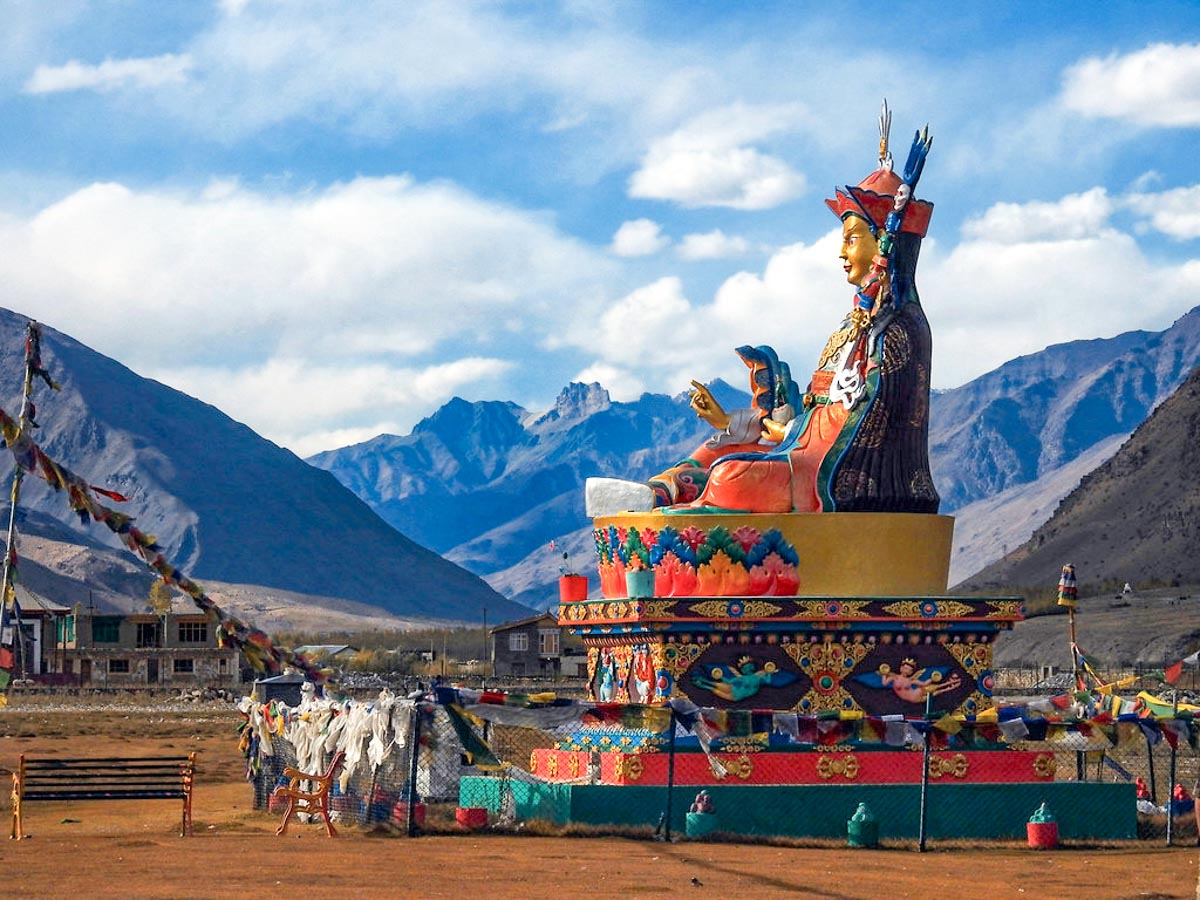
Most travelers imagine Ladakhi monasteries perched dramatically on cliffs or mountain slopes.
Sani Monastery is different.
The historic monastery stands on relatively level ground near Sani village, around 6–7 km from Padum. The official Ladakh information describes it as a castle-like monastery and notes its association with the Kanishka Stupa.
Its setting is one of the reasons it gets overlooked.
It does not have the instantly recognizable hilltop silhouette of some of Ladakh’s famous monasteries.
But historically and culturally, Sani is significant.
The monastery is associated with Zanskar’s Buddhist heritage, and monks from Sani continue to participate in major cultural events. The Ladakh administration has also highlighted Sani as a holy place and hosted the Zanskar Festival there.
In 2026, Ladakh Tourism lists the Zanskar Festival for September 15–16 at Sani, making it a particularly interesting destination for travelers who want to combine landscape travel with living culture.
Why Sani belongs on this list
It offers:
- Ancient Buddhist heritage
- A distinctive architectural setting
- Connection with Zanskar’s living culture
- Access from Padum
- A quieter alternative to Ladakh’s most photographed monasteries
Best for
Culture lovers, photographers, spiritual travelers and anyone exploring Zanskar beyond the obvious stops.
The 7 Hidden Places in Ladakh at a Glance
| Destination | Best Known For | Difficulty | Best For |
|---|---|---|---|
| Phuktal | Cave monastery | High | Trekking, heritage |
| Sumda Chun | Ancient temple and artwork | Moderate | History, culture |
| Rangdum | Wilderness and monastery | Moderate–High | Road trips, photography |
| Hanle | Dark skies and astronomy | Moderate | Stargazing |
| Dha-Hanu | Dardic cultural heritage | Moderate | Culture, photography |
| Saspol Caves | Historic cave paintings | Moderate | History, art |
| Sani | Zanskar Buddhist heritage | Moderate | Culture, architecture |
Which of These Hidden Places Is Actually the Most Remote?
Phuktal and Rangdum are among the strongest choices if remoteness is your priority.
Phuktal requires a trek into Lungnak Valley, while Rangdum lies deep along the Suru–Zanskar route and is officially described as a place of Himalayan wilderness and isolation.
If you want remoteness without a serious trek, Rangdum is the more practical choice.
If you want the feeling of reaching somewhere genuinely difficult, Phuktal is the stronger experience.
Which Hidden Place in Ladakh Is Best for Stargazing?
Hanle is the clear choice.
Its high altitude, low light pollution and astronomical infrastructure make it one of Ladakh’s most important astro-tourism locations.
But remember that astronomy is weather-dependent.
A perfect itinerary cannot guarantee a clear sky.
Which Offbeat Ladakh Destination Is Best for Culture?
Dha-Hanu and Sani stand out for different reasons.
Dha-Hanu offers a living village-based cultural experience, while Sani provides access to Zanskar’s Buddhist monastic heritage. The administration continues to promote cultural events and infrastructure in both regions.
Which Hidden Place Is Best for History?
If your interest is ancient Buddhist art, Saspol Caves and Sumda Chun are particularly compelling.
Saspol is notable for its painted cave temples, while Sumda Chun is associated with an early Tibetan Buddhist temple and important historic artwork.
These are excellent choices for travelers who want to understand Ladakh rather than simply photograph it.
When Is the Best Time to Visit These Hidden Places in Ladakh?
There is no single answer because these destinations sit in different geographic and climatic zones.
For many high-altitude road destinations and Zanskar routes, summer into early autumn generally offers the most practical access, but exact road conditions can change from year to year.
Ladakh Tourism currently identifies May–October as the broader season for many outdoor landscape experiences and June–September for major adventure activities.
For individual destinations, always check the latest road, weather and local-access situation before departure.
For Phuktal
Plan around the trekking and road-access season rather than assuming the monastery is accessible year-round.
For Hanle
Choose nights based on both weather and moon conditions if stargazing is your priority.
For Rangdum
Road and weather conditions matter considerably because of its remote position on the Kargil–Padum route.
For Dha-Hanu
Spring can be especially interesting because of apricot blossom events, although the exact timing varies.
The April 2026 festival at Dha-Bema Lasthang demonstrates the area’s growing cultural-tourism calendar.
How to Visit the Secret Places in Ladakh Without Damaging What Makes Them Special
This is where “hidden places” travel needs a different philosophy.
The more successful a social-media post becomes, the less hidden a place becomes.
That is already happening across Ladakh.
The region’s official tourism strategy now emphasizes eco-tourism, low-impact stays, local conservation and responsible travel.
So the goal should not be:
“How do I find a place nobody knows about?”
A better goal is:
“How do I visit a lesser-known place without turning it into the next overcrowded attraction?”
Follow these rules
Stay locally when possible.
Homestays and local guesthouses can keep more tourism spending within the community.
Do not enter religious spaces without permission.
Do not touch ancient murals or artifacts.
Carry your waste back.
Avoid flying drones near monasteries, villages, wildlife or sensitive areas unless you have the required permission.
Do not photograph people without consent.
Do not assume mobile connectivity, ATMs or fuel will be available in remote areas.
Keep extra time in your itinerary.
That final point is especially important.
Hidden Ladakh is not compatible with an itinerary where every stop is scheduled down to the minute.
Are These Places Really “Hidden” Anymore?
Not completely.
And that is an important distinction.
Search results now contain dedicated guides to hidden Ladakh, and destinations such as Hanle and Phuktal increasingly appear in travel content and social-media posts. Recent Reddit discussions show that Hanle has developed a recognizable astrophotography community, while Phuktal is also being shared by travelers as an off-the-beaten-path experience.
So calling these destinations “secret” in the literal sense would be misleading.
They are better described as:
less mainstream, lower-volume, harder-to-reach or culturally overlooked destinations.
That is actually more useful to travelers.
The goal is not to discover a place that has never been photographed.
The goal is to experience a side of Ladakh that most short itineraries still leave out.
How These Hidden Places Fit Into a Larger Ladakh Trip
You do not necessarily need a completely separate trip for all seven.
Some can be combined naturally.
Route idea 1: Heritage-focused Ladakh
Leh → Saspol → Sumda Chun → Dha-Hanu
This works for travelers interested in art, village life and cultural heritage.
Route idea 2: Zanskar-focused adventure
Kargil → Suru Valley → Rangdum → Pensi La → Padum → Sani → Phuktal
This is much more demanding and should be planned around current road and trekking conditions.
Route idea 3: Astro + Changthang
Leh → Changthang → Hanle
This makes sense for travelers whose priority is night-sky photography rather than monastery-hopping.
These are examples, not fixed itineraries. Current road conditions, weather, local regulations and access restrictions should determine the final route.
The Bigger Story: Ladakh Is More Than Pangong and Nubra
The popularity of Ladakh has created a strange paradox.
The region is now globally recognizable, but many of its most interesting experiences remain relatively obscure.
A visitor can spend several days photographing the same famous landscapes without ever seeing the ancient caves near Saspol, walking toward Phuktal, sitting under the stars in Hanle, exploring the cultural landscape of Dha-Hanu or reaching the wilderness of Rangdum.
That is why the best hidden places in Ladakh are not necessarily the places with the fewest Google results.
They are the places where the experience still feels connected to the landscape, history and people who live there.
Phuktal offers isolation.
Sumda Chun offers heritage.
Rangdum offers wilderness.
Hanle offers the night sky.
Dha-Hanu offers culture.
Saspol offers ancient art.
Sani offers living Zanskari Buddhist heritage.
Together, they reveal a different Ladakh.
And for travelers who have already seen the standard itinerary, that may be the most rewarding Ladakh of all.
FAQ
What are the hidden places in Ladakh?
Some of the most worthwhile lesser-known destinations include Phuktal Monastery, Sumda Chun, Rangdum, Hanle, Dha-Hanu, Saspol Caves and Sani Monastery. They offer a mix of remote landscapes, ancient Buddhist heritage, cultural experiences and dark-sky tourism.
What are the best secret places in Ladakh beyond Pangong Lake?
For a genuinely different experience, consider Phuktal, Rangdum, Sumda Chun, Saspol Caves and Dha-Hanu. These destinations are less central to the standard Leh–Nubra–Pangong circuit.
What are the most underrated places in Ladakh?
Rangdum, Sumda Chun and Saspol Caves are particularly underrated because they offer major landscape or heritage value without the same mainstream recognition as Pangong Lake or Nubra Valley.
What are the best offbeat Ladakh destinations for 2026?
Phuktal, Rangdum, Hanle, Dha-Hanu, Sumda Chun, Saspol and Sani are strong choices for travelers seeking experiences outside the conventional Ladakh itinerary. Ladakh Tourism itself is expanding its focus toward remote valleys, heritage, astro-tourism, trekking and eco-tourism.
Which hidden place in Ladakh is best for stargazing?
Hanle is the strongest choice because of its high altitude, exceptionally dark skies and the presence of the Indian Astronomical Observatory.
Is Phuktal Monastery difficult to reach?
Yes. Phuktal is among the more demanding destinations on this list because the final approach requires walking or trekking into the remote Lungnak Valley. Recent traveler reports describe the Purne–Phuktal hike as roughly 2–3 hours each way, depending on conditions and pace.
Is Hanle still a hidden place in Ladakh?
It is becoming less hidden. Hanle is increasingly known among astrophotographers and is actively promoted through Ladakh’s astro-tourism initiatives. However, it remains far less mainstream than destinations such as Pangong and Nubra.
Which hidden place in Ladakh is best for culture?
Dha-Hanu is one of the strongest choices for cultural travel, while Sani is particularly valuable for Buddhist and Zanskari heritage. Official tourism and cultural events continue to promote both regions.
Can I visit these places independently?
Some can be incorporated into independent road trips, while destinations such as Phuktal require more serious planning. Remote Ladakh routes can have changing road, weather, connectivity and accommodation conditions, so travelers should confirm current local conditions before leaving.
What should I carry for offbeat Ladakh travel?
Carry sufficient water, medicines, warm layers, sun protection, essential documents, offline maps, power banks and enough cash for remote sections. Do not assume that every village will have reliable mobile connectivity, fuel, ATMs or medical facilities.
Are these places suitable for a first-time Ladakh visitor?
Some are. Hanle, Saspol and Dha-Hanu can be more approachable depending on the route, while Phuktal and Rangdum are better suited to travelers who are comfortable with longer journeys and fewer facilities.