




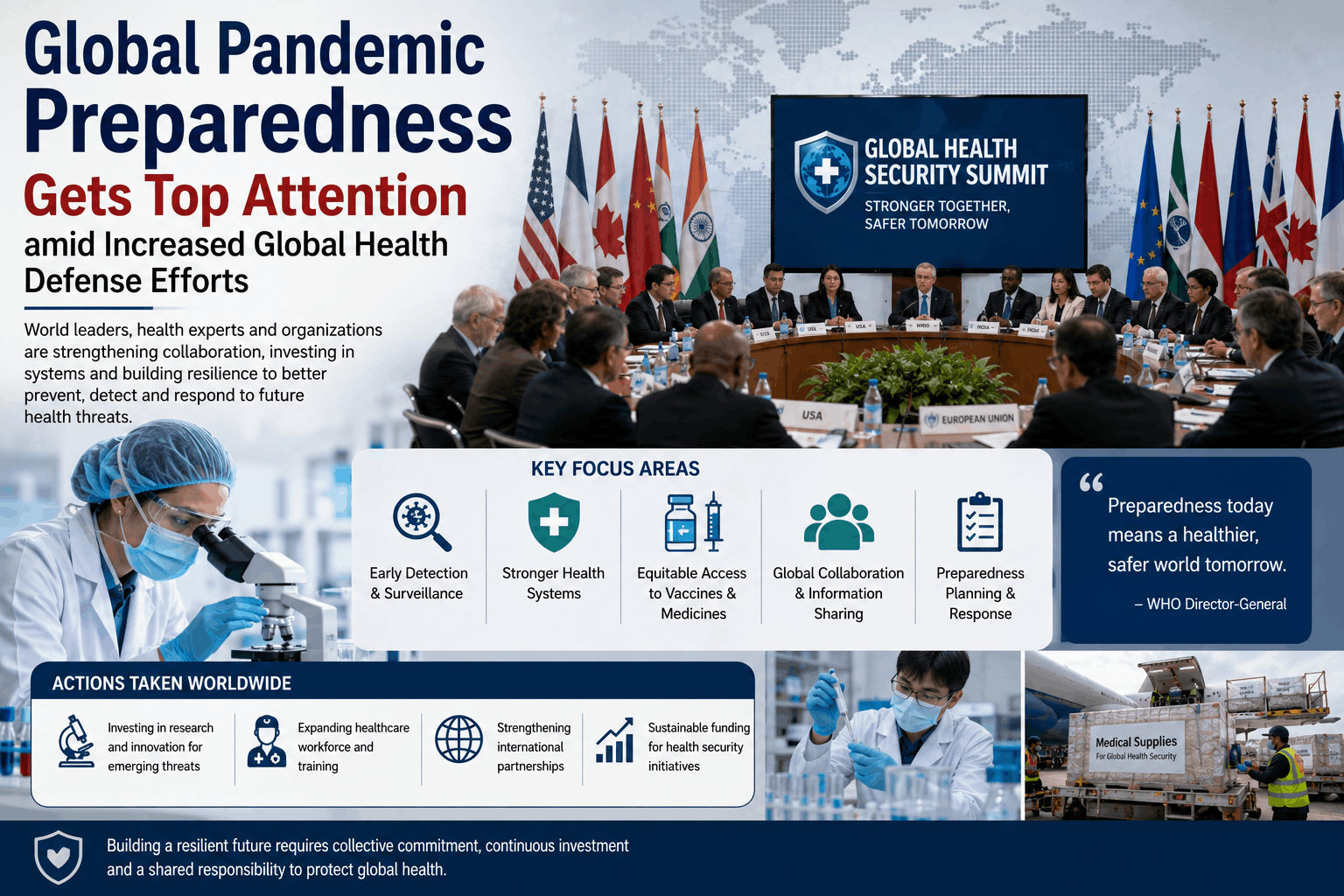
Pandemic Preparedness – Pandemic preparedness has emerged as one of the top priorities for many countries around the globe due to the growing necessity to prepare for future infectious disease outbreaks. The experience of outbreaks such as the one with the COVID-19 virus shows how quickly such diseases can spread across countries and put immense pressure on the economy and the health care system.
Several countries have increased their efforts in such spheres as disease surveillance, vaccine development, medicine, medical supplies, and emergency response. According to experts, preparedness is not about reacting to the pandemic but about being able to anticipate the risks and respond quickly.
Early Detection Continues to Be a Crucial Part of Pandemic Preparedness
First of all, one of the key elements of any pandemic preparedness strategy is early detection.
Strengthening Surveillance Capabilities
National and international health organizations continue to improve disease surveillance networks that help detect the presence of infectious diseases in communities, hospitals, and laboratories. Such networks help officials spot unusual trends in disease incidence and investigate them until infections begin to occur more often.
In addition, the modern system of monitoring includes the use of various modern technologies as well as digital data analysis. Researchers analyze data from laboratories, hospitals, and other sources to identify the emergence of such diseases.
However, experts also note that surveillance should be combined with rapid communication because only the ability to communicate will make it possible to react quickly once the risk of an outbreak is detected.
Increasing Vaccine and Treatment Production Capabilities
Secondly, the ability to produce vaccines and treatments is another crucial part of pandemic preparedness.
COVID-19 pandemic has shown the importance of having adequate research facilities, manufacturing capacity, and supplies for a quick reaction to the emergence of an infectious disease. Therefore, many governments and scientific organizations invest in the improvement of vaccine platforms and research into infectious diseases.
Flexibility of Manufacturing System
The flexible manufacturing system will help companies and governments to boost production once there is a health emergency. This is especially important in the initial period of the pandemic when the number of patients seeking vaccines, medicines,s and protective equipment rises significantly.
Moreover, international cooperation is also very important because a pandemic does not stay within national borders and makes it hard to contain the disease with unequal access to vaccines and medical supplies.
Health Care System Prepares for Patient Surge
In turn, healthcare systems are still among the most important elements of pandemic preparedness because hospitals face a lot of shortages during outbreaks: from bed shortages to shortages of medicines and medical personnel.
Training of Healthcare Workers
The training and protection of medical personnel are considered to be necessary because doctors, nurses, laboratory workers, emergency workers, and other medical professionals can face additional risks when an infectious disease outbreak emerges.
Moreover, hospitals review their emergency plan in order to find out how to provide additional capacity in case of a surge in patient numbers. Such measures may include finding additional areas to provide treatment to patients, maintaining emergency supplies, and developing the process of relocating the workforce and resources.
According to the experts, the above measures are also helpful in cases of non-pandemic emergencies and can help deal with natural disasters and other health crises.
Cooperation between countries is very important.
Pandemic preparedness cannot be achieved without the cooperation of several countries. Infectious diseases can spread very quickly between regions via travel, trade, etc.
Information Exchange Across Borders
International cooperation provides an opportunity to exchange information about the emergence of the disease, laboratory results, and developments in public health. The quick exchange helps to make an informed decision.
In addition, global health organizations help to support countries that do not have enough resources and help to strengthen the health system in different regions, thus improving the world’s capability to deal with any outbreak.
The emphasis on cooperation has grown significantly following the experience of the COVID-19 pandemic,c during which there were different levels of access to tests, vaccines, protective equipment, and medical facilities.
Communities Have Their Role Too
Even though many preparations are carried out by governments and health organizations, experts note that communities also have an important role in pandemic preparedness.
Public Awareness
Awareness of the population can help people understand recommendations provided during a pandemic and appreciate measures aimed at protecting vulnerable groups of the population.
Public Trust
The ability to communicate clearly and provide correct information becomes especially important during a health emergency because confusing information will make it harder to understand which actions should be taken.