



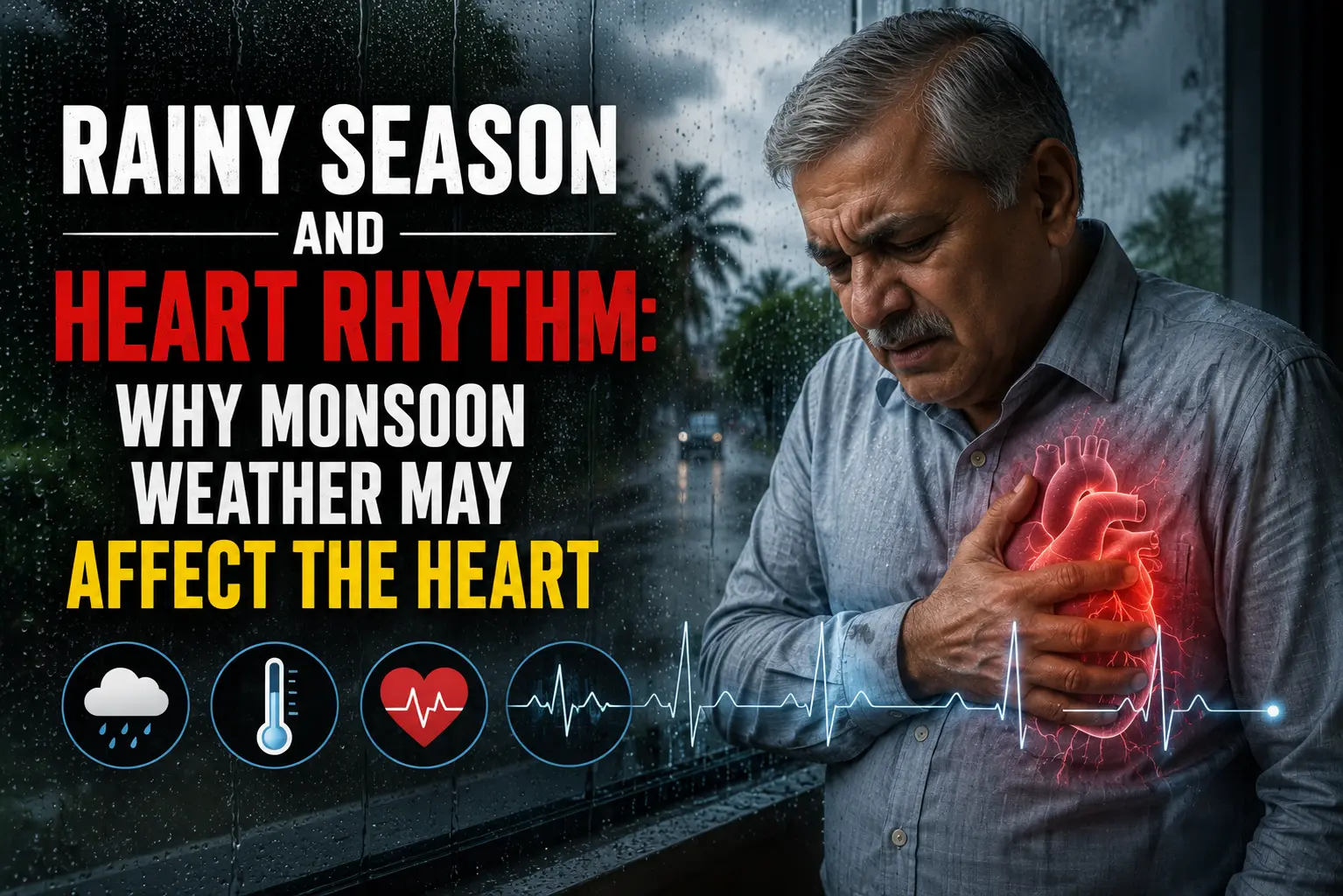
New Delhi: The monsoon brings the most lovey-dovey moments for couples, cooler weather for normal people, and high humidity for the larger part of India. Most of the doctors are urging that the people who have the medical history with the heart condition need to pay attention to changes in their cardiovascular symptoms. While these rainy seasons do not directly cause an abnormal heartbeat, fluctuations in humidity, temperature, hydration, and daily routines may influence heart health to the vulernable indivduals.
The connection between rainy seasons and heart rhythm is gaining attention from both individuals and professional doctors. This attention has led to research on this topic and how the rainy season affects the conditions of people with cardiovascular conditions.
Why Does Monsoon Weather for Heart?
High humidity can make it difficult for the body to regulate temperature because the evaporation of sweat is not effective for the body. This may increase cardiovascular strain, particularly among people with heart failure, coronary artery disease, hypertension, or other underlying conditions.
There is a study published in JACC: the study provides the information that exposure to extreme humidity was associated with a 23% that increases the risk of ventricular tachycardia or ventricular fibrillation among patients with implemented cardic devices. This research noted that the association was particularly important for people with existing cardiovascular conditions.
However, experts provides the cautions against assuming that every episode of high humidity or rainfall will trigger an arrhythmia. Weather-related effects can vary considerably from person-to-person.
Rainy Season Heart Health: More Than Just Humidity
This has an impact on monsoon rainy-season heart health, which can also involve dehydration, infections, reduced physical activity, and changes in medication or eating routines.
Fever and infections can place additional stress on cardiovascular health, while dehydration and electrolyte disturbances may contribute to the plapilation is susceptible to individuals. It reduces outdoor activity during the prolonged rainfall and may also affect the body’s blood system of the body, weight, and overall cardiovascular fitness.
What Symptoms Should Not Be Ignored?
During the peak monsoon period, people should not automatically attribute the new symptoms to the weather.
Persistent or recurrent palpitations, pain in the chest, unusual breathing rate, dizziness, fainting, or a very rapid to the irregulars heartbeat can be warning signs for people who especially have a history of medical conditions.
Patients who are already taking medicines for blood pressure, heart failure, or an arrhythmia must continue their prescribed medicines and treatment with their doctors.
Simple Steps for Better Monsoon and Heart Health
Usually, doctors recommended the maintaing the ideal level of hydration with a balanced diet. People with heart problems or other conditions who need to follow fluid restrictions should follow the specific fluid advice given by their health care professional.
Read More..
Dehradun: दून में बदलते मौसम का असर, डॉक्टरों ने दी खानपान और लाइफस्टाइल सुधार की सलाह