

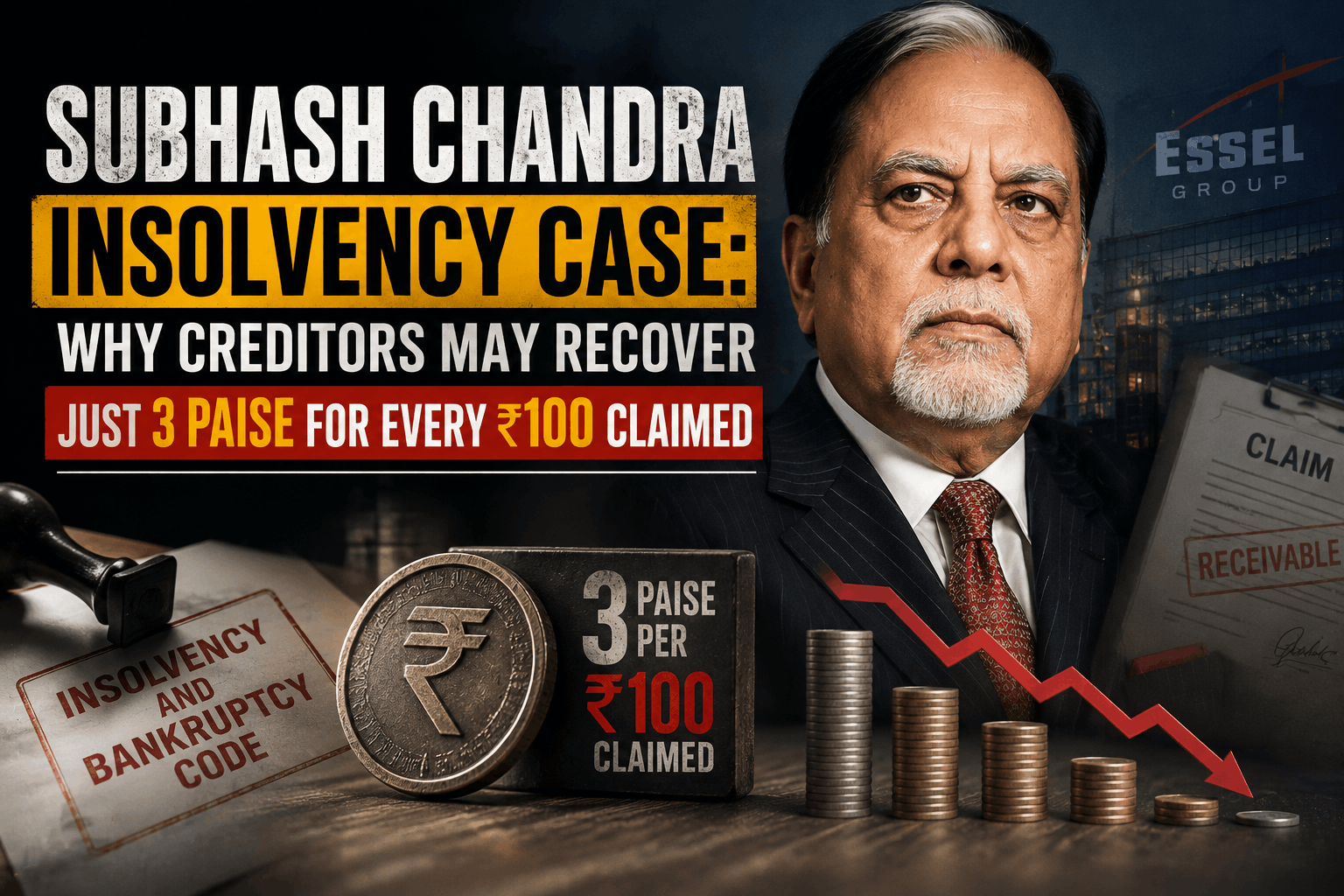
The National Company Law Tribunal has sanctioned a repayment scheme under which creditors are likely to get close to ₹ 6.5 crore in Subhash Chandra’s personal insolvency proceedings against admitted claims of ₹ 22,006.57 crore. This equates to about 0.03% recovery, or 3 paise to a hundred, the implied haircut is of approximately 99.97%.
But this shocking recovery figure does not imply that the NCLT has waived off ₹ 22,000 crore of debt willy-nilly. The NCLT took into consideration the law relating to insolvency and creditors’ decision along with Chandra’s personal assets in possession and if creditors can recover more in bankruptcy proceedings.
Subhash Chandra Insolvency Case: Key Numbers at a Glance
| Particular | Amount / Status |
| Admitted creditor claims | ₹22,006.57 crore |
| Repayment plan | About ₹6.5 crore |
| Approximate recovery | 0.03% |
| Approximate recovery per ₹100 claimed | 3 paise |
| Approximate haircut | 99.97% |
| Creditor voting support | 80.81% |
| Initial loan linked to the proceedings | ₹170 crore |
| Insolvency application | Filed in 2022 |
The 80.81% voting figure is particularly important because the tribunal gave significant weight to the commercial decision of the majority of creditors.
Why Is the Recovery Only 3 Paise for Every ₹100?
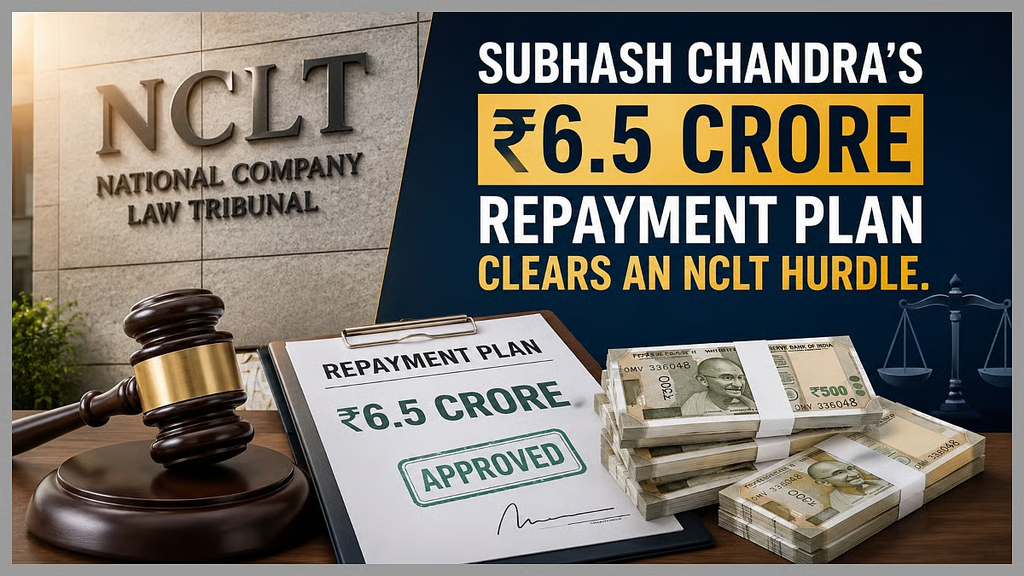
The simplest explanation is that the repayment amount is based on what the insolvency process indicates can realistically be recovered, rather than on the total amount originally claimed by creditors.
The admitted claims may total ₹22,006.57 crore, but that does not automatically mean ₹22,006.57 crore is available in cash or assets for distribution.
The tribunal considered the value of Subhash Chandra’s personal assets and the possible outcome if the repayment plan failed and the process moved toward bankruptcy. According to the NCLT reasoning reported from the order, creditors could potentially recover even less in a bankruptcy scenario.
In other words, the central question was not simply:
“Why should creditors accept ₹6.5 crore against ₹22,006 crore?”
The more relevant insolvency question was:
“Would creditors realistically recover more if this repayment plan were rejected?”
The tribunal concluded that rejecting the plan was unlikely to produce a better recovery for creditors.
How Much Is 3 Paise per ₹100?
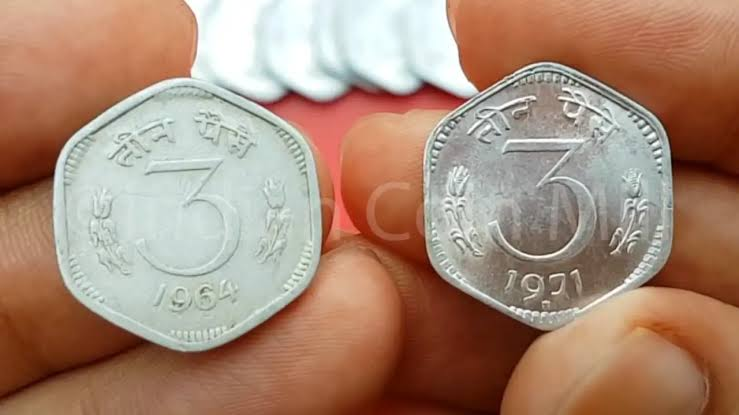
The math is easy : 6.5 cr 22,006.57 cr 100 0.0295 % that comes out to roughly 0.03 %recovery. In terms of per 100 : 100 0.0295 % 0.0295 So it is about 3 paise per 100 claimed.
The rest comes out to about 99.97 % haircut. The only reason why this matter got much attention is the huge divide between the admitted claims and what is being offered.
Why Did NCLT Approve the Repayment Plan?
There are three major factors to understand.
1. The majority of creditors supported the plan
Creditors representing approximately 80.81% of the voting share supported the repayment plan.
Some lenders opposed it, but their combined voting share was below 20%.
Under the insolvency framework, creditor decisions receive substantial weight because lenders are generally better positioned than the tribunal to assess commercial recoveries.
2. NCLT considered the realistic recovery scenario
The tribunal considered Chandra’s personal assets and the possibility that creditors could receive even less if the repayment plan failed and bankruptcy followed.
That made the comparison less about ₹6.5 crore versus ₹22,006 crore and more about ₹6.5 crore versus the likely recovery from an alternative insolvency outcome.
3. The tribunal’s role is not to replace creditor commercial judgment
The NCLT’s reasoning emphasized the distinction between judicial supervision and commercial decision-making.
Where creditors have taken a decision within the legal framework, the tribunal does not ordinarily substitute its own commercial assessment simply because it believes another recovery amount would be preferable.
What Was the Original Loan Behind the Case?
The personal insolvency proceedings relate back to the same credit facility linked to Vivek Infracon. “Subhash Chandra, had in his capacity as personal guarantor, extended credit facilities for amounts of $170 crore and after loan recall by the lender, Indiabulls Housing Finance had lodged a claim against Chandra.”
The creditor’s insolvency application was lodged with the authorities in 2022 and the same stood admitted, proceeding with personal guarantor (under IBC) aspects.
Indiabulls Housing Finance was later renamed Sammaan Capital.
Why Did the Case Take So Long?

Background On February 6, the NCLT ordered that personal insolvency proceedings initiated by the Indiabulls Housing Finance Limited against Chandra would stand confirmed by the creditor as soon as Indiabulls obtains necessary clearances on the personal resolution plan. The case, over the period, has undergone multiple litigation and procedural steps The insolvency proceedings were initiated against Chandra by Indiabulls Housing Finance in the year 2022. A litigation with respect to the applicability of personal-guarantor provisions of the Insolvency and Bankruptcy Code, 2016, played spoilsport for insolvency proceedings.
Following the Supreme Court clearing these IBC provisions in November 2023, the proceedings were reignited in 2024 with NCLT admitting the personal insolvency proceedings against Chandra.
Eventually, Creditors discussed the repayment plan with voting which culminated into discussions on the approval and it was conducted in late October-early November 2024. In NCLT records subsequently one finds subsequent challenges, applications filed by Chandra challenging creditor meeting, payment plan.
What Happened Inside the NCLT?
The resolution was not by unanimity.
The original 2 member tribunal had also delivered a dissent. Consequently, to address the areas of differences between the two, a third member, Nilesh Sharma was brought into the tribunal which gave an approval of the resolution scheme to be allowed under Section 114 of the code, in this order the NCLT mentioned in their order that the resolution scheme also got 80.814% of voting of the creditors. From there it will be sent back to the correct bench.
Why Did Some Creditors Oppose the Plan?
Not every creditor agreed that the proposed recovery was acceptable.
One prominent example was LIC Housing Finance, whose admitted claim was reported at approximately ₹1,322.39 crore. The repayment proposed against that claim was only around ₹38 lakh.
From a creditor’s perspective, the objection is understandable: a recovery of that scale represents only a tiny fraction of the outstanding claim.
The broader legal issue, however, was whether the tribunal could override the commercial decision of creditors who collectively supported the plan.
The NCLT ultimately gave substantial weight to the majority creditor vote within the applicable legal framework.
Does the ₹22,000 Crore Simply Disappear?
Not exactly.
The phrase “₹22,000 crore debt cut to ₹6.5 crore” is useful as a headline, but it can be misleading if interpreted literally.
The more precise explanation is:
Creditors had admitted claims totalling approximately ₹22,006.57 crore, while the approved repayment plan provides approximately ₹6.5 crore for distribution under the insolvency process.
The plan determines the recovery available to creditors through this process. It does not mean ₹22,000 crore in cash existed and was physically written off from a bank account.
This distinction is important when discussing insolvency cases.
What Does “Haircut” Mean in an Insolvency Case?
A haircut is the portion of an admitted claim that a creditor does not recover through a resolution or repayment process.
For example, if a creditor is owed ₹100 and receives ₹40, the recovery is 40% and the haircut is 60%.
In this case, the approximate figures are:
- Claim: ₹100
- Recovery: about ₹0.03
- Unrecovered amount: about ₹99.97
- Haircut: approximately 99.97%
The unusually large haircut is the primary reason the case has generated widespread attention.
Does NCLT Decide How Much a Creditor Should Recover?
Not in the same way a bank or creditor would make a commercial lending decision.
The tribunal’s role includes assessing whether the proposed plan satisfies the applicable legal requirements. But the insolvency framework also gives considerable importance to the commercial decision of creditors.
In this case, the NCLT reasoned that it could not simply replace the commercial assessment of creditors with its own preferred recovery figure when the plan had received the required majority support and operated within the statutory framework.
What Does This Case Mean for Personal Insolvency in India?
The case could become significant because it highlights the difficult balance between creditor recovery, debtor assets and commercial wisdom in personal-guarantor insolvency proceedings.
It also demonstrates why the amount of a creditor’s admitted claim and the amount ultimately recoverable can be dramatically different.
However, it would be premature to describe this single case as establishing a blanket rule that creditors will receive similarly low recoveries in future personal insolvency cases.
Each case depends on its facts, including:
- The debtor’s assets and liabilities
- The nature of the guarantees
- The claims admitted in the process
- The repayment or resolution proposal
- Creditor voting
- Applicable provisions of the IBC
- The tribunal’s assessment of the proposed plan
What Is the Biggest Takeaway From the Subhash Chandra Case?
The most important takeaway is that an insolvency claim is not the same thing as a guaranteed recovery.
Subhash Chandra’s case illustrates the difference particularly starkly: creditors had admitted claims of approximately ₹22,006.57 crore, but the approved repayment plan provides about ₹6.5 crore, equivalent to approximately 0.03% of the admitted claims.
The NCLT’s decision focused not only on the size of the claims but also on the available assets, the alternatives to the repayment plan and the commercial decision of the creditor majority.
That is the key to understanding why a seemingly extraordinary 99.97% haircut could receive tribunal approval.
Frequently Asked Questions
What is the Subhash Chandra insolvency case?
It is a personal insolvency proceeding involving Zee Group founder Subhash Chandra, initiated after a lender sought recovery under the IBC in connection with a guaranteed loan.
How much did creditors claim from Subhash Chandra?
The admitted creditor claims were approximately ₹22,006.57 crore.
How much will creditors receive under the repayment plan?
The approved repayment plan provides approximately ₹6.5 crore.
Why are creditors getting only 3 paise per ₹100?
Because ₹6.5 crore represents only about 0.03% of the ₹22,006.57 crore in admitted claims. The NCLT also considered the debtor’s available assets and whether rejecting the plan could produce a better recovery.
What is the haircut in the Subhash Chandra case?
The approximate haircut is 99.97%, based on the ₹6.5 crore repayment against ₹22,006.57 crore in admitted claims.
Which loan triggered the insolvency proceedings?
The proceedings trace back to a ₹170-crore loan involving Vivek Infracon, for which Subhash Chandra had provided a personal guarantee.
Did all creditors approve the repayment plan?
No. Creditors representing approximately 80.81% of the voting share supported the plan, while some lenders opposed it.
Did the NCLT unanimously approve the plan?
No. The original two-member tribunal delivered a split verdict. A third member, Nilesh Sharma, was subsequently appointed to resolve the disagreement and approved the plan under Section 114 of the IBC.
Does approval mean creditors will later receive the remaining ₹22,000 crore?
No. The approved repayment plan determines the recovery available to creditors through this insolvency process. The ₹22,000-crore figure represents the admitted claims, not an amount that will necessarily be paid in full later.
Is this a precedent for every personal insolvency case in India?
Not automatically. The outcome is based on the facts and legal circumstances of this particular case. Future personal insolvency proceedings will depend on their own claims, assets, creditor decisions and statutory requirements.