



UAE Missile Threat: What Happened After the Emergency Alert?
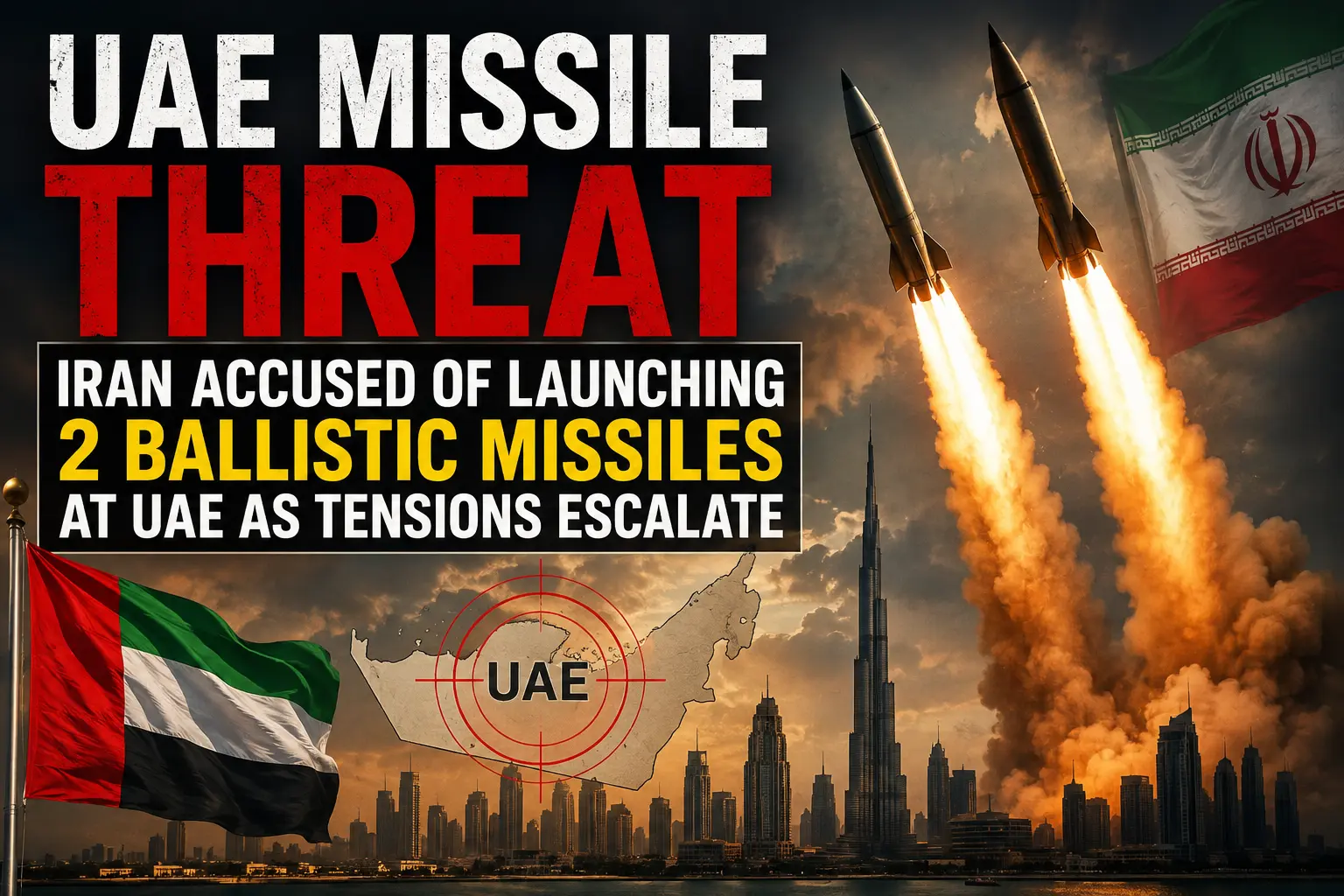
The United Arab Emirates faced a fresh missile threat on August 18, 2026, after its air-defense systems detected two ballistic missiles that the UAE says were launched from Iran. The incident triggered an emergency alert asking residents to move to a safe place, but authorities later said the situation had returned to normal.
The incident has added another layer of tension to the already volatile relationship between Iran and the UAE, with the wider Middle East facing ongoing military and maritime-security concerns.
According to the UAE Ministry of Defence, both missiles ultimately fell into the sea. The ministry later assessed that the missiles were targeting maritime traffic, rather than striking populated areas. Iran has denied the UAE’s accusation.
UAE Missile Threat: What Did the UAE Say?
On Tuesday, August 18, UAE authorities issued an emergency warning after the country’s air-defense systems detected a potential missile threat.
The National Emergency Crisis and Disaster Management Authority (NCEMA) instructed residents to remain in a safe location while the threat was being assessed.
The alert was later lifted, with authorities saying the situation was safe and normal activities could resume while residents remained cautious.
The UAE Ministry of Defence subsequently provided more details, saying its air-defense systems had detected two ballistic missiles launched from Iran.
According to the ministry, both missiles fell into the sea. Reuters reported that the UAE said one missile fell outside its territorial waters and another fell within them.
Did Iran Attack the UAE?
This is where the story requires careful wording.
The UAE says the missiles were launched from Iran. Iran denies the accusation.
Therefore, the most accurate description is that the UAE has accused Iran of launching two ballistic missiles toward the UAE, while Tehran has rejected the allegation.
Reuters reported that Iran called the accusation baseless. The UAE’s claim could not independently establish the launch location beyond the evidence cited by its authorities.
For news readers, this distinction matters because the allegation remains contested.
Were Dubai or Abu Dhabi Hit?
There is no indication from the latest official reporting that a missile struck Dubai or Abu Dhabi in the August 18 incident.
The UAE said the two detected ballistic missiles fell into the sea. The emergency alert was precautionary and was subsequently lifted.
Social media quickly filled with reports and videos claiming explosions or missile interceptions. However, individual social-media posts should not be treated as confirmation unless they are backed by UAE authorities or reliable reporting.
There is no verified evidence in the latest reports that a major missile impact occurred in Dubai or Abu Dhabi during this incident.
Why Was an Emergency Alert Sent?
The UAE has a national early-warning system designed to alert residents when authorities detect potential threats.
The August 18 alert was issued after the country’s air-defense network detected the missile threat. Residents were asked to move to a safe location while authorities assessed the situation. The alert was later cancelled after authorities determined that the immediate danger had passed.
The system is designed to prioritize public safety rather than wait until an incoming threat has caused damage.
That means receiving an emergency alert does not automatically mean a missile has struck the country.
Why Is the UAE Facing Missile Threats?
The latest incident comes amid a much broader escalation involving Iran, the United States and other regional actors.
The UAE has previously reported Iranian missile and drone attacks during the current regional conflict. UAE authorities have repeatedly said that the country is not seeking escalation but reserves the right to defend its territory and sovereignty.
The UAE has also repeatedly stated that it does not allow its territory, airspace or territorial waters to be used for military action against Iran.
Despite that position, the UAE has increasingly found itself exposed to regional military and maritime risks.
Strait of Hormuz Adds to the Risk
The latest missile incident also comes against the backdrop of growing tensions around the Strait of Hormuz, one of the world’s most important energy and shipping routes.
The UAE has accused Iran of attacks on vessels linked to its state-owned energy company ADNOC while they were transiting the Strait of Hormuz. Tehran has rejected some of the accusations made against it.
The UAE has called for the waterway to remain open and has warned that attacks on commercial shipping could threaten global trade and energy security.
For the global economy, the significance goes far beyond the UAE.
Any prolonged disruption around the Strait of Hormuz could affect oil shipments, shipping costs, insurance rates and global supply chains.
UAE Takes Tougher Economic Action Against Iran
The missile incident has also had an economic and diplomatic impact.
On August 19, the UAE announced the suspension of trade, commercial exchanges and financial transactions with Iran until further notice, according to reports citing the UAE Foreign Ministry. The move followed the latest escalation and represents a significant deterioration in economic ties between the two countries.
The decision comes as investors are already watching the region closely.
Reuters reported that UAE stock markets fell on Wednesday following the missile scare. Abu Dhabi’s main index declined 0.9%, while Dubai’s index fell 0.2%.
What Does This Mean for People in the UAE?
For residents and visitors, the most important point is to follow official emergency instructions rather than social-media rumors.
If an emergency alert is received:
- Move to a safe indoor location.
- Follow instructions from UAE authorities.
- Avoid unnecessary travel during an active alert.
- Do not approach areas where emergency operations are underway.
- Avoid sharing unverified videos or claims.
- Check official government channels for updates.
The UAE’s emergency-management authorities have repeatedly urged residents to rely on official sources and follow safety instructions during periods of heightened regional tension.
Is There Still a Missile Threat to the UAE?
The August 18 emergency alert was lifted after authorities assessed that the immediate situation had returned to normal.
However, regional tensions remain high, and the UAE continues to monitor potential missile, drone and maritime threats.
The UAE Ministry of Defence has said it remains prepared to respond to threats and protect the country’s sovereignty, security and critical infrastructure.
That means the situation can change quickly, particularly while military tensions involving Iran and the wider Gulf region continue.
UAE Missile Threat: What We Know vs What We Don’t
| Confirmed/Reported | Status |
|---|---|
| UAE issued an emergency missile warning | Confirmed |
| Two ballistic missiles were detected | Confirmed by UAE |
| UAE says they were launched from Iran | UAE allegation |
| Iran launched the missiles | Denied by Iran |
| Both missiles fell into the sea | UAE statement |
| Dubai was hit by a missile | Not supported by latest reports |
| Abu Dhabi was hit by a missile | Not supported by latest reports |
| Emergency alert was later lifted | Confirmed |
| UAE suspended trade with Iran | Reported on Aug. 19 |
What Happens Next?
The biggest question now is whether the latest incident remains an isolated escalation or becomes part of a wider cycle of attacks and retaliation.
The UAE has signaled that it wants to protect its territory while avoiding unnecessary escalation. At the same time, the suspension of trade and financial dealings with Iran shows that the consequences are no longer limited to military and security concerns.
The situation also has implications for shipping, energy markets and the wider Gulf economy.
For now, residents and travelers should rely on official UAE alerts and government announcements rather than viral posts.
Timeline: Recent UAE Missile & Security Alerts
August 18, 2026
UAE authorities issued an emergency alert after detecting a potential missile threat. The Ministry of Defence later said two ballistic missiles launched from Iran had been detected. Both fell into the sea.
August 19, 2026
The UAE’s financial markets came under pressure following the missile scare, while the UAE moved to suspend trade and financial transactions with Iran until further notice.
Earlier in 2026
The UAE had reported multiple missile and drone threats during the wider regional conflict. UAE officials have said its layered air-defense systems are designed to detect and respond to such threats.
FAQs
Did Iran launch missiles at the UAE?
The UAE says Iran launched two ballistic missiles toward the country on August 18, 2026. Iran has denied the accusation, so the claim should be attributed to the UAE rather than presented as an independently established fact.
Was Dubai hit by a missile?
There is no verified report in the latest coverage that a missile struck Dubai during the August 18 incident. The UAE said both detected missiles fell into the sea.
Was Abu Dhabi attacked?
The UAE reported detecting two ballistic missiles but said both fell into the sea. There is no confirmed report in the latest coverage of a direct missile impact on Abu Dhabi.
Why did UAE residents receive an emergency alert?
UAE authorities issued the alert after detecting a potential missile threat. The warning was later lifted after authorities said the situation had returned to normal.
Is the UAE still under missile threat?
The immediate August 18 alert was lifted, but regional security tensions remain high. UAE authorities continue monitoring potential threats and have urged residents to follow official instructions.
Did the UAE stop trade with Iran?
Yes. On August 19, reports citing the UAE Foreign Ministry said the country had suspended trade, commercial exchanges and financial transactions with Iran until further notice.
“External Source Suggestions“
UAE National Emergency Crisis and Disaster Management Authority
Reuters — UAE markets after missile scare
Bottom Line
The UAE issued a missile-threat alert on August 18, 2026 after detecting two ballistic missiles. The UAE says the missiles were launched from Iran and that both fell into the sea. Iran denies the accusation.
No major missile impact on Dubai or Abu Dhabi has been confirmed in the latest reporting.
The bigger concern is what happens next. With tensions already high around Iran, the Gulf and the Strait of Hormuz and with the UAE now suspending trade and financial transactions with Iran—the latest missile scare has become both a security and economic story
“Must Read”
Is GTA 6 Released Yet? No Here’s the Official GTA 6 Release Date, Platforms & Latest Update
Wang Yi South Korea Visit: Key Talks, Trade and Regional Issues
पाकिस्तान की शीर्ष अदालत का आदेश: इमरान खान को जेल से अस्पताल ले जाने का निर्देश