




JSW MG Motor India is preparing to introduce a new seven-seat SUV based on its recently unveiled ADAPT architecture, with the electric version expected to arrive first. The upcoming model has now been spotted testing in India with little to no camouflage, offering a clearer look at its production-ready exterior ahead of its expected August 26 launch.
The SUV has been referred to as the MG Hector Tomahawk in recent reports, although the final production name should be confirmed by the company at launch. It is expected to sit above the existing Hector in MG’s Indian portfolio and target the growing premium three-row electric SUV segment.
JSW MG officially unveiled its ADAPT platform in July 2026. The architecture has been developed to support multiple electrified powertrains, including battery-electric, plug-in hybrid, hybrid and range-extender technologies. The company has said one EV and one PHEV based on the platform will debut during FY2026-27.
Undisguised sighting reveals the SUV’s design
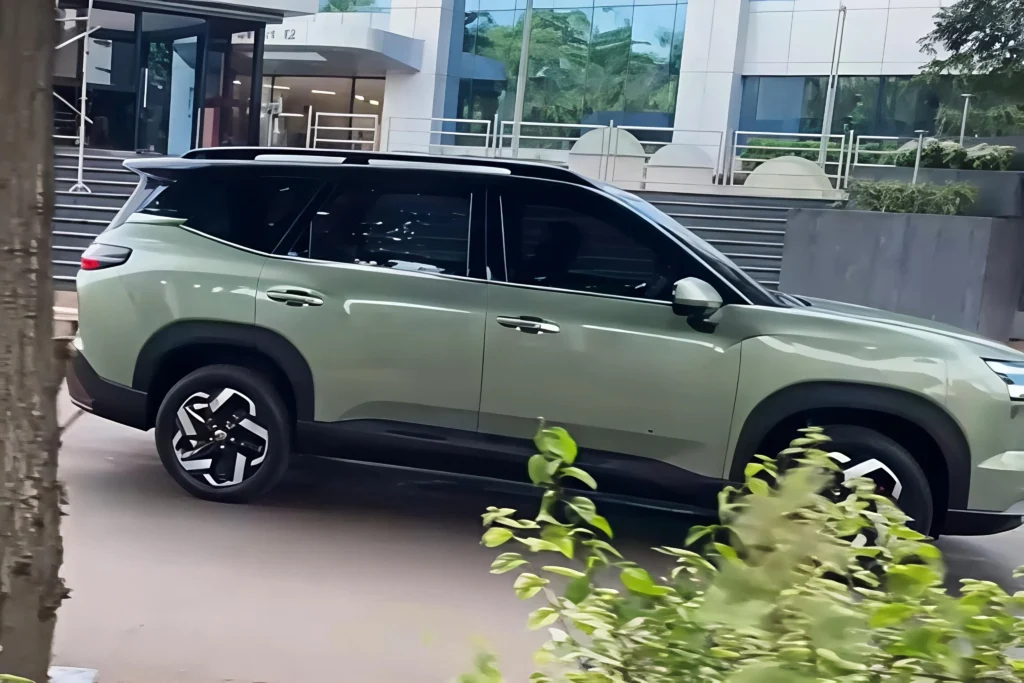
The latest road sighting gives a much better indication of how the new MG SUV will look in production form.
At the front, the SUV features connected-looking LED daytime running lights, LED headlamps and a closed-off grille treatment consistent with an electric vehicle. The MG badge sits centrally, while the lower bumper incorporates a broad air intake and vertically positioned air curtains.
The side profile follows a conventional three-row SUV design, with squared-off wheel arches, black body cladding and large alloy wheels. Chrome elements around the windows and door handles add a more premium touch, while the roof and roof rails contrast with the body.
The vehicle seen testing also appears to have substantial road presence, which fits its positioning above the Hector.
First major model on MG’s ADAPT platform
The more significant story behind the new SUV is the technology underneath it.
JSW MG’s ADAPT platform is designed as a flexible architecture capable of accommodating several types of electrified powertrains. According to the company, the platform incorporates technologies aimed at improving efficiency, charging performance, range and driving refinement.
The first SUV using the platform is expected to be offered as a battery-electric vehicle, followed later by a plug-in hybrid. Autocar India has reported that the EV will use a battery of around 69kWh and could deliver an official range of approximately 600km, although final Indian specifications have not yet been confirmed.
For comparison, the global Wuling model on which the SUV is based uses a 69.2kWh LFP battery and a front-mounted electric motor. Its specifications should not be treated as final Indian-market specifications until JSW MG confirms them.
Expected range and performance
Reports have pointed to a battery capacity of around 69.2kWh for the electric SUV. The global-specification model uses a front-mounted motor producing roughly 201hp and 310Nm, with a claimed CLTC range of up to 530km.
However, the Indian model could receive different calibration, equipment or battery specifications. JSW MG has previously indicated that its new EV is being developed with a focus on competitive range and charging capability. Autocar India has reported an expected range of around 600km for the India-spec model.
That distinction matters because CLTC figures and Indian certification figures are not directly interchangeable. The final ARAI-certified range will be more relevant to Indian buyers.
Seven seats and a premium equipment list
The new SUV is expected to retain a seven-seat layout, making it one of the more notable upcoming electric options for buyers looking for three rows.
Expected equipment includes a large touchscreen infotainment system, digital driver’s display, powered and ventilated front seats, automatic climate control with rear-row vents, wireless phone charging, a 360-degree camera and an electronic parking brake.
Safety equipment is also expected to include six airbags and an ADAS package, although the exact features and variant-wise availability remain to be confirmed.
The SUV is closely related to the Wuling Starlight 560/Eksion sold in other markets. Reports indicate that the Indian model will share much of its basic architecture and dimensions with that vehicle.
Why this SUV matters for MG
The new model represents more than another addition to MG’s electric range. It is the first major product expected to demonstrate what the company’s new ADAPT strategy can deliver in India.
MG’s existing Hector helped establish the brand in India’s connected-SUV market after its 2019 introduction. The company is now moving toward a broader electrified portfolio, with ADAPT intended to allow different propulsion technologies to be developed around a common platform.
That approach could also help MG compete in a market where customers are still divided between conventional petrol vehicles, hybrids and fully electric cars.
Anurag Mehrotra, managing director of JSW MG Motor India, has said the company sees multiple powertrain technologies playing a role in India’s electrification journey, rather than relying on a single solution.
“Sources Used“
Autocar India — JSW MG electric and PHEV SUV plans
JSW MG Motor India — ADAPT platform announcement
Expected price and rivals
The electric SUV is expected to be positioned competitively, with reports putting its likely price in the Rs 18 lakh-25 lakh range. The final price, however, will depend on variants, battery capacity and equipment and has not yet been officially announced.
Its most important competition is expected to come from electric SUVs such as the Mahindra XEV 9S, while its three-row format also places it in competition with established large SUVs and upcoming electrified models.
Autocar India has reported that JSW MG is targeting aggressive pricing and could position the new EV below the 70kWh version of the Mahindra XEV 9S.
What happens next?
The expected August 26 launch should settle the biggest unanswered questions: the SUV’s official name, battery and motor specifications, certified range, variant lineup, charging capabilities and pricing.
For buyers, the key question will be whether MG can combine a genuinely usable three-row cabin with competitive range and pricing. If it does, the new SUV could become an important test of how quickly premium family SUVs in India are moving toward full electrification.
“Must Reads”
Tata Sierra EV vs Mahindra BE 6 Price: Which Electric SUV Offers Better Value in 2026?
Tata Punch EV vs Tata Tiago EV: Price, Range, Features and Which One Makes More Sense in 2026