


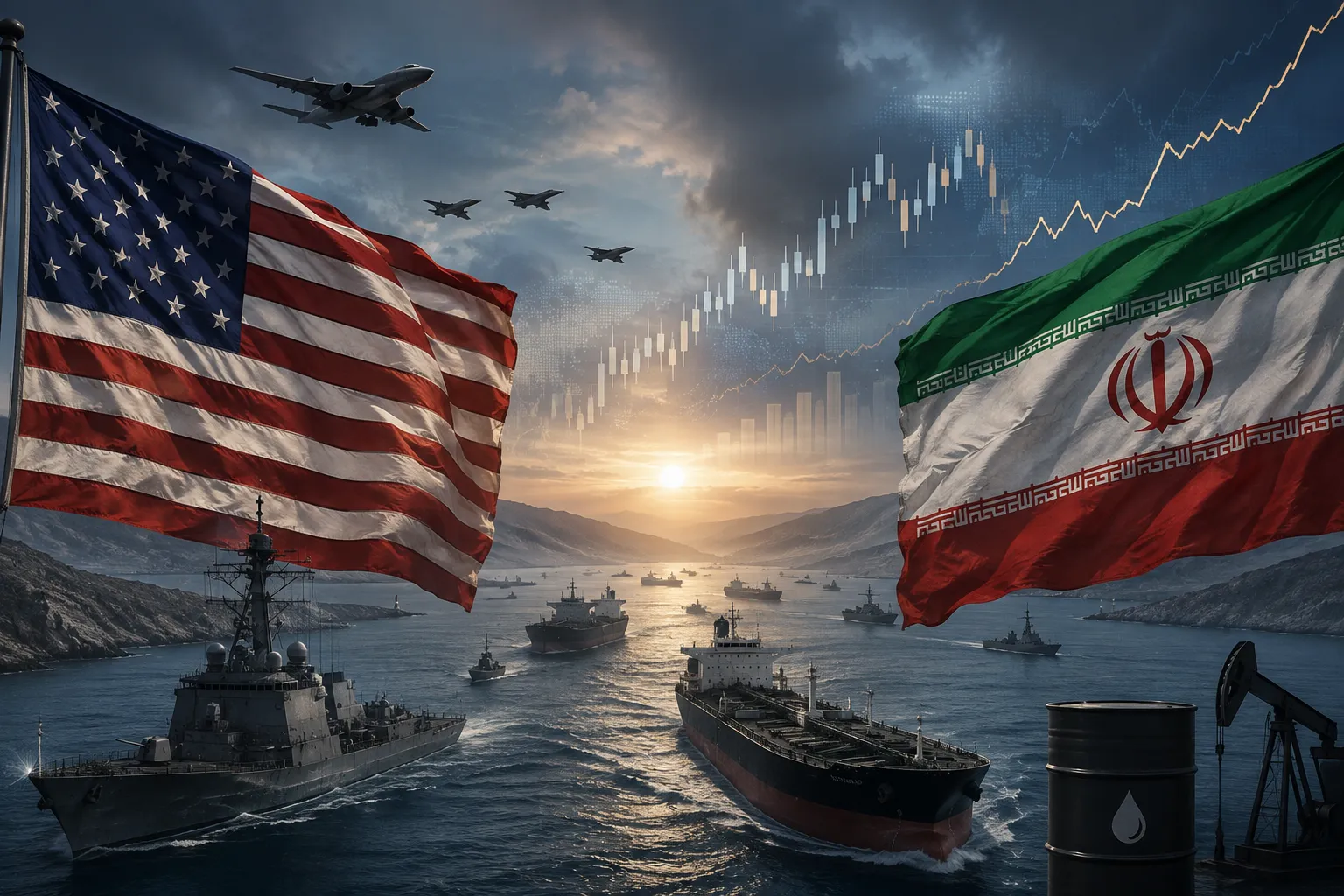
The US Iran war has entered another dangerous phase, with renewed American strikes on Iranian targets followed by Iranian missile and drone attacks against US forces and regional allies. The latest escalation has once again placed the Strait of Hormuz, global oil supplies and financial markets at the centre of international concern.
The conflict began on February 28, 2026, when the United States and Israel launched strikes against Iran. After periods of reduced fighting and diplomatic efforts, hostilities have intensified again in September. The latest developments have raised a crucial question for the global economy: how far could the conflict spread, and what happens if energy supplies through the Gulf remain disrupted?
Why Are the US and Iran Fighting?
The roots of the US-Iran conflict go beyond the latest military exchanges.
Washington and Tehran have been locked in disputes over Iran’s nuclear programme, sanctions, regional security and Iran’s ability to export oil. The United States has sought to restrict Iran’s military and economic capabilities, while Tehran has resisted US demands and defended its strategic influence in the region.
The nuclear issue remains particularly important. The US has pushed for restrictions on Iran’s nuclear capabilities, while Iran has sought sanctions relief and greater control over its economic and security interests.
The current confrontation has also become closely linked to the Strait of Hormuz, a strategic waterway through which a major share of global energy supplies traditionally passes.
Recent US strikes and the subsequent Iranian response have therefore created a conflict that is not only military but also economic.
https://www.reuters.com/world/middle-east/iran-urges-us-comply-with-interim-deal-after-trump-threatens-further-strikes-2026-09-01/
What Triggered the Latest US-Iran Escalation?
The latest escalation followed a period of relative calm.
US forces recently carried out strikes against Iranian military infrastructure, including systems connected to Iran’s military presence around the Strait of Hormuz. Iran subsequently responded with missile and drone attacks targeting US forces and regional allies.
The renewed fighting has complicated diplomatic efforts and increased uncertainty over whether the two sides can return to negotiations.
The conflict is also spreading beyond direct US-Iran exchanges. Iranian attacks have targeted locations in Gulf states, increasing concerns among countries that host American military facilities or depend heavily on maritime energy trade.
Related HNN24x7 Coverage
For readers looking specifically at the economic side of the crisis, read US-Iran conflict sanctions and their impact on India and global markets.
Why Is the Strait of Hormuz So Important?
The Strait of Hormuz is one of the world’s most important energy chokepoints.
It connects the Persian Gulf with the Gulf of Oman and the Arabian Sea. Before the current conflict, around one-fifth of global oil consumption passed through the waterway, making any sustained disruption potentially significant for energy markets.
The latest conflict has sharply reduced visible commercial traffic.
Reuters reported that only four commodity vessels crossed the Strait on September 3, compared with a 10-day average of about 15 vessels. The actual number can be difficult to establish because some vessels operate with their tracking systems switched off.
That uncertainty itself can push oil prices higher because traders begin pricing in the possibility of future supply shortages.
How Is the US-Iran War Affecting Oil Prices?
Oil prices are one of the clearest economic consequences of the conflict.
When traders fear that Middle Eastern production or shipping could be interrupted, they typically demand a higher risk premium for crude. That can push benchmark prices higher even before an actual global shortage develops.
Brent crude was trading above $95 per barrel in early September amid renewed concerns about supply disruptions through Hormuz.
The bigger risk is a prolonged disruption.
If several million barrels of oil per day were removed from the global market for an extended period, prices could move substantially higher. Analysts cited by ThePrint have warned that Brent could move above $100 if another 2–3 million barrels per day were taken off the market.
However, that is a risk scenario, not a guaranteed forecast. Oil prices will depend on the duration of the conflict, actual tanker movements, alternative supply routes, strategic reserves and diplomatic developments.
Will the US-Iran Conflict Push Oil Above $100?
It could, but a sustained move above $100 would likely require a significant and prolonged supply disruption.
There are two major forces affecting prices.
First is the geopolitical risk premium. Traders may bid prices higher simply because they fear escalation.
Second is the physical supply situation. If oil production or exports actually fall significantly, the market faces a genuine shortage.
Recent market data suggests the second issue is becoming increasingly important because Gulf exports and shipping activity remain below pre-war levels.
This distinction matters. A temporary military escalation can cause a short-lived price spike, while a sustained disruption to production or shipping could have a much broader impact.
What Does the US-Iran War Mean for India?
India is particularly exposed to higher oil prices because crude is a major component of its import bill.
The immediate impact would come through higher energy costs and a larger import bill. If crude remains expensive for a prolonged period, demand for US dollars to pay for imports can increase, putting pressure on the Indian rupee.
Recent Reuters reporting showed that the rupee was already facing pressure from higher oil prices, although Reserve Bank of India intervention helped limit the immediate impact.
India’s crude basket also approached $100 per barrel in early September amid renewed West Asian tensions, highlighting the country’s exposure to the conflict.
Could Petrol and Diesel Become More Expensive?
Higher international crude prices can increase pressure on domestic fuel prices, but the relationship is not automatic or immediate.
Indian fuel prices are affected by several factors, including international crude prices, refining margins, taxes, exchange rates and the pricing decisions of oil marketing companies.
If crude remains elevated for several months, however, the economic pressure becomes harder to ignore.
Higher transportation costs can also affect food distribution, manufacturing, logistics and consumer goods.
What Happens to India’s Inflation and Economic Growth?
A prolonged oil shock can affect the economy through several channels:
- Higher import costs
- Pressure on the rupee
- Higher transportation expenses
- Higher input costs for businesses
- Potential inflationary pressure
- Wider trade deficit
- Pressure on economic growth
India’s large foreign-exchange reserves and ability to diversify crude suppliers provide some protection, but they cannot completely eliminate the impact of a prolonged global oil shock.
The biggest risk is therefore not necessarily a brief jump in crude prices. It is oil remaining extremely expensive for several consecutive months.
What About Global Financial Markets?
The US-Iran conflict is also creating a risk-off environment in global markets.
Higher oil prices can increase inflation expectations, while investors may become more cautious about equities and emerging-market assets.
Indian stocks already reacted negatively to the renewed escalation. Reuters reported that the Nifty 50 and Sensex both fell on September 2, while concerns about oil supply and inflation weighed on market sentiment.
The impact is not limited to India.
Higher energy costs can affect airlines, shipping companies, manufacturers, chemical producers and other energy-intensive industries around the world.
At the same time, oil-producing countries and some energy companies can benefit from higher crude prices.
Why Are Gulf Countries Worried?
The conflict creates a difficult situation for Gulf countries because many are simultaneously:
- Major energy exporters,
- Hosts to US military facilities, and
- Dependent on secure shipping routes.
Iranian attacks toward US-linked positions in the Gulf have therefore increased regional security concerns.
Any further expansion of the conflict could create additional pressure on commercial shipping, aviation and regional trade.
For a detailed look at another regional development, readers can follow Iran’s latest missile threat to the UAE.
What Role Do US Sanctions Play?
Sanctions are another major part of the conflict.
Washington has used economic restrictions to limit Iran’s ability to generate revenue from oil and other international trade. For Iran, maintaining access to energy markets is therefore closely connected to its broader economic survival.
The sanctions issue also creates a diplomatic dilemma.
Iran wants sanctions relief, while the US wants concessions on security and nuclear issues. As long as the two sides remain far apart, economic pressure and military confrontation can reinforce each other.
For more background, see Trump’s economic punishment threat against countries helping Iran.
Could the Conflict Become a Wider Middle East War?
That remains one of the biggest uncertainties.
The conflict has already involved attacks and counterattacks across multiple locations in the Gulf region. A wider confrontation could potentially involve more regional actors and create greater disruption to energy infrastructure and shipping.
However, escalation is not inevitable.
Diplomatic channels remain important because neither Washington nor Tehran has an easy path to absorbing the economic and military costs of an indefinite conflict.
The key indicators to watch are:
- US and Iranian military operations
- Strait of Hormuz shipping levels
- Iranian oil exports
- Brent crude prices
- US sanctions decisions
- Diplomatic negotiations
- Attacks on Gulf infrastructure
- Movement of commercial tankers
What Happens Next?
The next phase of the US Iran war will largely depend on whether military escalation is followed by renewed diplomacy.
If shipping through the Strait of Hormuz gradually normalises, some of the geopolitical premium could come out of oil prices.
If attacks continue and tanker traffic remains severely restricted, energy markets could face greater pressure.
For India and other oil-importing economies, the duration of the disruption will be more important than a single day’s price movement.
FAQ
Why are the US and Iran fighting?
The conflict involves long-running disputes over Iran’s nuclear programme, US sanctions, regional security and competing strategic interests. The current war began with US and Israeli strikes on Iran on February 28, 2026, followed by Iranian retaliation.
Why is the Strait of Hormuz important in the US-Iran war?
The Strait of Hormuz is a critical route for global energy shipments. Any sustained disruption can reduce available oil supplies and increase prices.
Will the US Iran war increase oil prices?
It can. Renewed fighting and reduced shipping through Hormuz have already pushed oil prices higher. A prolonged physical supply disruption could create significantly greater price pressure.
How will the US Iran war affect India?
India could face higher crude-import costs, pressure on the rupee, increased inflationary risks and weaker growth if oil prices remain elevated for an extended period.
Will petrol and diesel prices rise in India?
Higher crude prices can increase pressure on domestic fuel prices, but retail prices also depend on taxes, exchange rates, refining costs and oil-company pricing decisions.
Could Brent crude reach $100?
It is possible if the conflict causes a substantial and sustained reduction in global oil supplies. However, $100 is a risk scenario rather than a certainty.
Is the US-Iran conflict affecting global stock markets?
Yes. Renewed concerns about oil supplies and inflation have contributed to risk-off sentiment, including declines in Indian equity benchmarks.
What should readers watch next?
The most important indicators are Strait of Hormuz shipping, oil exports, Brent crude prices, military escalation, sanctions and diplomatic negotiations.
Bottom Line
The US-Iran conflict is no longer only a military confrontation. It has become a major global energy and economic risk because of Iran’s position near the Strait of Hormuz.
For consumers worldwide, the most important issue is oil. For India, the key risks are crude-import costs, the rupee, inflation and economic growth. For global markets, the biggest uncertainty is whether the conflict remains contained or develops into a broader regional crisis.
For now, the direction of oil prices will remain closely tied to developments around the Strait of Hormuz and the possibility of further US-Iran escalation.