

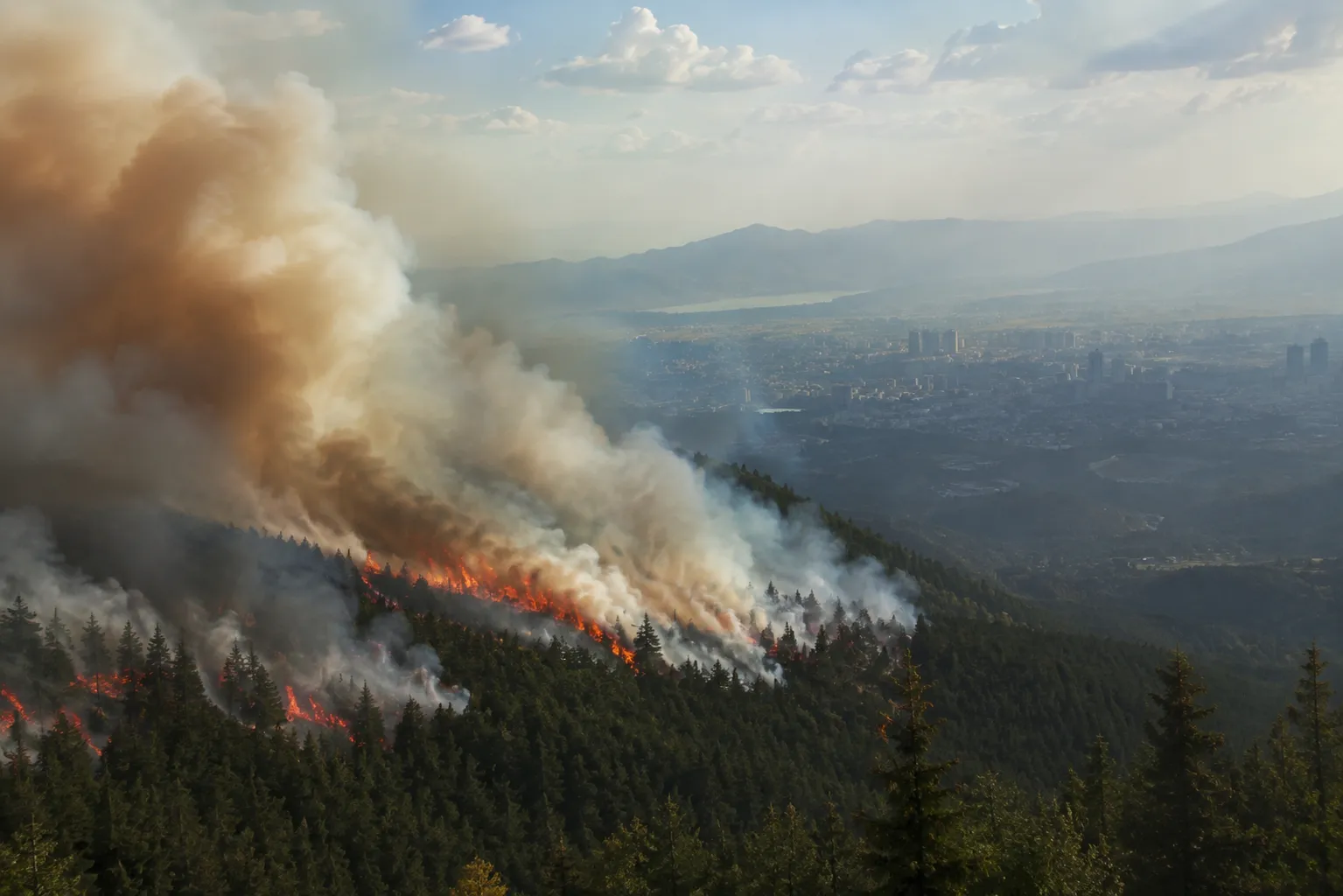
Wildfires do not only threaten people living close to the flames. Their smoke can travel hundreds or even thousands of miles, carrying fine particles and other pollutants into communities far from the original fire. The biggest health concern is PM2.5, microscopic particles that can penetrate deep into the lungs and contribute to respiratory and cardiovascular problems.
The U.S. Environmental Protection Agency (EPA) says wildfire smoke can travel hundreds to thousands of miles, depending on weather and atmospheric conditions. The Centers for Disease Control and Prevention (CDC) similarly warns that wildfire smoke can reach areas far away from where fires are burning.
That means a forest fire can become an air-quality problem for people who may never see the flames.
How Far Can Wildfire Smoke Travel?
Wildfire smoke can travel hundreds to thousands of miles, although the exact distance varies with wind speed, atmospheric conditions, fire intensity, terrain and the height of the smoke plume.
When a major wildfire produces a large smoke plume, strong winds can carry it far beyond the immediate fire zone. A scientific review notes that wildfire smoke plumes can travel hundreds of kilometres while gradually becoming diluted. Chemical reactions can also transform pollutants as the smoke ages during transport.
In some extreme events, smoke can cross national borders and even continents. EPA describes long-distance wildfire smoke transport as ranging from hundreds to thousands of miles.
The health risk does not necessarily disappear with distance. Smoke generally becomes more diluted as it travels, but communities far from the fire can still experience significant increases in air pollution when atmospheric conditions concentrate or transport the plume.
Why Does Forest Fire Smoke Travel So Far?
Several atmospheric factors determine how far forest fire smoke can travel.
Wind direction and speed
Wind is one of the most important factors. A strong, persistent wind can push a smoke plume rapidly across large areas.
Fire intensity
Large and intense wildfires can send smoke high into the atmosphere. Once smoke reaches higher atmospheric layers, it can be transported over much greater distances.
Weather and atmospheric stability
Temperature, humidity, pressure and atmospheric mixing influence how pollutants disperse. Under certain conditions, smoke can remain concentrated near the ground and significantly worsen local air quality.
Terrain
Mountains, valleys and other geographical features can influence how smoke moves and where it accumulates.
This is why two communities at similar distances from a wildfire can experience very different levels of smoke exposure.
What Makes Wildfire Smoke Dangerous?
Wildfire smoke is not simply ordinary smoke from burning wood. It is a complex mixture of gases and particles produced when vegetation, buildings and other materials burn.
According to the EPA, wildfire smoke can contain fine particulate matter (PM2.5), carbon monoxide, nitrogen oxides and various organic compounds. PM2.5 is considered the pollutant of greatest health concern in wildfire smoke.
What is PM2.5?
PM2.5 refers to particles with an aerodynamic diameter of about 2.5 micrometres or smaller.
Because these particles are extremely small, they can travel deep into the respiratory system. EPA explains that PM2.5 can reach the lower regions of the lungs, including the alveolar area.
This is one reason smoke PM2.5 is a major concern during wildfire events.
What Are the Main Wildfire Smoke Health Effects?
The wildfire smoke health effects can range from temporary irritation to serious respiratory and cardiovascular problems, particularly among vulnerable people.
The CDC lists coughing, breathing difficulty, wheezing, asthma attacks, irritated eyes, sore throat, headaches, tiredness, chest pain and rapid heartbeat among possible effects of wildfire smoke exposure.
1. Coughing and throat irritation
Even relatively short exposure can irritate the eyes, nose and throat.
People may experience:
- Persistent coughing
- Scratchy or sore throat
- Runny nose
- Burning or irritated eyes
- Increased mucus
- Headaches
These symptoms can occur even in otherwise healthy people.
2. Asthma attacks
People with asthma can be particularly sensitive to wildfire smoke.
Fine particles and other pollutants can irritate the airways and trigger worsening symptoms. The CDC and EPA identify asthma exacerbation as an important health concern during wildfire smoke events.
3. COPD and other lung diseases
People with chronic obstructive pulmonary disease (COPD) and other respiratory conditions may experience worsening symptoms after exposure.
Scientific reviews have found consistent associations between wildfire smoke exposure and respiratory health problems, particularly exacerbations of asthma and COPD.
4. Reduced lung function
High concentrations of fine particles can cause inflammation in the respiratory system and temporarily reduce lung function.
EPA notes that exposure can produce persistent coughing, phlegm, wheezing and difficulty breathing, while some healthy people may experience pulmonary inflammation and temporary reductions in lung function.
For readers interested in the broader relationship between wildfire smoke and respiratory health, HNN24x7’s related guide provides additional context on the effects of smoke exposure:
Wildfire Smoke Health Effects: Air Pollution and Its Impact on the Lungs
Can Wildfire Smoke Affect the Heart?
Yes. Wildfire air pollution can also affect cardiovascular health, particularly in people who already have heart disease or other risk factors.
Fine particles can trigger inflammation and other biological responses. EPA explains that PM2.5 exposure can affect blood vessels and heart function, while wildfire smoke exposure has been associated with cardiovascular events including heart attacks, stroke and worsening heart failure.
However, the strength of evidence varies across specific cardiovascular outcomes. A systematic review found strong evidence for respiratory effects, while cardiovascular findings have been less consistent across studies.
That distinction is important: wildfire smoke is clearly a respiratory health concern, while research continues to refine our understanding of the full cardiovascular risk.
Who Is Most Vulnerable to Wildfire Smoke?
Wildfire smoke can affect anyone, but certain groups face a higher risk of serious symptoms.
They include:
- Children
- Older adults
- Pregnant people
- People with asthma
- People with COPD or other lung diseases
- People with cardiovascular disease
- Outdoor workers
- Wildland firefighters
The CDC and EPA specifically identify children, older adults, pregnant women and people with pre-existing heart or lung conditions as groups requiring additional protection.
Outdoor workers can face additional exposure because they may spend several hours breathing smoky air while performing physically demanding activities.
Does Wildfire Smoke Become Less Dangerous as It Travels?
Not necessarily.
The concentration of primary pollutants generally decreases as a smoke plume spreads and becomes diluted. However, smoke can still create unhealthy air quality far from the fire.
In addition, chemical reactions occur while smoke is transported through the atmosphere. Pollutants can change and secondary pollutants can form during this process.
Therefore, distance alone is not enough to determine whether wildfire smoke is dangerous. Actual air-quality conditions and the concentration of PM2.5 are more useful indicators of exposure risk.
Can Wildfire Smoke Cause Long-Term Health Problems?
The answer depends on the intensity, duration and frequency of exposure and on an individual’s health.
Short-term wildfire smoke exposure is clearly associated with respiratory symptoms, asthma and COPD exacerbations, respiratory hospital visits and other health effects. Research also indicates associations with mortality and respiratory hospitalizations.
Scientists are continuing to investigate the consequences of repeated or prolonged exposure, including possible long-term effects on cardiovascular, respiratory and other systems.
It is therefore important not to assume that one brief exposure automatically causes permanent disease. At the same time, repeated heavy exposure should not be dismissed as harmless.
Why Is PM2.5 the Biggest Concern?
PM2.5 is particularly concerning because of its small size.
Larger particles are more likely to be trapped in the upper respiratory tract. Much smaller particles can penetrate deeper into the lungs.
EPA identifies three major biological pathways through which PM2.5 can contribute to health effects:
- Inflammation and oxidative stress
- Changes in the autonomic nervous system
- Movement of some particles or particle-related effects from the lungs toward the bloodstream
These mechanisms help explain why fine-particle pollution can affect more than just the lungs.
How Can People Protect Themselves From Wildfire Smoke?
The most effective strategy is to reduce exposure when smoke levels are high.
Practical measures include:
- Check local air-quality information before spending time outdoors.
- Reduce strenuous outdoor exercise during smoky conditions.
- Keep windows and doors closed when outdoor smoke is heavy.
- Use appropriately designed air filtration indoors when possible.
- Avoid adding indoor pollution through activities such as smoking or burning materials.
- People with asthma or other chronic conditions should follow their healthcare professional’s existing management plan.
- Outdoor workers should follow workplace wildfire-smoke protection procedures.
- If authorities issue evacuation instructions because of an active fire, follow them immediately.
CDC recommends preparing for wildfire smoke and taking steps to protect yourself before, during and after wildfire events.
When Should Smoke Exposure Be Treated as an Emergency?
Severe breathing difficulty, significant chest pain, confusion, fainting or other serious symptoms require urgent medical attention.
People with asthma, COPD, heart disease and other chronic conditions should be especially cautious because smoke exposure can worsen existing disease.
The goal is not to panic whenever smoke is visible. It is to recognize that wildfire smoke is an air-pollution event and respond according to actual air-quality conditions and personal health risk.
The Bigger Picture: Wildfires Are Also an Air-Pollution Problem
A wildfire can become a public-health issue far beyond the area directly threatened by flames.
EPA notes that wildfire smoke can affect populations hundreds to thousands of miles away. As the number and extent of wildfires increase in some regions, the amount of smoke entering the atmosphere can also increase.
This creates a wider challenge for communities, health systems and air-quality authorities. Monitoring smoke movement, communicating air-quality risks and protecting vulnerable populations are increasingly important parts of wildfire preparedness.
FAQ
How far can wildfire smoke travel?
Wildfire smoke can travel hundreds to thousands of miles, depending on wind, atmospheric conditions, fire intensity and other factors.
What is the biggest health concern in wildfire smoke?
PM2.5, or fine particulate matter, is considered the pollutant of greatest health concern in wildfire smoke because the particles can penetrate deep into the lungs.
Can wildfire smoke damage the lungs?
Yes. Exposure can cause coughing, wheezing, breathing difficulties, inflammation and worsening of conditions such as asthma and COPD.
Can forest fire smoke affect people hundreds of miles away?
Yes. Smoke can be transported hundreds or even thousands of miles, meaning distant communities can experience degraded air quality without being near the fire itself.
Who is most at risk from wildfire smoke?
Children, older adults, pregnant people, people with asthma or other lung diseases, people with cardiovascular disease and people with high occupational exposure are among those at greater risk.
Can wildfire smoke affect the heart?
Yes. Wildfire smoke exposure has been associated with cardiovascular effects, including worsening heart failure and increased risks of heart attack and stroke, although evidence varies by specific cardiovascular outcome.
Does wildfire smoke become harmless when it travels far away?
No. Smoke generally becomes diluted as it travels, but distant communities can still experience unhealthy air pollution. Atmospheric chemistry can also transform pollutants during transport.
What should people do when wildfire smoke affects their area?
Monitor local air quality, reduce strenuous outdoor activity, limit exposure to smoky air and improve indoor air filtration where possible. People with chronic respiratory or cardiovascular conditions should take additional precautions.
https://www.epa.gov/wildfires/wildland-fires-and-public-health-effects
Bottom Line
Wildfire smoke can travel hundreds to thousands of miles, and its health effects can reach communities far from the original fire. The most important pollutant of concern is PM2.5, which can penetrate deep into the lungs and contribute to inflammation and respiratory problems.
For most people, the immediate concerns include coughing, throat and eye irritation, wheezing and breathing difficulties. For vulnerable groups, exposure can worsen asthma, COPD and cardiovascular conditions and increase the risk of medical care or hospitalization.
The key message is simple: you do not have to live next to a wildfire to be affected by its smoke. During major smoke events, air-quality monitoring and exposure reduction can be important tools for protecting public health.