

Trees are often treated as a part of a city’s landscape, but their role goes far beyond making streets look greener. The growing evidence on trees health benefits shows that urban vegetation can influence air quality, temperature, physical activity, stress and overall wellbeing.
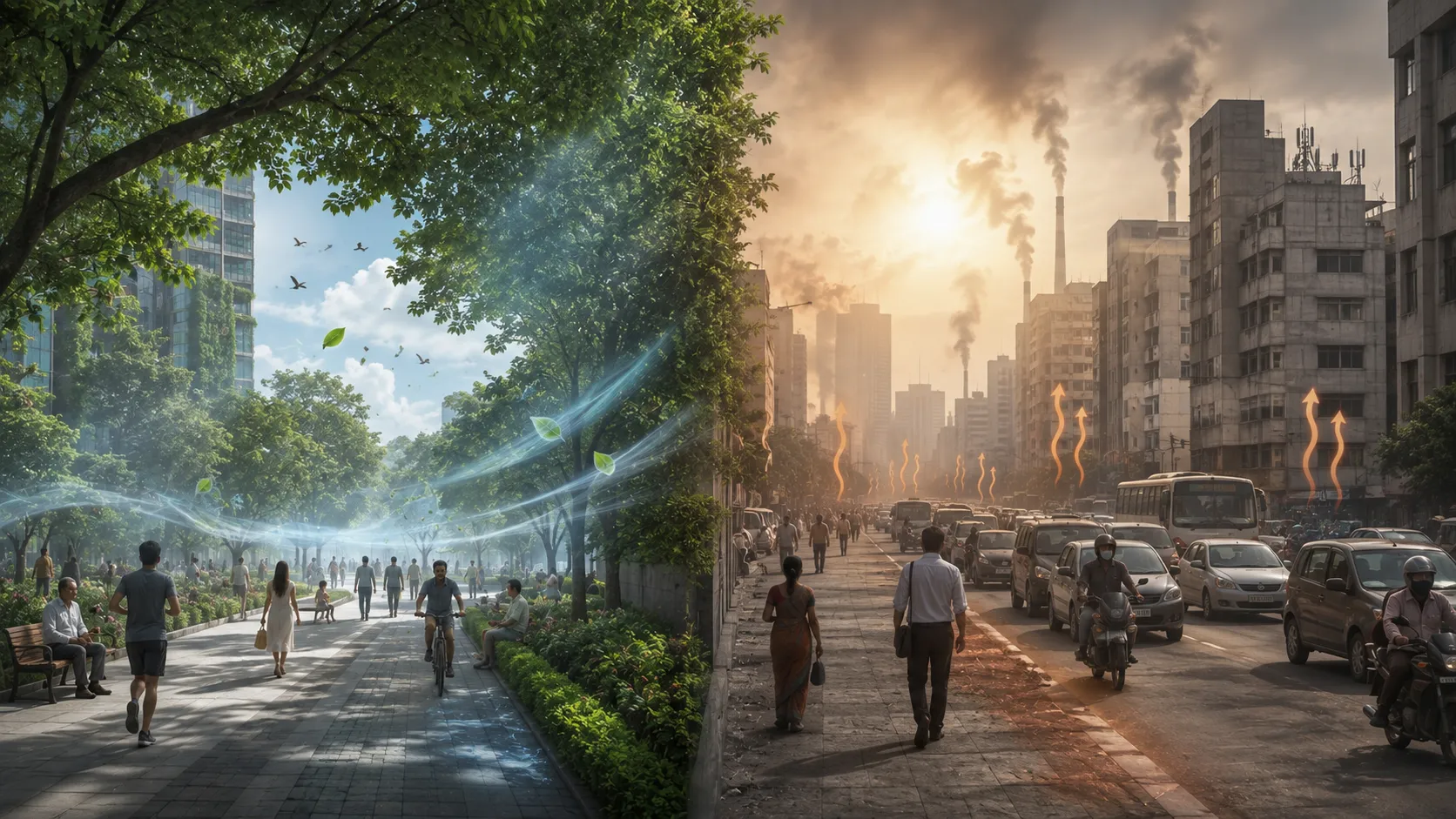
When cities lose trees and green spaces, they can also lose some of their natural protection against air pollution and extreme heat.
The World Health Organization (WHO) says urban green spaces can support physical and mental health by encouraging physical activity and relaxation while reducing exposure to air pollution, excessive heat and noise.
This makes trees and parks an important part of public-health planning, particularly as cities become hotter and more densely populated.
What are the health benefits of trees?
Trees can benefit health by providing shade, helping cool urban environments, supporting cleaner air, encouraging physical activity and creating spaces for relaxation and social interaction.
The benefits are not limited to one organ or one disease. Green environments can influence several pathways connected with physical and mental health.
Major benefits include:
- Lower exposure to extreme heat
- Improved local air quality
- More opportunities for walking and physical activity
- Reduced noise exposure
- Stress reduction and psychological restoration
- Opportunities for social interaction
- Potential cardiovascular benefits
- Improved urban environmental quality
WHO describes urban green spaces as an important component of healthy cities because they can simultaneously address several environmental and health risks.
How do trees reduce urban heat?
One of the most visible benefits of trees is cooling.
Trees cool cities through two main mechanisms:
Shade
Tree canopies block sunlight from reaching roads, pavements, buildings and people.
This can make shaded surfaces substantially cooler than surfaces exposed directly to the sun.
Evapotranspiration
Trees absorb water through their roots and release water vapour through their leaves. This process, known as evapotranspiration, uses heat energy and contributes to cooling the surrounding environment.
The U.S. Environmental Protection Agency (EPA) reports that one review of 308 studies found urban forests were, on average, about 1.6°C cooler than urban areas without green cover.
The exact cooling effect varies considerably depending on tree species, canopy density, local climate, urban design, soil moisture and the size and arrangement of green spaces.
How much can trees protect people from extreme heat?
Trees cannot eliminate heatwaves, but they can reduce local heat exposure.
The EPA notes that shade from trees and vegetation can substantially lower the temperature of surfaces exposed to direct sunlight. Vegetation also reduces urban heat-island effects through shade and moisture release.
This matters because extreme heat is not simply uncomfortable—it is a health hazard.
WHO says heat stress can worsen cardiovascular disease, diabetes, asthma and mental-health conditions, while heatstroke can become a medical emergency.
Therefore, increasing tree cover around homes, walking routes, schools and public spaces can be part of a broader strategy for reducing heat exposure.
Can trees reduce air pollution?
Yes, trees can remove some air pollutants, but they are not a replacement for reducing emissions at their source.
Leaves can capture or absorb certain pollutants from the atmosphere. The EPA says trees can remove particulate matter and pollutants including nitrogen oxides, sulfur dioxide, carbon monoxide and ground-level ozone from the air.
This is one reason trees reduce air pollution is an important environmental-health connection.
However, the effectiveness of trees depends on their location and design.
A badly designed vegetation barrier in a narrow street canyon, for example, may not always improve air circulation. Species selection, canopy structure, road layout and local wind conditions all matter.
Trees should therefore complement—not replace—measures such as cleaner transportation, industrial emission controls and improved energy systems.
How do trees help reduce exposure to particulate matter?
Particulate matter, particularly fine particles such as PM2.5, is a major air-quality concern.
Tree leaves and other vegetation can intercept some airborne particles. Vegetation can therefore contribute to local pollution reduction.
The EPA reports that tall, dense roadside vegetation can reduce downwind pollutants under appropriate conditions.
But the relationship is not as simple as “more trees always means cleaner air.”
Pollution levels are also determined by:
- Traffic emissions
- Industrial sources
- Weather
- Wind direction
- Street geometry
- Tree density
- Pollution source location
- Atmospheric chemistry
The greatest public-health benefit comes when urban greenery is combined with policies that reduce pollution at its source.
What are the green spaces health benefits?
Green spaces include much more than forests.
They can include:
- Public parks
- Urban forests
- Community gardens
- Tree-lined streets
- Playgrounds
- Green schoolyards
- Natural meadows
- Wetlands
- Riverfront green areas
- Residential vegetation
WHO identifies green spaces as places that can encourage physical activity, relaxation, recreation and social interaction while reducing exposure to environmental hazards.
This means a small neighbourhood park can have health value even when a person does not have access to a large forest.
Can green spaces improve mental health?
Yes, access to green spaces is associated with better mental wellbeing, although the exact causal pathways are still being studied.
Natural environments can provide opportunities for relaxation, physical activity and social interaction.
WHO reports that green spaces can support mental health and wellbeing, while research reviews have found generally positive associations between urban green-space exposure and mental-health outcomes.
A systematic review of 26 studies found evidence that green-space exposure can support mental wellbeing through pathways including psychological restoration, physical activity and mitigation of harmful environmental exposures.
More recent research is also examining green exercise—physical activity performed in urban green environments. A 2025 systematic review and meta-analysis of randomized controlled trials found a significant positive effect of urban green exercise on mental health, although the evidence base remains relatively limited.
What happens to mental health when cities lose green spaces?
When accessible greenery disappears, residents can lose opportunities for:
- Walking
- Exercise
- Relaxation
- Social interaction
- Exposure to natural environments
- Escape from traffic and noise
This does not mean that removing one tree directly causes a mental-health disorder.
Instead, the concern is cumulative: a city with fewer accessible green spaces may provide fewer opportunities for behaviours and environmental conditions associated with better wellbeing.
WHO notes that inadequate green space is among the urban environmental conditions that can contribute to unhealthy living environments.
How do urban trees affect heart health?
The connection between urban trees health and cardiovascular health involves several pathways.
Trees can:
- Reduce exposure to extreme heat.
- Help improve local environmental conditions.
- Encourage walking and outdoor physical activity.
- Provide spaces for relaxation.
- Potentially reduce exposure to some air pollutants.
WHO’s assessment of urban green spaces identifies cardiovascular health among the potential health benefits associated with greener urban environments.
Heat reduction is particularly relevant because extreme heat can place additional stress on the cardiovascular system.
However, trees should not be described as a direct treatment for heart disease. Their benefits are primarily environmental and behavioural, which can contribute to healthier living conditions.
Can green spaces encourage physical activity?
Yes. Accessible parks, tree-lined streets and other green spaces can make physical activity easier and more attractive.
People may be more likely to walk, cycle, exercise or spend time outdoors when they have safe and appealing green environments nearby.
WHO says urban parks and gardens can provide safe routes for walking and cycling as well as spaces for physical activity, recreation and social interaction.
This creates an important chain:
More accessible green space → more opportunities for activity → healthier behaviours → potential long-term health benefits
The relationship is influenced by factors such as safety, accessibility, maintenance, walkability and the quality of the space.
Why does losing trees make cities hotter?
Urban surfaces such as asphalt, concrete and rooftops absorb solar energy and can release that heat later.
When tree cover is removed, there is less shade and less evapotranspiration.
This can contribute to the urban heat island effect, where built-up areas become warmer than surrounding less-developed areas.
EPA explains that trees and vegetation help counter urban heat islands by shading surfaces and releasing moisture into the atmosphere.
The loss of tree canopy can therefore have consequences beyond aesthetics.
A neighbourhood with fewer trees may have:
- More sun-exposed pavement
- Higher surface temperatures
- Fewer shaded walking routes
- Greater heat exposure for pedestrians
- Higher cooling demand for buildings
Do trees reduce the need for air conditioning?
They can.
Trees positioned appropriately around buildings can provide shade and reduce the amount of solar heat entering structures.
The EPA reports that green infrastructure and urban forestry can reduce energy demand in nearby buildings, with the exact effect depending on design and local conditions.
This can create a secondary environmental benefit: lower electricity demand can mean fewer emissions when electricity generation depends on fossil fuels.
Therefore, the benefits of trees can extend from:
shade → lower building heat → lower cooling demand → potentially lower emissions
Are all green spaces equally beneficial?
No.
The health value of a green space depends on factors such as:
- Size
- Accessibility
- Tree canopy
- Biodiversity
- Maintenance
- Safety
- Connectivity
- Noise levels
- Air quality
- Availability of facilities
- Local climate
A 2021 systematic review found that health benefits were more consistently observed in areas with greater tree canopy, while the evidence varied depending on the type and quality of green space.
A newer 2026 systematic review examining biodiversity in urban green spaces also found predominantly favourable associations across general health, mental wellbeing and chronic-disease outcomes, although the researchers noted substantial variation between studies and settings.
In other words, simply measuring the amount of “green” in a city may not tell the whole story.
Quality, accessibility and how people can actually use the space matter too.
Are there any downsides to urban trees?
Trees generally provide substantial public-health and environmental benefits, but they are not completely risk-free.
Poorly selected or poorly maintained vegetation can contribute to:
- Allergic pollen exposure
- Falling branches
- Blocked visibility
- Infrastructure damage from roots
- Water-management problems
- Certain pest or vector habitats
WHO notes that potential disadvantages, including allergenic pollen and vector-related risks, can often be reduced through appropriate planning, maintenance and management.
This is why urban tree planting should focus on the right tree in the right place, rather than simply planting as many trees as possible.
Why are trees especially important as cities get hotter?
Climate change is increasing heat risks in many parts of the world.
WHO reported in 2026 that exposure to extreme heat is increasing across world regions and that heat can worsen several underlying health conditions.
At the same time, urbanization can intensify local heat through dense construction and limited vegetation.
Trees offer one relatively simple adaptation tool because they can simultaneously provide:
Shade + evaporative cooling + air-quality benefits + recreational space + biodiversity + opportunities for physical activity
This makes urban forestry relevant not only to environmental policy but also to public health.
What happens when a city has too few green spaces?
A city with limited green space can face multiple overlapping challenges.
There may be:
- Greater exposure to urban heat
- Fewer shaded walking routes
- Less space for exercise
- More exposure to traffic and noise
- Reduced opportunities for relaxation
- Higher cooling demand
- Fewer natural habitats
WHO’s urban-health guidance links inadequate green space with broader urban health challenges, including conditions associated with pollution, heat and insufficient opportunities for active living.
The issue is also one of health equity.
Not every neighbourhood has equal access to parks or tree canopy. If hotter and more polluted neighbourhoods also have less vegetation, residents may face a greater environmental-health burden.
What can cities do to increase the health benefits of trees?
Cities do not necessarily need to choose between development and greenery.
Better planning can integrate vegetation into everyday infrastructure.
Useful approaches include:
Planting street trees
Tree-lined streets can provide shade along walking and cycling routes.
Protecting mature trees
Large established trees can provide substantial canopy, so protecting existing trees can be as important as planting new ones.
Creating connected green spaces
Networks of parks, tree-lined corridors and natural areas can make green space more accessible.
Greening schools and public facilities
Children and communities can benefit from shaded outdoor environments.
Designing for heat
Tree planting should prioritise locations where shade can protect pedestrians, homes and public spaces.
Choosing appropriate species
Species should be selected according to climate, soil, water requirements, infrastructure and allergen considerations.
Combining trees with pollution-control policies
Vegetation should complement—not substitute for—cleaner transport, industrial controls and other emission-reduction measures.
FAQ
How do trees improve human health?
Trees can support health by providing shade, reducing local heat, helping remove some air pollutants, encouraging physical activity and creating environments that support relaxation and mental wellbeing.
Can trees reduce air pollution?
Yes. Tree leaves can capture or absorb certain pollutants, including some particulate matter and gaseous pollutants. However, trees work best as a complement to measures that reduce pollution at its source.
How much can trees reduce urban heat?
The effect varies by climate, species, canopy density and urban design. One review cited by the U.S. EPA found urban forests were, on average, about 1.6°C cooler than non-green urban areas.
Do green spaces improve mental health?
Research generally finds positive associations between access to green spaces and mental wellbeing. Possible pathways include stress reduction, psychological restoration, physical activity and social interaction.
Why are urban trees important for health?
Urban trees can simultaneously address several environmental factors that influence health, including heat, air pollution, noise and opportunities for physical activity.
Can losing trees make a city hotter?
Yes. Removing trees reduces shade and evapotranspiration, potentially increasing exposure to heat and contributing to the urban heat-island effect.
Do trees help protect people during heatwaves?
Trees can reduce local heat exposure by providing shade and cooling the surrounding environment. They cannot eliminate the health risks of a heatwave, but they can be an important part of heat-adaptation strategies.
Are all green spaces equally beneficial?
No. Accessibility, safety, tree canopy, biodiversity, maintenance, size and quality can influence how much health benefit people receive from green spaces.
https://www.epa.gov/heatislands/benefits-trees-and-vegetation
The Bottom Line
The evidence behind trees health benefits is broader than the idea that trees simply produce oxygen.
Trees and green spaces can help create healthier cities by reducing local heat, filtering some air pollutants, encouraging physical activity and providing environments associated with relaxation and mental wellbeing.
Their cooling role may become increasingly important as extreme heat becomes a greater public-health threat.
But trees are not a magic solution. They cannot replace pollution-control policies, climate action, healthcare or safe urban infrastructure.
The strongest approach is to treat urban greenery as part of a wider public-health system:
Cleaner air + less extreme heat + accessible green spaces + active transport + good urban planning = healthier cities.
As cities expand, protecting and increasing tree canopy may therefore be not just an environmental choice, but an investment in human health.