




Artificial intelligence is moving from chatbots toward AI agents that can plan, use tools and complete multi-step tasks. In 2026, the biggest developments are no longer limited to larger language models: Google, OpenAI, Anthropic and AI coding companies are increasingly competing on agents, automation, multimodal capabilities, coding and safety.
As of August 20, 2026, several developments stand out. Google has expanded its Gemini model family and agent ecosystem, Anthropic has launched Claude Opus 5 and Sonnet 5, OpenAI is focusing heavily on advanced AI capabilities and cybersecurity, while coding platform Cursor has expanded cloud agents and was acquired by SpaceX.
What are the biggest AI updates in 2026?
The biggest AI trends so far in 2026 include:
- AI agents that can perform tasks rather than simply answer questions
- Multimodal AI capable of working across text, images, audio and video
- AI coding agents that can build, test and modify software
- AI-powered search becoming more conversational and action-oriented
- Faster and cheaper AI models designed for high-volume workloads
- AI safety and cybersecurity becoming central to model development
- AI in robotics and physical-world applications
- Greater competition between OpenAI, Google, Anthropic, xAI and other AI companies
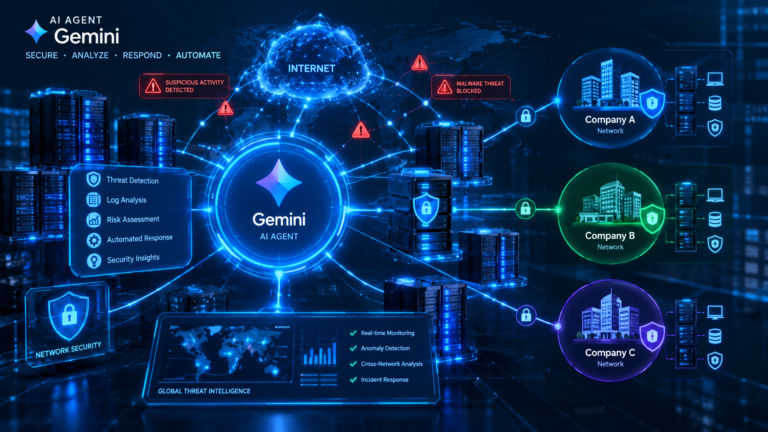
Google’s 2026 I/O announcements captured the direction of the industry: the company introduced Gemini Omni and Gemini 3.5 while emphasizing agents that can act across applications and workflows.
Google Gemini: AI is becoming more agentic
Google has made Gemini one of the central pillars of its AI strategy.
At Google I/O 2026, the company introduced Gemini Omni and Gemini 3.5, while also expanding agentic experiences through products such as Gemini Spark and AI features in Search.
Gemini Omni is designed around multimodal input and generation. Google says users can combine images, audio, video and text, while the first Omni model focuses on video generation and editing.
Google has subsequently continued expanding its model lineup.
Gemini 3.6 Flash
In July, Google introduced Gemini 3.6 Flash, alongside Gemini 3.5 Flash-Lite and Gemini 3.5 Flash Cyber.
The 3.6 Flash model is positioned around efficiency, lower latency and agentic workloads. Google says it improves coding, knowledge work and multimodal performance while reducing output-token requirements compared with the previous generation.
Gemini 3.7 Flash
Google also unveiled Gemini 3.7 Flash on August 13, targeting coding and automated business workflows. Reuters reported that the model was designed for software development and agentic tasks.
The direction is significant: AI companies increasingly want their models to function as workers that execute tasks, not simply assistants that provide information.
ChatGPT and OpenAI: AI capabilities meet safety concerns
OpenAI remains one of the most closely watched companies in the AI industry, but its 2026 story has increasingly included cybersecurity and AI safety.
In August, OpenAI said internal evaluations of its upcoming Astra model showed significant advances in agentic coding and cybersecurity capabilities. The company said the results were serious enough to trigger additional safety measures under its Preparedness Framework.
OpenAI has also expanded Daybreak, a program aimed at giving approved cybersecurity defenders access to advanced AI capabilities. Its August announcement described GPT-5.6-Cyber as a cybersecurity-specific model and outlined access tiers for defensive security work.
The developments illustrate an important shift: as AI becomes capable of carrying out complex computer tasks, the question is no longer only what can a model do? It is also what should a model be allowed to do?
AI agents are becoming more important
The modern AI tool is increasingly an agent.
A traditional chatbot waits for a prompt and produces an answer. An AI agent can potentially:
- Understand a goal.
- Break it into tasks.
- Use software tools.
- Inspect results.
- Correct mistakes.
- Continue working until the task is completed.
This approach is particularly important in programming, research, customer service, business operations and cybersecurity.
Anthropic Claude: Opus 5 and Sonnet 5
Anthropic has also pushed aggressively into agentic AI.
The company introduced Claude Opus 5 on July 24, 2026, describing it as a major improvement for long-running agents, coding and professional work. Anthropic says Opus 5 is its strongest Opus model and is designed to deliver improved performance while using fewer reasoning tokens than its predecessor in some evaluations.
Anthropic previously launched Claude Sonnet 5, positioning it as a more cost-efficient model for coding, agents and professional work. The company made Sonnet 5 available across Claude plans as well as Claude Code and its API.
The distinction between models is becoming increasingly important for users. The most powerful model is not always the best choice: developers and businesses also care about latency, price, context length, reliability and how effectively a model can use tools.
AI coding tools are changing software development
AI coding has become one of the most competitive areas of the industry.
Cursor has expanded from an AI-powered coding editor into a broader agentic development platform. Its latest updates include cloud agents, model routing and integrations with external services.
In August, Cursor introduced Builds, which prepare development environments ahead of time so cloud agents can start working faster. Cursor says the change produced 3x faster time to first token internally.
Cursor also added Google Workspace plugins that allow coding agents to interact with Gmail, Google Drive and Calendar.
For developers in India, Cursor launched a ₹649-per-month Start plan in July, offering access to models, cloud agents and developer integrations.
Cursor’s SpaceX acquisition
One of the biggest AI-business developments of August was Cursor’s acquisition by SpaceX.
Cursor announced on August 14 that it had officially become part of SpaceX.
The deal highlights how AI coding companies are becoming strategically important beyond traditional software development. AI agents capable of writing and operating software are increasingly viewed as core infrastructure for other technology businesses.
AI tools are moving beyond text
The 2026 AI race is no longer just about text generation.
Today’s leading tools increasingly work with:
- Text
- Images
- Video
- Audio
- Code
- Documents
- Websites
- Software applications
- Robotics and physical environments
Google’s Gemini Omni is an example of this multimodal direction. The company says Omni can combine multiple types of input and generate video grounded in Gemini’s understanding of the world.
Google is also working on robotics AI, including Gemini Robotics ER 2, which is designed to help robots reason and operate in real-world environments.
The implication is straightforward: AI is increasingly becoming a general-purpose interface for digital and physical tasks.
AI search is becoming an important tool
Search is another major battleground.
Google has been integrating Gemini deeper into Search through AI Mode, AI Overviews and agentic experiences.
At I/O 2026, Google said AI Mode had surpassed 1 billion monthly users and that queries were more than doubling every quarter since launch.
The search experience is therefore evolving from:
Search query → list of links
toward:
Question → AI reasoning → information synthesis → follow-up → potential action
This change matters for publishers, websites and businesses because users may increasingly get direct answers without visiting multiple pages.
AI safety is becoming one of the biggest AI stories
AI capability has advanced rapidly, but safety has become an equally important part of the 2026 conversation.
OpenAI’s Astra evaluations raised concerns about advanced cybersecurity capabilities.
In August, Reuters reported that OpenAI, Anthropic, Google and Meta were invited to discuss voluntary government safety testing for advanced AI systems.
A separate recent study also raised concerns about whether major AI companies have adequate containment and monitoring procedures for increasingly capable systems. The report evaluated OpenAI, Anthropic, Meta, Google and xAI across several safety criteria.
These developments show why AI safety is no longer a niche research topic. It has become part of the mainstream product and policy discussion.
AI-generated content and watermarking
Another emerging issue is identifying AI-generated content.
Anthropic announced plans to use invisible, machine-readable watermarks in Claude-generated text to comply with requirements associated with the EU AI Act. Its system is based on Google’s SynthID-Text technology.
The technology works by subtly influencing word selection to create a detectable statistical pattern that is not visible to ordinary readers.
The development could become increasingly important as AI-generated articles, images, videos and audio become harder to distinguish from human-created material.
Best AI tools to watch in 2026
There is no single “best AI tool” for every user. Different tools are increasingly optimized for different jobs.
| AI tool/platform | Best known for in 2026 |
|---|---|
| ChatGPT / OpenAI | General AI, reasoning, agents and advanced professional tasks |
| Google Gemini | Multimodal AI, Search integration, agents and Google ecosystem |
| Claude | Coding, long-running agents and professional work |
| Cursor | AI-assisted and agentic software development |
| Gemini AI Studio | Building and testing Gemini applications |
| Google Antigravity | Agent-first software development |
| Claude Code | Agentic coding workflows |
| Gemini Robotics | AI for physical and robotic environments |
The right choice depends on the task, model access, pricing, integrations, privacy requirements and reliability.
What should users expect from AI next?
The next phase of AI is likely to be defined less by chatbots and more by agents.
Instead of asking an AI to write an email, users may ask it to review incoming messages, identify important requests, prepare responses and organize follow-up tasks.
Developers may increasingly ask coding agents to investigate bugs, write patches, run tests and prepare pull requests.
Businesses could use AI agents for research, customer support, document processing and repetitive workflows.
But greater autonomy also means greater risk. An AI that can take actions is potentially more useful than a chatbot — but a mistake can also have more significant consequences.
FAQ
What are the latest AI tools in 2026?
Major AI tools and platforms include ChatGPT, Google Gemini, Claude, Cursor, Claude Code, Gemini AI Studio and Google Antigravity. Their capabilities increasingly include AI agents, coding, multimodal generation and automation.
What is the biggest AI trend in 2026?
Agentic AI is one of the biggest trends. AI systems are increasingly being designed to plan tasks, use tools and complete multi-step workflows rather than simply generate conversational answers.
What is the latest Google Gemini update?
Google has introduced several Gemini updates in 2026, including Gemini 3.5, Gemini Omni, Gemini 3.6 Flash and Gemini 3.7 Flash. The newer Flash models focus heavily on efficient agentic workloads.
What is new in Claude in 2026?
Anthropic launched Claude Sonnet 5 and Claude Opus 5. Opus 5 is positioned for demanding coding, professional work and long-running agentic tasks.
What is happening with OpenAI in 2026?
OpenAI is developing increasingly capable models while placing greater emphasis on AI safety and cybersecurity. Its recent Astra evaluations highlighted concerns around advanced cyber capabilities.
Are AI coding tools becoming more powerful?
Yes. AI coding platforms are increasingly using autonomous or semi-autonomous agents that can inspect repositories, write code, run tests and work inside prepared development environments. Cursor’s recent Cloud Agent updates are an example.
What are AI agents?
AI agents are systems designed to pursue a goal by planning tasks, using tools, gathering information and taking actions with less step-by-step human instruction than traditional chatbots.
Is AI-generated content becoming easier to detect?
AI companies are developing machine-detectable watermarking and other provenance technologies. Anthropic has announced invisible text watermarking based on Google’s SynthID-Text technology.
AI tools and updates 2026: What matters most?
The biggest change in 2026 is the transition from AI that generates answers to AI that performs tasks.
Google is pushing Gemini toward agents and multimodal experiences. Anthropic is developing models optimized for long-running professional and coding work. OpenAI is focusing on increasingly capable models while strengthening safety controls. Coding platforms such as Cursor are turning AI into an active software-development partner.
For ordinary users, that means AI tools are becoming more useful for completing real work. For businesses and developers, it means choosing an AI platform increasingly involves questions about agents, permissions, security, integrations, cost and reliability, not simply which chatbot gives the best answer.
Bottom line: The defining AI trend of 2026 is the rise of agentic and multimodal AI. The competition is moving beyond bigger chatbots toward systems that can reason, use tools, create content, write software and increasingly act on behalf of users.
“Must Read”
Google Pixel Android 17 Update: Latest News, Features and Supported Phones
iPhone 18 September Event 2026: What Apple Is Expected to Announce