


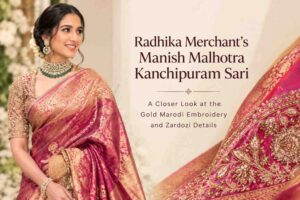
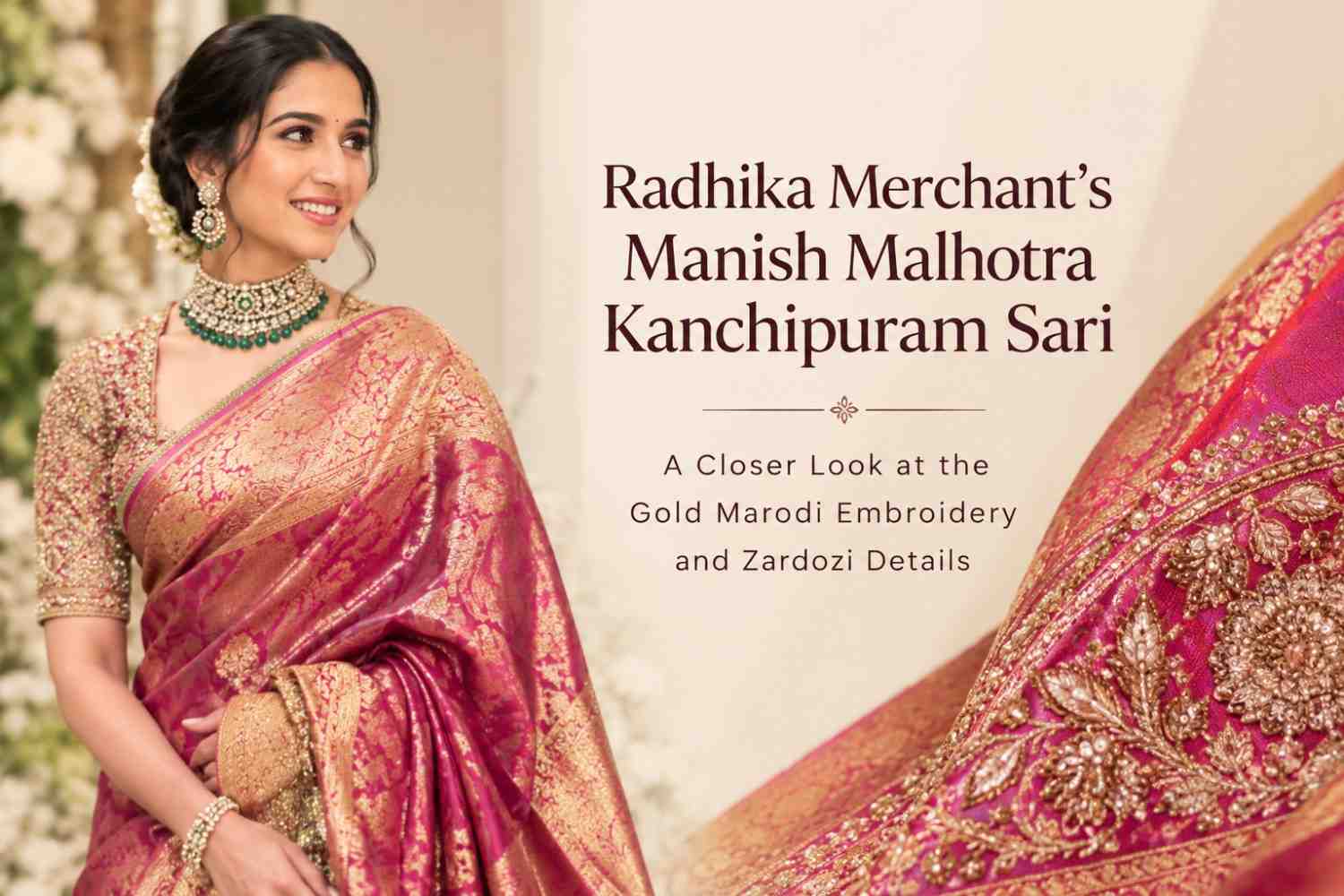
Radhika Merchant’s Manish Malhotra Kanchipuram sari featured a jewel-pink hue, rich gold zari, antique-gold marodi embroidery, and intricate zardozi detailing. She wore the custom Kanjeevaram silk sari for her classical dance performance during the Ambani family’s Ganesh Chaturthi celebrations.
Radhika Merchant’s Manish Malhotra Kanchipuram Sari: Design Details
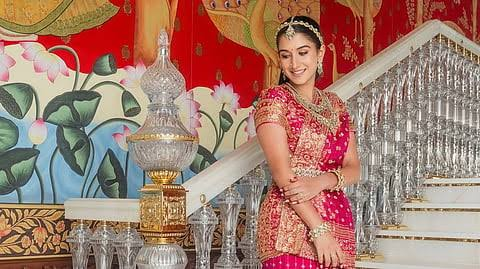
Radhika Merchant chose an elaborate hand-crafted fuchsia and gold Kanchipuram silk saree by Manish Malhotra to adorn herself during the Ambani’s family celebration of Ganesh Chaturthi at Antilia. The saree was specially crafted for Radhika Merchant taking into account her Bharatanatyam dance performance and featured the union of South Indian silk and gold zari and antique gold marodi embroidery.
Key Takeaways: Radhika Merchant’s Manish Malhotra Kanchipuram sari
- Radhika Merchant wore a custom Manish Malhotra Kanchipuram silk ensemble.
- The look featured a rich fuchsia-pink colour palette with gold detailing.
- Antique-gold marodi embroidery and zardozi enhanced the handwoven silk.
- The traditional six-yard format was reinterpreted as a pre-stitched silhouette with structured pleats.
- The ensemble was designed with Radhika’s Bharatanatyam performance in mind.
- She paired the outfit with layered kundan-style jewellery, a kamarbandh, maang tikka, mathapatti and bangles.
Radhika Merchant’s Manish Malhotra Kanchipuram Sari for Ganesh Chaturthi
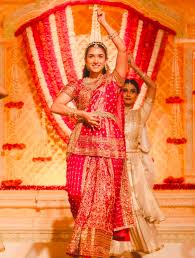
For the celebration of Ganesh Chaturthi for the Ambanis at Antilia, Radhika Merchant wore an elaborate creation in Kanchipuram silk designed by Manish Malhotra.
As opposed to displaying the Kanchipuram silk traditionally in the form of six yards, Malhotra designed an ensemble out of the traditional material. The pleating was done in a way that would unfurl as Radhika danced Bharatanatyam.
The combination of traditional handwoven silk and contemporary design made the creation even more unique.
The Fuchsia-and-Gold Kanchipuram Silk
The most notable colour combination used in Radhika Merchant’s outfit was the bold fuchsia pink with gold.
The rich and bright pink colour of the silk served as the base colour for the intricate embroidery design while gold zari, marodi, and zardozi made up the rich traditional Indian textile festival look. Vogue describes the fabric as the handmade silk fabric featuring large florals and paisley designs using the gold thread technique.
Kanchipuram silk is already known as the textile with a long-standing history. Kanchipuram Silk is registered as the Geographical Indication in India; the year of its registration was 2005. It is officially defined as the textile from the Kanchipuram region in the Tamil Nadu state.
Thus, the choice of Kanchipuram silk becomes even more significant for the festive occasion in India.
What Makes Radhika Merchant’s Sari Different?
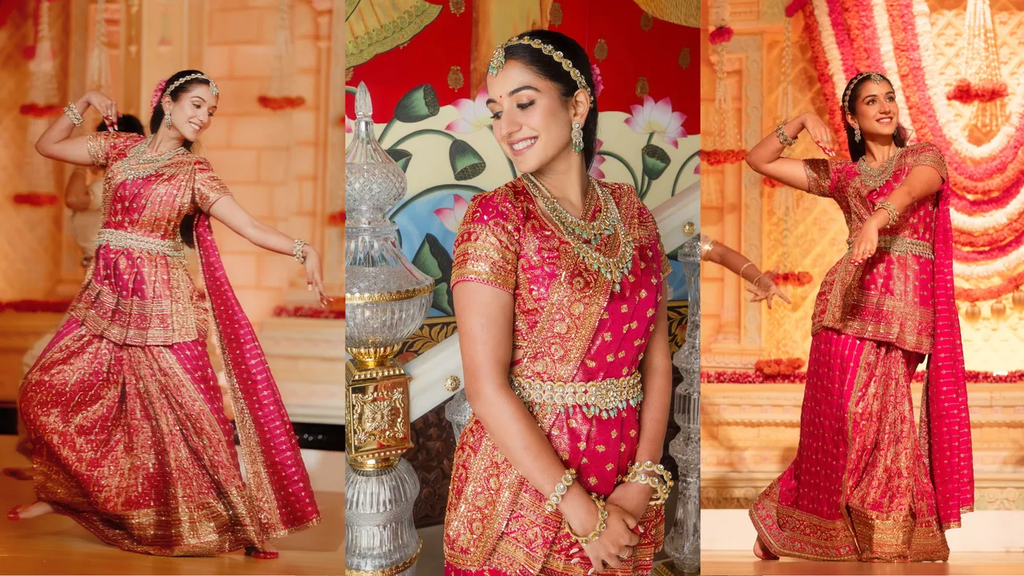
The most striking aspect of the attire is that it does not merely copy an age-old sari from Kanchipuram.
Manish Malhotra redesigned the silhouette around Radhika’s classical dance routine. The pleating has been done in such a way that it opens up equally on motion, thereby creating an enhanced visual impact through the flow of the fabric while doing Bharatanatyam.
Additionally, the sari has been draped in the seedha pallu style from Gujarat, thus creating a large embroidered portion at the front.
This method combines three different aspects:
| Element | Role in the Look |
| Kanchipuram silk | Provides the traditional textile foundation |
| Couture construction | Creates a pre-stitched, movement-friendly silhouette |
| Gold embroidery | Adds ceremonial richness and visual definition |
The result is a look that connects South Indian textile heritage with contemporary Indian couture.
Gold Marodi Embroidery and Zardozi: The Craft Details
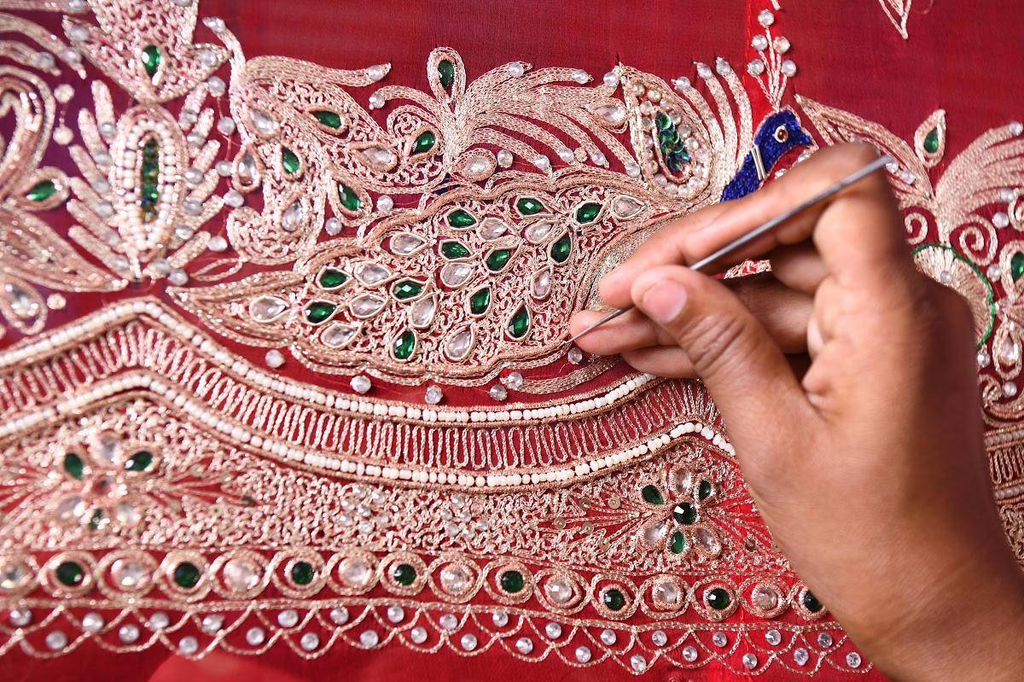
This is the most distinct element of the garment worn by Radhika Merchant.
Big floral and paisley-like designs were embroidered with antique gold marodi embroidery and zardozi. The golden thread was also included in the weaving process of the silk fabric.
What Is Marodi Embroidery?
Marodi is a form of hand embroidery associated with detailed threadwork. In contemporary Indian couture, marodi techniques can be used to create intricate linear, floral and ornamental patterns.
On Radhika’s outfit, the antique-gold treatment gives the embroidery a slightly vintage appearance while complementing the vivid fuchsia base.
What Is Zardozi?
Zardozi is a style of Indian embroidery which makes use of metal threads for decorations. Zardozi is normally used in bridal wear, high-end designs and ceremonial dresses.
In Radhika’s Kanchipuram style, the role of zardozi is combined with the use of gold zari and marodi embroidery and not just the single form of decoration.
This combination is quite essential because the visual effect is created by the combination of silk, zari, marodi, zardozi and jewels.
The Blouse Was Designed to Match the Sari
This particular blouse has been designed with the same color combination of pink and gold.
According to the details provided by Vogue Magazine, this blouse has short sleeves which have gold embroidered stripes all over. Furthermore, the collar of the blouse is also embellished with gold embroidery, while the pink colored blouse serves as the complement of the sari.
In this way, this particular blouse becomes the part of the sari.
Radhika Merchant’s Jewellery for the Kanchipuram Look
Jewellery was yet another important aspect of the styling.
Radhika was wearing a layered kundan style necklace which had stones encased in gold and pear shaped green emeralds at the bottom portion of the chain. These jewellery items were matched with earrings, mathapatti, maang tikka and a wide kamarbandh worn around the waist. Radhika was also wearing two bangles in each hand.
The entire jewellery styling enhanced the traditional look of the attire.
Jewellery Highlights
- Layered kundan-style necklace
- Green emerald drops
- Matching statement earrings
- Mathapatti
- Maang tikka
- Wide kamarbandh
- Stacked gold bangles
The styling demonstrates how traditional Indian jewellery can be used to frame an elaborate silk ensemble without changing its central colour story.
Radhika Merchant’s Hair and Makeup
Radhika’s makeup was equally stylish.
She had put on a stylish bun hairstyle, and there were some flowers in her bun, making her look very elegant, taking inspiration from performances in Indian classical dance. She had lined eyes, rosy cheeks, and red bindi as her makeup.
Her makeup looked very much complementing to the jewelry and sari, but it was not an accessory.
Why Kanchipuram Silk Is Significant
It is more than just a high-end fashion material made out of Kanchipuram silk.
As per the description of the National Portal of the Indian Government, Kancheepuram silk is defined as a traditional material made by the artisans using ancient techniques. The Kancheepuram Silk also holds GI certification.
According to the District Information of Government of Tamil Nadu, the traditional Kanchipuram silk sarees are linked to mulberry silk, contrasting borders and pallus, zari work, and temple designs and other natural motifs.
Kanchipuram Silk vs Kanjeevaram Silk: Are They the Same?
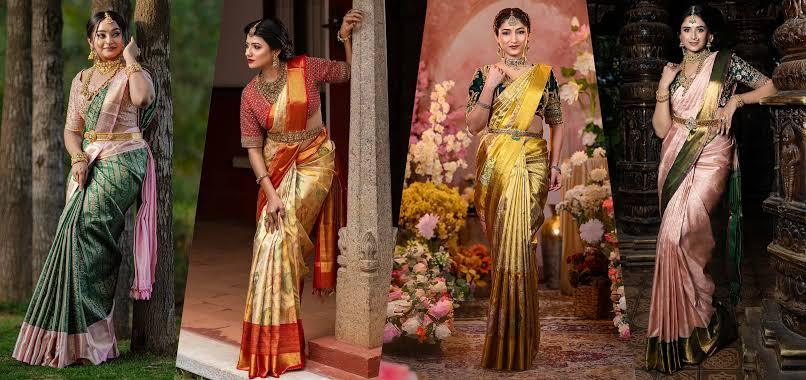
Yes. Both Kanchipuram silk and Kanjeevaram silk may mean the same type of silk sari, which originates from Kanchipuram in India.
The terms may differ according to the publication or designer in question. Indian official sources prefer the term Kancheepuram Silk, which is considered a protected Geographical Indication.
In that regard, searches for “Radhika Merchant Kanjeevaram sari” and “Radhika Merchant Kanchipuram sari” may describe the same fashion style.
The Bharatanatyam Connection
Radhika Merchant’s outfit was created with movement in mind because she performed Bharatanatyam during the celebration.
This explains the unusual construction of the ensemble. Instead of treating the sari exclusively as a static ceremonial garment, the design incorporated structured pleats that could open as she moved through Bharatanatyam positions.
The result is an interesting meeting point between Indian handloom, couture construction and classical dance.
A Modern Interpretation of Traditional Indian Fashion
The Manish Malhotra Kanchipuram sari of Radhika Merchant is a perfect example to illustrate how heritage fabrics can be renewed without losing their cultural connection.
In this particular example, the Kanchipuram silk is the traditional fabric in question, while the presence of gold zari and embroidery keeps the ceremonial nature of the textile. In contrast, the pre-sewing approach is the way how modern styling is taken care of.
It is just one of many examples of modern styling interpretation of traditional fabrics in the Indian fashion industry.
Of course, Kanchipuram silk has changed throughout time too. As mentioned on the government website of Tamil Nadu state, “modern-day Kanchipuram sarees have been developed taking into consideration contemporary trends in designs but retaining the traditions of the textile.”
How to Recreate the Radhika Merchant-Inspired Look
You do not need an identical couture ensemble to capture the essence of the look.
1. Start with a Jewel-Toned Silk Saree
Choose a fuchsia, magenta, deep pink or wine-toned silk sari with gold detailing.
2. Look for Gold Zari
A gold zari border or pallu immediately creates the traditional festive effect seen in Radhika’s ensemble.
3. Add Antique-Gold Embroidery
Marodi-inspired embroidery, zardozi or other metallic handwork can provide the ornate couture appearance.
4. Keep the Jewellery Coordinated
Choose gold jewellery with kundan-style stones or emerald accents rather than mixing several unrelated jewellery styles.
5. Finish with a Classical Hairstyle
A sleek bun decorated with fresh flowers creates a traditional finish that works particularly well with silk saris.
6. Let the Saree Remain the Focus
If the sari has extensive embroidery, balance it with coordinated jewellery and polished makeup instead of introducing too many competing colours.
Radhika Merchant Kanchipuram Sari: Style Breakdown
| Feature | Details |
| Designer | Manish Malhotra |
| Textile | Kanchipuram silk |
| Main colour | Fuchsia / rich pink |
| Accent | Gold |
| Embroidery | Marodi and zardozi |
| Weave detail | Gold zari |
| Silhouette | Pre-stitched, structured pleated format |
| Draping style | Gujarati seedha pallu |
| Occasion | Ganesh Chaturthi celebration at Antilia |
| Performance | Bharatanatyam |
| Jewellery | Kundan-style layered jewellery, emeralds, kamarbandh, mathapatti, maang tikka & bangles |
These details are based primarily on Vogue India’s published description of the look, supplemented by reporting from other fashion publications.
Frequently Asked Questions
What sari did Radhika Merchant wear for Ganesh Chaturthi?
Radhika Merchant wore a custom fuchsia-and-gold Kanchipuram silk creation by Manish Malhotra. The outfit incorporated gold zari, antique-gold marodi embroidery and zardozi detailing and was designed around her Bharatanatyam performance
Who designed Radhika Merchant’s Kanchipuram sari?
The Kanchipuram ensemble was designed by Indian couturier Manish Malhotra. Vogue India identifies the garment as a custom Manish Malhotra creation.
What colour was Radhika Merchant’s Kanchipuram sari?
The sari was primarily a rich fuchsia or jewel-pink shade with extensive gold detailing. The combination of vibrant pink silk and gold embroidery formed the central colour palette of the look.
Did Radhika Merchant wear a traditional six-yard sari?
Not in the conventional sense. Manish Malhotra adapted the Kanchipuram textile into a pre-stitched silhouette with structured pleats, allowing the garment to open with Radhika’s movement during her Bharatanatyam performance
What embroidery was used on Radhika Merchant’s sari?
The outfit featured antique-gold marodi embroidery and zardozi details, along with gold zari incorporated into the handwoven silk. Floral and paisley-like motifs were highlighted with the metallic craftsmanship.
What jewellery did Radhika Merchant wear with the sari?
She wore layered kundan-style jewellery with green emerald drops, statement earrings, a mathapatti, maang tikka, a broad kamarbandh and stacked bangles.
Why is Kanchipuram silk important?
Kanchipuram silk is a traditional textile associated with Kanchipuram in Tamil Nadu and has registered Geographical Indication status in India. The textile is known for its silk weaving tradition, distinctive borders and pallus, zari work and craftsmanship.
Is Kanjeevaram the same as Kanchipuram silk?
Kanjeevaram is a commonly used name for the Kanchipuram silk sari tradition. Official Indian sources use the designation Kancheepuram Silk, which has GI registration.
What makes Radhika Merchant’s Manish Malhotra look unique?
The look combines a heritage Kanchipuram silk textile with couture construction specifically adapted for Bharatanatyam movement. Its fuchsia colour, gold zari, marodi embroidery, zardozi and coordinated traditional jewellery create a distinctly contemporary interpretation of ceremonial Indian dressing.