




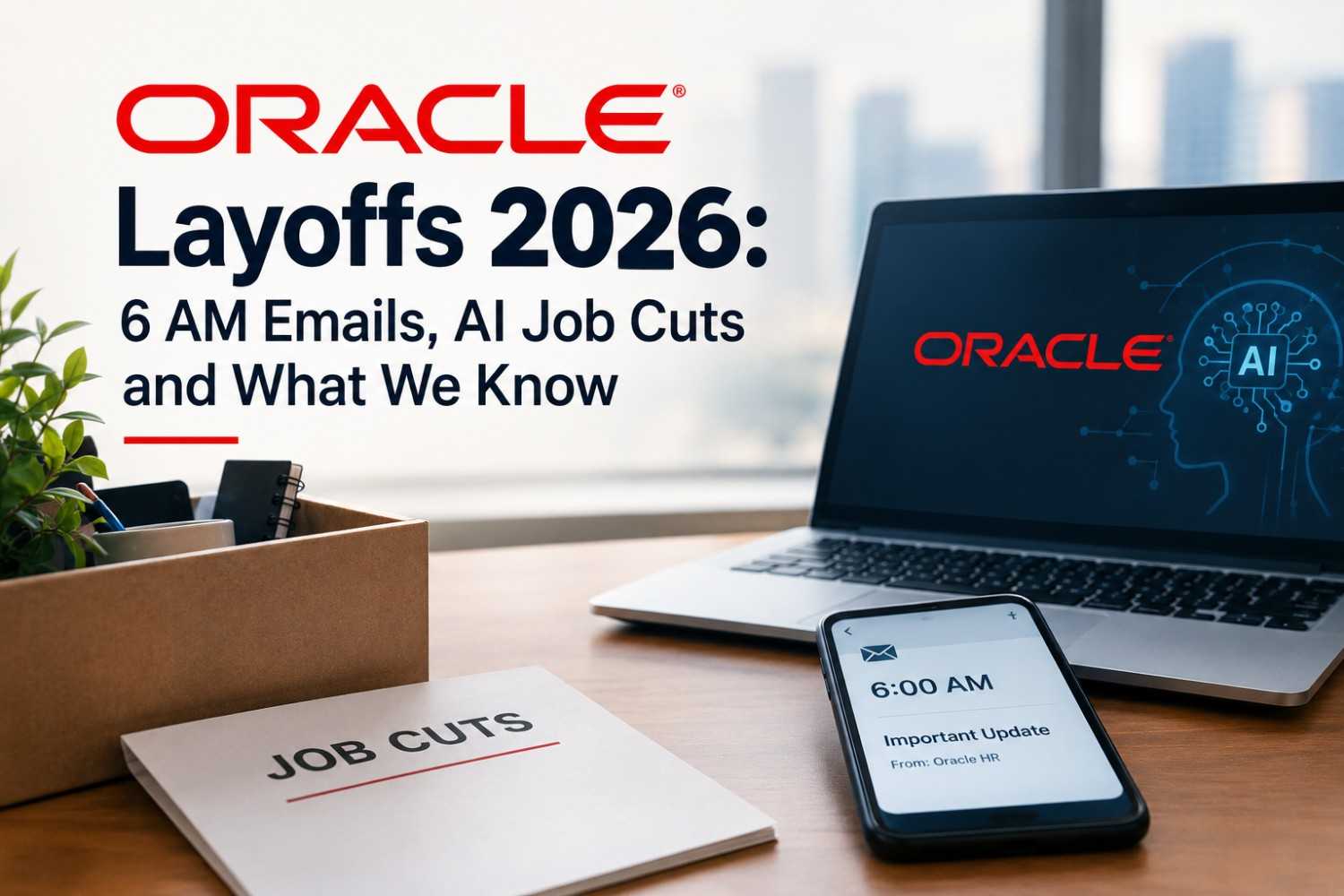
Oracle layoffs in 2026 have become a major talking point as the company restructures its workforce while simultaneously investing billions of dollars in artificial intelligence and cloud infrastructure. Oracle’s workforce fell by roughly 21,000 employees during fiscal 2026, while the company continues to expand its AI cloud business aggressively.
The latest reported layoffs have drawn particular attention because some affected employees reportedly received early-morning termination emails telling them that their current working day would be their last. Oracle has not publicly disclosed how many employees were affected by this latest round.
The bigger question, however, is whether Oracle’s job cuts are primarily the result of artificial intelligence – or whether AI is only one part of a much broader restructuring strategy.
Oracle Layoffs 2026: Key Facts at a Glance
- Oracle’s workforce declined by approximately 21,000 employees, or 13%, during fiscal 2026.
- Oracle had roughly 141,000 employees at the end of May 2026, compared with about 162,000 a year earlier.
- The company spent approximately $1.84 billion on severance and other restructuring costs during fiscal 2026.
- Oracle recently increased its estimated restructuring costs by another $700 million, taking the expected fiscal 2026 restructuring programme to about $2.8 billion.
- Oracle spent $28.5 billion on capital expenditure in Q1 fiscal 2027, while signing more than $30 billion in additional AI cloud contracts during the quarter.
What Happened in the Latest Oracle Layoffs?
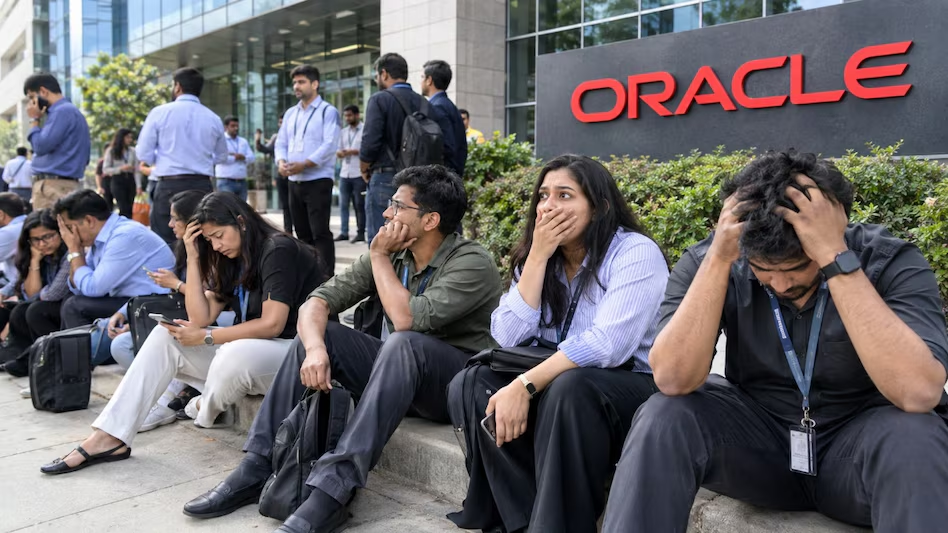
The latest reported Oracle layoffs attracted attention after affected workers received termination notifications early in the morning.
According to reporting reviewed by NDTV, some employees received emails around 6 a.m. informing them that their roles had been eliminated as part of a broader organisational change. The communications reportedly explained that access to company systems would be deactivated and that employees would receive further information about severance and separation arrangements.
Importantly, Oracle has not disclosed the number of employees affected by this particular round.
That distinction matters. Headlines about a specific number of new layoffs can be misleading when the company has not formally announced that figure.
What Did the Oracle Layoff Email Say?

Reports indicate that affected employees were told their positions had been eliminated as part of a broader organisational change and that the day they received the notification could be their final working day.
The reported communication also addressed access to company systems, separation documents and severance-related information.
Rather than treating the reported email as proof that every affected employee experienced exactly the same process, it is more accurate to describe it as an example of the termination communication reported by affected workers.
Why Is Oracle Laying Off Employees in 2026?
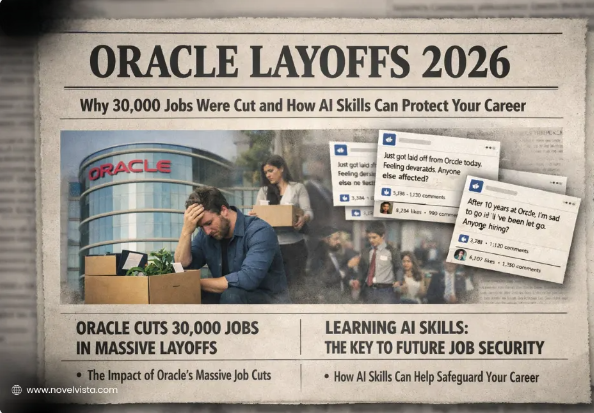
Oracle’s layoffs appear to reflect several overlapping factors rather than a single cause.
The company is restructuring its workforce while making enormous investments in cloud infrastructure and AI. At the same time, Oracle’s business is shifting toward areas where demand is growing rapidly, particularly cloud infrastructure and AI computing.
Oracle reported that its first-quarter fiscal 2027 revenue increased 30% year over year to $19.3 billion. Total cloud revenue increased 62%, while cloud infrastructure revenue increased 121%. The company also reported $664 billion in remaining performance obligations and more than $30 billion in new AI cloud contracts during the quarter.
This creates an important distinction:
Oracle’s layoffs do not necessarily mean the company is shrinking its AI ambitions; they are happening alongside an aggressive expansion of AI infrastructure.
In other words, Oracle appears to be reallocating resources rather than simply reducing investment across the board.
Are Oracle Layoffs Because of AI?
AI is one factor, but the available evidence does not support the claim that every Oracle job cut is directly caused by AI replacing workers.
Oracle has linked workforce reductions and restructuring to AI adoption and deployment, but restructuring can also involve cost management, changing business priorities, organisational consolidation and shifting demand between departments.
Independent research also suggests that the relationship between AI and employment is more complicated than a simple “AI replaces workers” narrative.
Goldman Sachs Research estimates that 6%–7% of US workers could ultimately be displaced by AI during a broad adoption transition, while also noting that AI can create new demand and employment opportunities.
Stanford researchers have separately found evidence that early-career workers in highly AI-exposed occupations have experienced disproportionately weaker employment outcomes since the widespread adoption of generative AI.
The broader lesson is that AI may eliminate some tasks, reduce demand for certain roles, change team structures and increase productivity without necessarily eliminating entire occupations.
How Many Employees Has Oracle Laid Off?
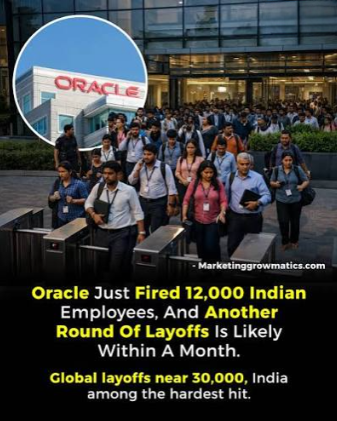
Oracle’s workforce declined by approximately 21,000 employees during fiscal 2026, equivalent to about 13% of its workforce.
The company had approximately 141,000 employees at the end of May 2026, compared with roughly 162,000 a year earlier. Oracle also spent approximately $1.84 billion on severance and restructuring-related costs during that period.
However, the number of employees affected by the latest reported September 2026 layoffs has not been publicly disclosed by Oracle.
That means the 21,000 figure should not automatically be presented as the number affected by the latest round. It represents the workforce reduction reported across fiscal 2026.
Oracle Layoffs vs AI Investment: What Is Really Happening?

At first glance, Oracle’s layoffs and AI spending appear contradictory.
They are actually two sides of the same strategic shift.
| Oracle development | What it indicates |
| Workforce down about 21,000 in FY2026 | Significant restructuring |
| $1.84 billion restructuring-related spending | Large financial impact from workforce changes |
| Restructuring estimate increased to about $2.8 billion | Continued organisational adjustment |
| $28.5 billion Q1 FY2027 capital expenditure | Aggressive infrastructure investment |
| $30+ billion new AI cloud contracts | Strong AI-related customer demand |
| $664 billion remaining performance obligations | Large future revenue backlog |
| Cloud infrastructure revenue up 121% | Rapid expansion in Oracle’s infrastructure business |
Oracle’s own latest results show strong cloud and AI demand despite the workforce reductions.
This suggests that the company is not simply “cutting jobs because AI is failing.”
Instead, Oracle is attempting to redirect capital and organisational resources toward a rapidly expanding AI and cloud infrastructure business while controlling costs elsewhere.
Why Is Oracle Spending Billions on AI While Cutting Jobs?

The economics of AI infrastructure help explain the apparent contradiction.
Oracle spent $28.5 billion on capital expenditure during the first quarter of fiscal 2027, more than three times the amount it spent in the comparable period a year earlier. The company also maintained a full-year capital expenditure forecast of approximately $90 billion to $95 billion
At the same time, Oracle said demand for AI training and inference services was growing faster than supply.
The company reported that it had delivered more than 300,000 GPUs to AI cloud customers since the end of the previous quarter and had signed more than $30 billion in additional AI cloud contracts during Q1 FY2027.
That means Oracle’s biggest resource requirements are shifting.
The company needs enormous amounts of capital for data centres, GPUs, networking, power and cloud infrastructure. Meanwhile, some traditional functions may require fewer employees as software, automation and AI-assisted workflows become more productive.
Which Oracle Jobs Could Be Most Exposed to AI?

It would be inaccurate to claim that a particular Oracle department will definitely be eliminated because of AI unless Oracle publicly confirms it.
However, broader labour-market research identifies several categories of work as more exposed to AI-driven automation.
These include:
- Routine software development tasks
- Customer-service operations
- Administrative work
- Certain accounting and analytical tasks
- Repetitive knowledge-work processes
- Some entry-level roles where work consists largely of predictable digital tasks
Goldman Sachs Research identifies programmers, accountants and auditors, legal and administrative assistants, and customer-service representatives among occupations with relatively high exposure to AI displacement.
Stanford research also suggests that younger workers in highly AI-exposed occupations may face stronger employment pressure than more experienced workers.
However, AI exposure is not the same thing as guaranteed job loss.
A role can be highly exposed to AI while becoming more productive rather than disappearing.
Is Oracle’s Layoff Strategy Part of a Larger Tech Industry Trend?

Yes.
Oracle’s restructuring is occurring during a broader technology-industry shift toward AI-driven productivity, cloud infrastructure and cost optimisation.
Goldman Sachs Research reported in September 2026 that AI adoption among major developed economies is generally in the 15%–20% range and that employment growth has slowed in industries with greater exposure to AI automation. The research also notes that the economy-wide impact remains limited so far, although junior workers may face stronger hiring headwinds.
This makes the Oracle story particularly significant.
The company’s strategy illustrates a transition occurring throughout the technology sector:
fewer resources devoted to some traditional workflows + more investment in AI infrastructure + greater pressure to increase productivity.
What Does Oracle’s AI Strategy Mean for Tech Workers?
Oracle’s restructuring offers several lessons for technology professionals.
First, technical skills alone may no longer provide the same level of job security they once did.
Second, workers who can combine technical expertise with AI tools, business knowledge and problem-solving ability may become increasingly valuable.
Third, entry-level workers may face greater pressure because some traditional junior-level tasks are among the easiest to automate or augment with AI.
This does not mean that technology careers are disappearing.
In fact, Oracle’s own expansion demonstrates the opposite: AI is creating enormous demand for cloud infrastructure, data centres, GPUs, networking, cybersecurity and specialised technical talent.
The nature of the jobs is changing faster than the overall demand for technology.
What Skills Should Tech Professionals Learn After the Oracle Layoffs?

Professionals concerned about AI-driven restructuring should focus on skills that complement automation rather than compete directly with it.
1. AI literacy
Professionals should understand how generative AI, AI agents, machine learning systems and automation tools are used in real business workflows.
2. Cloud infrastructure
Cloud computing remains central to AI deployment. Skills in infrastructure, distributed systems, databases and cloud architecture can become increasingly valuable as AI workloads scale.
3. Data skills
AI systems depend on high-quality data. Data engineering, data governance, analytics and database expertise remain important parts of enterprise AI.
4. Cybersecurity
More AI adoption also creates new security, privacy and governance challenges.
5. Business and domain expertise
AI can generate outputs, but organisations still need people who understand customers, regulations, risk, strategy and business consequences.
6. AI-assisted productivity
Learning how to use AI to complete existing work faster can be more valuable than treating AI purely as a technical speciality.
What Can Employees Learn From the Oracle Layoffs?
The Oracle layoffs highlight an important change in the modern technology labour market:
Job security increasingly depends on how valuable your skills remain as companies change their operating models.
Workers should therefore avoid relying exclusively on one tool, programming language, platform or narrow job function.
A stronger career strategy is to develop transferable skills while learning how AI is changing the specific industry in which you work.
The goal is not simply to “learn AI.”
The goal is to become more useful because you know how to work effectively with AI.
What Happens Next for Oracle?
Oracle’s near-term strategy appears heavily focused on scaling cloud and AI infrastructure.
Its latest results showed 30% year-over-year revenue growth, 62% growth in total cloud revenue and 121% growth in cloud infrastructure revenue. The company also reported $664 billion in remaining performance obligations.
That suggests Oracle’s AI investment cycle is far from over.
At the same time, the company’s restructuring costs and workforce reductions show that the transition is expensive.
The central challenge for Oracle will be balancing three competing priorities:
- Building enough infrastructure to capture AI demand.
- Maintaining financial discipline while funding that expansion.
- Restructuring its workforce without damaging execution, customer service or innovation.
Bottom Line: Are Oracle Layoffs Really About AI?
Oracle’s 2026 layoffs are best understood as a combination of AI-driven transformation, cost restructuring and a major shift toward cloud infrastructure—not simply a case of AI replacing 21,000 employees.
The company has simultaneously reduced its workforce and dramatically increased spending on AI infrastructure.
The evidence therefore points toward workforce reallocation and organisational restructuring alongside automation, rather than a straightforward one-for-one replacement of human employees with AI.
For technology workers, the message is clear: AI is changing which skills companies value, how teams are structured and how much work can be completed by smaller teams.
The most resilient professionals are likely to be those who combine deep domain expertise with the ability to use AI effectively.
Frequently Asked Questions
How many employees did Oracle lay off in 2026?
Oracle’s workforce declined by approximately 21,000 employees, or 13%, during fiscal 2026. The company had roughly 141,000 employees at the end of May 2026, compared with about 162,000 a year earlier.
How many people were affected by the latest Oracle layoffs?
Oracle has not publicly disclosed the number of employees affected by the latest reported September 2026 layoffs. Reports describe early-morning termination notifications sent to some employees.
Is Oracle laying off employees because of AI?
AI is one factor behind Oracle’s workforce transformation, but the layoffs should not automatically be attributed entirely to AI. Oracle is simultaneously restructuring operations, controlling costs and investing heavily in AI and cloud infrastructure.
Did Oracle send layoff emails at 6 AM?
Reports indicate that some affected Oracle employees received termination emails around 6 a.m. The communications reportedly stated that their roles had been eliminated and that their working day could be their final day.
Why is Oracle cutting jobs while investing in AI?
Oracle is redirecting substantial resources toward AI and cloud infrastructure while restructuring other parts of its workforce. Its Q1 FY2027 results showed $28.5 billion in capital expenditure and more than $30 billion in new AI cloud contracts.
How much is Oracle spending on AI infrastructure?
Oracle spent $28.5 billion in capital expenditure during Q1 FY2027 and maintained a full-year capital expenditure forecast of approximately $90 billion to $95 billion. Much of this investment is connected to expanding cloud and AI infrastructure.
Are AI layoffs happening across the technology industry?
AI-related workforce pressure is appearing across several technology and knowledge-work sectors, although AI is only one factor behind layoffs. Goldman Sachs Research has found that highly AI-exposed industries and younger workers can face greater employment pressure as adoption increases.
What skills should technology workers learn because of AI?
AI literacy, cloud infrastructure, data engineering, cybersecurity, AI-assisted development and strong business-domain knowledge are useful areas to develop. The strongest strategy is generally to learn how AI can augment professional expertise rather than treating AI as a standalone skill.
Will AI replace technology jobs completely?
AI is more likely to transform many jobs than eliminate every role within an occupation. Research from Goldman Sachs indicates that AI could displace some workers while also increasing productivity and creating demand in other areas.