



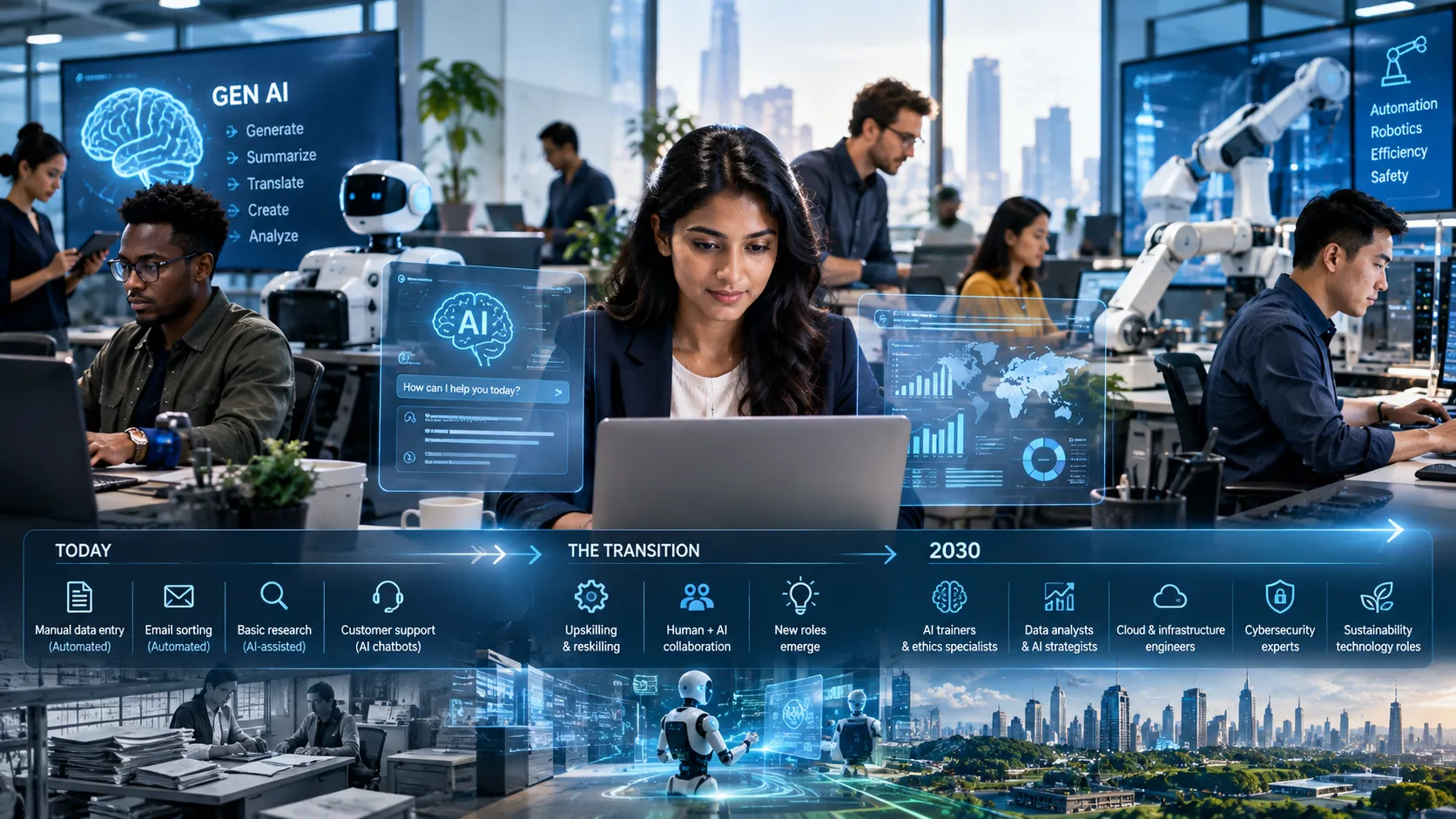
AI jobs को लेकर सबसे बड़ा सवाल अब यह नहीं है कि artificial intelligence नौकरियों को प्रभावित करेगा या नहीं। सवाल यह है कि कौन-सी नौकरियां कितनी तेजी से बदलेंगी, किन कामों को AI automate करेगा और किन skills की मांग बढ़ेगी।
अंतरराष्ट्रीय श्रम संगठन (ILO) के 2025 के आकलन के मुताबिक दुनिया में लगभग हर चार में से एक worker ऐसे occupation में है जिसमें Generative AI का कुछ स्तर का exposure है। लेकिन ILO का निष्कर्ष यह नहीं है कि इन सभी नौकरियों के खत्म होने की संभावना है। अधिकांश मामलों में AI से jobs के पूरी तरह खत्म होने के बजाय उनके tasks और काम करने के तरीके बदलने की संभावना ज्यादा है।
वहीं, World Economic Forum (WEF) के Future of Jobs Report 2025 के अनुसार 2030 तक विभिन्न बड़े economic और technological trends के कारण 170 million नए jobs पैदा हो सकते हैं, जबकि 92 million मौजूदा jobs displaced हो सकती हैं। यानी कुल मिलाकर करीब 78 million jobs का net increase अनुमानित है।
इसलिए AI की कहानी सिर्फ “नौकरी जाएगी” की कहानी नहीं है। असली बदलाव यह है कि एक नौकरी के अंदर किए जाने वाले कामों का मिश्रण बदल सकता है।
AI आपकी नौकरी को कैसे बदल सकता है?
AI किसी पूरी नौकरी को replace करने से पहले आमतौर पर उस नौकरी के कुछ tasks को automate करता है।
उदाहरण के लिए एक accountant को लें।
पहले उसे data entry, invoice processing, basic reconciliation, reports और analysis के कई हिस्से manually करने पड़ सकते थे। AI इनमें से कुछ repetitive tasks तेजी से कर सकता है।
लेकिन इसका मतलब यह नहीं कि accountant की जरूरत तुरंत खत्म हो जाएगी।
उसकी भूमिका tax interpretation, financial decisions, client communication, risk assessment और complex cases की ओर ज्यादा जा सकती है।
यही कारण है कि ILO के अनुसार AI का सबसे संभावित प्रभाव job transformation है, न कि व्यापक स्तर पर complete replacement.
आसान भाषा में समझें
AI अक्सर “पूरी नौकरी” को नहीं, बल्कि नौकरी के अंदर मौजूद repetitive tasks को target करता है।
जिस job में repetitive, predictable और digital tasks ज्यादा हैं, वहां automation का दबाव अधिक हो सकता है।
अगले 5 साल में किन नौकरियों पर AI का सबसे ज्यादा असर पड़ सकता है?
हर occupation पर AI का प्रभाव समान नहीं होगा। जिन jobs में text, numbers, routine information processing या standardized digital workflows ज्यादा हैं, उनमें exposure अपेक्षाकृत अधिक हो सकता है।
1. Data Entry और Clerical Jobs
Data entry operators, routine documentation और कई clerical roles AI automation के शुरुआती targets में रह सकते हैं।
AI documents पढ़ सकता है, information extract कर सकता है, forms भर सकता है और structured data को systems में डाल सकता है।
ILO के research में clerical occupations को Generative AI exposure वाला सबसे प्रमुख occupational group पाया गया है।
इसका अर्थ यह नहीं है कि हर clerical worker की नौकरी समाप्त हो जाएगी। लेकिन purely repetitive administrative work की मात्रा कम हो सकती है।
2. Customer Support और Basic Call-Centre Work
Customer service में AI पहले से ही chatbots, voice assistants और automated support systems के रूप में इस्तेमाल हो रहा है।
Basic questions जैसे:
- Order status क्या है?
- Password कैसे reset करें?
- Refund policy क्या है?
- Account कैसे update करें?
- Appointment कब है?
इनका जवाब AI दे सकता है।
इससे human customer-service employees की भूमिका complex complaints, emotional situations, escalation और relationship management की ओर जा सकती है।
यानी customer support खत्म होने के बजाय उसका skill requirement बदल सकता है।
3. Basic Content Writing और Translation
Generative AI ने text creation को काफी तेजी से बदल दिया है।
Simple product descriptions, basic summaries, routine emails, social-media drafts और कुछ translation tasks AI तेजी से तैयार कर सकता है।
ILO ने भी बताया है कि GenAI की voice, image और video capabilities बढ़ने के साथ media और web-related occupations के कई tasks की automation exposure बढ़ी है।
लेकिन high-quality journalism, investigative reporting, original research, expert analysis और strong editorial judgment जैसे काम अभी भी human expertise पर काफी निर्भर रहेंगे।
इसलिए content industry में सबसे बड़ा बदलाव संभवतः “writer vs AI” नहीं, बल्कि “AI-enabled writer vs non-AI-enabled writer” की दिशा में हो सकता है।
4. Basic Accounting और Bookkeeping
Routine financial tasks भी automation के लिए relatively suitable हैं।
AI और accounting software मिलकर:
- invoices categorize कर सकते हैं,
- transactions process कर सकते हैं,
- expense reports तैयार कर सकते हैं,
- anomalies identify कर सकते हैं,
- basic financial summaries बना सकते हैं।
इसका मतलब यह नहीं कि accountants खत्म हो जाएंगे।
बल्कि basic bookkeeping से ऊपर उठकर financial interpretation, compliance, strategic advice और risk management की भूमिका अधिक महत्वपूर्ण हो सकती है।
WEF ने accountants और auditors को 2025-2030 के दौरान decline की उम्मीद वाले roles में शामिल किया है, हालांकि job decline केवल AI की वजह से नहीं बल्कि कई technological और economic trends के संयुक्त प्रभाव का परिणाम है।
5. कुछ Entry-Level Office और Knowledge Jobs
AI का एक महत्वपूर्ण प्रभाव entry-level work पर पड़ सकता है।
2026 की WEF research के अनुसार दुनिया भर में एक-तिहाई से ज्यादा young workers ऐसे occupations में हैं जहां AI-driven task change का medium से high exposure है। रिपोर्ट विशेष रूप से बताती है कि AI entry-level hiring और career pathways को प्रभावित कर रहा है।
यह महत्वपूर्ण है क्योंकि entry-level jobs अक्सर workers को शुरुआती अनुभव देती हैं।
अगर basic research, drafting, coding, analysis या administrative tasks AI करने लगे, तो कंपनियों के लिए junior employees की संख्या कम करने या उनसे अलग तरह के skills मांगने का incentive बढ़ सकता है।
इसका मतलब graduates के लिए competition केवल “degree” पर नहीं रहेगा।
AI के साथ काम करने की क्षमता increasingly important हो सकती है।
क्या Software Developers की नौकरियां भी खतरे में हैं?
यह AI jobs debate का सबसे complicated हिस्सा है।
AI coding assistants code लिख सकते हैं, bugs खोज सकते हैं, tests generate कर सकते हैं और documentation तैयार कर सकते हैं।
इससे junior-level repetitive coding tasks पर pressure बढ़ सकता है।
लेकिन दूसरी तरफ software और application developers को WEF ने 2030 तक fastest-growing roles में शामिल किया है। AI और information-processing technologies खुद नए software और technology roles की demand पैदा कर रही हैं।
इसका मतलब यह हो सकता है कि:
“AI programmer को खत्म करेगा” से ज्यादा सही बात है—”AI programmer के काम करने का तरीका बदल देगा।”
Future developer से सिर्फ code लिखने की उम्मीद नहीं होगी। उसे architecture, security, system design, product understanding, AI tools और problem-solving में मजबूत होना पड़ेगा।
कौन सी नौकरियां AI से अपेक्षाकृत ज्यादा सुरक्षित रह सकती हैं?
“AI-proof job” कहना सही नहीं होगा, क्योंकि कोई भी occupation technology से पूरी तरह सुरक्षित नहीं है।
लेकिन कुछ jobs में human interaction, physical presence, responsibility, judgment और unpredictable environments की भूमिका ज्यादा होती है।
इनमें शामिल हो सकते हैं:
- Healthcare professionals
- Nurses और caregivers
- Teachers
- Construction workers
- Skilled technicians
- Electricians
- Plumbers
- Social workers
- Therapists
- Emergency responders
- Sales और relationship-based roles
- Senior managers
- Skilled trades
- Jobs requiring complex physical work
WEF के अनुसार 2030 तक care economy, education, construction, delivery और agriculture जैसे कई बड़े employment categories में growth की संभावना है। Farmworkers, construction workers, delivery drivers, salespersons और food-processing workers absolute job growth वाली categories में शामिल हैं।
इसका एक कारण यह भी है कि physical-world tasks को पूरी तरह automate करना कई digital tasks की तुलना में अधिक कठिन हो सकता है।
AI किन नई नौकरियों को पैदा करेगा?
AI केवल jobs को replace नहीं करता; वह नई demand भी पैदा करता है।
WEF के अनुसार 2030 तक fastest-growing roles में कई AI और technology-related jobs शामिल हैं।
इनमें प्रमुख हैं:
- AI and Machine Learning Specialists
- Big Data Specialists
- Software and Application Developers
- FinTech Engineers
- Information Security Specialists
- Data Analysts and Scientists
- AI-related technical roles
इसके अलावा AI systems के साथ काम करने वाले professionals की भी demand बढ़ सकती है—जैसे AI product managers, AI governance specialists, model evaluators, AI security experts और AI implementation professionals।
AI के दौर में सबसे जरूरी skills कौन सी होंगी?
AI के आने के बाद सिर्फ technical skills महत्वपूर्ण नहीं होंगी।
ILO की अगस्त 2026 की research के अनुसार AI adoption workplace skills को बदल रही है और cognitive, socioemotional, digital तथा AI skills की मांग बढ़ रही है। AI literacy, adaptability, resilience और human agency भी महत्वपूर्ण होती जा रही हैं।
WEF की research भी इसी दिशा में संकेत देती है।
1. AI Literacy
हर व्यक्ति को AI engineer बनने की जरूरत नहीं है।
लेकिन यह समझना जरूरी होगा कि:
- AI क्या कर सकता है?
- इसकी limitations क्या हैं?
- सही prompt कैसे लिखें?
- AI output को verify कैसे करें?
- confidential information के साथ AI का इस्तेमाल कैसे करें?
2. Analytical Thinking
AI answer दे सकता है, लेकिन यह तय करना कि answer सही है या नहीं—अक्सर human judgment की जरूरत होगी।
3. Creativity
Original ideas, strategy और नए solutions AI economy में महत्वपूर्ण बने रह सकते हैं।
4. Communication
Strong communication, negotiation और collaboration जैसी skills मशीनों से अलग human advantage दे सकती हैं।
5. Adaptability
सबसे महत्वपूर्ण skill शायद यही होगी।
आज इस्तेमाल होने वाला AI tool पांच साल बाद बदल सकता है। इसलिए किसी एक software को सीखने के बजाय नई technology सीखने की क्षमता अधिक valuable हो सकती है।
भारत में AI Jobs का क्या भविष्य है?
भारत के लिए AI का प्रभाव विशेष रूप से महत्वपूर्ण है क्योंकि देश में IT, BPO, software services और large-scale digital employment का बड़ा ecosystem है।
WEF के India outlook के अनुसार भारत में 2030 तक तेजी से बढ़ने वाली roles में Big Data Specialists, AI and Machine Learning Specialists और Security Management Specialists शामिल हैं। भारतीय कंपनियां AI, robotics और autonomous systems में भी निवेश बढ़ाने की उम्मीद रखती हैं।
भारत में एक और बड़ा बदलाव skills-based hiring का हो सकता है।
WEF के मुताबिक भारत में 67% surveyed companies diverse talent pools का इस्तेमाल करने की उम्मीद रखती हैं, जबकि करीब 30% कंपनियां degree requirements हटाकर skills-based hiring की ओर बढ़ने की योजना बताती हैं।
इसका अर्थ यह हो सकता है कि आने वाले वर्षों में केवल यह कहना कि “मेरे पास degree है” पर्याप्त नहीं होगा।
Employers यह भी देखेंगे:
क्या आप AI tools के साथ productive तरीके से काम कर सकते हैं?
क्या AI से भारत में सबसे पहले IT Jobs प्रभावित होंगी?
IT sector AI adoption के लिए सबसे exposed sectors में से एक है, लेकिन इसका मतलब केवल job losses नहीं है।
Coding, testing, documentation, customer support और basic software development जैसे tasks में automation बढ़ सकता है।
साथ ही AI infrastructure, cybersecurity, cloud computing, data engineering और AI implementation जैसी नई opportunities भी बढ़ सकती हैं।
यही कारण है कि भारत के लिए सबसे बड़ी चुनौती AI को रोकना नहीं, बल्कि workforce को AI-enabled economy के लिए तैयार करना है।
भारत के 2026 AI Impact Summit के human-capital framework ने भी AI के साथ employment, skilling और workforce transformation को प्रमुख मुद्दा माना और job displacement के साथ productivity तथा नई employment categories की संभावनाओं पर जोर दिया।
अगले 5 साल में “AI से नौकरी जाएगी” से ज्यादा बड़ा खतरा क्या है?
सबसे बड़ा खतरा शायद AI खुद नहीं है।
खतरा यह है कि एक worker AI की productivity के साथ adapt कर ले और दूसरा न कर पाए।
कल्पना कीजिए कि एक कंपनी में दो employees हैं।
एक employee AI से:
- research करता है,
- reports बनाता है,
- data analyze करता है,
- presentations तैयार करता है,
- repetitive tasks automate करता है।
दूसरा employee वही काम पूरी तरह manual तरीके से करता है।
अगर दोनों का salary cost समान है, तो company के लिए पहला employee ज्यादा productive हो सकता है।
इसलिए भविष्य में competition केवल human vs machine नहीं हो सकता।
यह increasingly AI-enabled worker vs non-AI-enabled worker का भी competition हो सकता है।
क्या AI से कुल नौकरियां कम होंगी?
इसका निश्चित जवाब अभी उपलब्ध नहीं है।
लेकिन मौजूदा प्रमुख studies एक महत्वपूर्ण बात बताती हैं: AI job destruction और job creation दोनों को साथ लेकर चल सकता है।
WEF के 2030 projections में 170 million jobs के creation और 92 million jobs के displacement का अनुमान है, जिससे net 78 million jobs की वृद्धि बनती है। यह forecast केवल AI का परिणाम नहीं है; इसमें technology, demographic change, economic conditions और green transition जैसे कई trends शामिल हैं।
दूसरी ओर, ILO का research AI exposure को मुख्य रूप से task transformation के रूप में देखता है। उसके अनुसार दुनिया के लगभग 25% workers ऐसे occupations में हैं जिनमें कुछ GenAI exposure है, लेकिन highest exposure category में global employment का लगभग 3.3% हिस्सा आता है।
इसलिए “AI 25% jobs खत्म कर देगा” कहना गलत होगा।
25% आंकड़ा exposure को दर्शाता है, job losses को नहीं।
AI से सबसे ज्यादा प्रभावित होने वाली नौकरी और सुरक्षित नौकरी में क्या अंतर है?
| ज्यादा AI Exposure | अपेक्षाकृत कम Direct Automation |
|---|---|
| Data Entry | Nursing |
| Routine Clerical Work | Skilled Trades |
| Basic Customer Support | Construction |
| Routine Content Creation | Emergency Services |
| Basic Bookkeeping | Social Work |
| Repetitive Digital Tasks | Complex Sales |
| Basic Administrative Work | Hands-on Healthcare |
| Standardized Information Processing | Physical-world Technical Work |
यह table किसी job को पूरी तरह “safe” या “unsafe” घोषित नहीं करती। एक ही occupation में अलग-अलग tasks का AI exposure अलग हो सकता है।
क्या आपको AI से डरना चाहिए?
डरने के बजाय तैयारी करना ज्यादा उपयोगी है।
अगर आपका काम repetitive digital tasks पर heavily dependent है, तो अपने role को higher-value activities की ओर ले जाना समझदारी हो सकती है।
उदाहरण के लिए:
Data entry → Data analysis
Basic content writing → Research + Editorial strategy
Basic coding → Software architecture + AI-assisted development
Customer support → Complex problem solving + Customer relationship
Basic accounting → Financial analysis + Advisory
यह बदलाव overnight नहीं होगा।
लेकिन अगले पांच साल में career growth के लिए AI को competitor के बजाय productivity tool के रूप में इस्तेमाल करना महत्वपूर्ण advantage बन सकता है।
2030 तक Future of Work कैसा दिख सकता है?
WEF के अनुसार आज लगभग 47% work tasks मुख्य रूप से humans द्वारा किए जाते हैं, करीब 22% tasks technology द्वारा और 30% human-technology combination से पूरे होते हैं। Employers को 2030 तक इन तीन तरीकों के बीच ज्यादा balanced distribution की उम्मीद है।
इसका अर्थ है कि future workplace में तीनों चीजें साथ रहेंगी:
Human + AI + Automation
AI इंसान की जगह लेने के बजाय कई परिस्थितियों में इंसान के साथ काम करेगा।
लेकिन इसका दूसरा पहलू भी है: कुछ jobs में humans की आवश्यकता वास्तव में कम हो सकती है, खासकर वहां जहां tasks predictable, repetitive और आसानी से digitize किए जा सकते हैं।
AI Jobs के भविष्य का सबसे बड़ा सबक क्या है?
अगले पांच वर्षों में सबसे valuable employee जरूरी नहीं कि वह व्यक्ति हो जो सबसे ज्यादा काम करता है।
वह व्यक्ति अधिक valuable हो सकता है जो:
AI को सही काम देता है + output को verify करता है + बेहतर decisions लेता है + human skills का इस्तेमाल करता है।
AI के दौर में technical knowledge और human judgment के बीच संतुलन महत्वपूर्ण होगा।
इसलिए career planning का सवाल अब सिर्फ यह नहीं होना चाहिए कि:
“AI मेरी नौकरी लेगा या नहीं?”
बेहतर सवाल है:
“मेरी नौकरी के कौन से हिस्से AI कर सकता है और मैं कौन-सी ऐसी skills विकसित कर सकता हूं जिन्हें AI के साथ मिलकर इस्तेमाल किया जा सके?”
यही बदलाव आने वाले future of work की सबसे महत्वपूर्ण विशेषताओं में से एक हो सकता है।
निष्कर्ष: AI आपकी नौकरी बदल सकता है, लेकिन आपकी पूरी career value तय नहीं करता
AI jobs का भविष्य binary नहीं है। इसका मतलब यह नहीं कि एक दिन AI आएगा और इंसानों की सारी नौकरियां खत्म हो जाएंगी।
मौजूदा global evidence ज्यादा nuanced तस्वीर दिखाता है।
कुछ repetitive और highly digital tasks तेजी से automate हो सकते हैं। कुछ occupations में hiring कम हो सकती है। कुछ existing roles पूरी तरह बदल सकते हैं। लेकिन साथ ही AI, data, cybersecurity, software, healthcare, education और अन्य क्षेत्रों में नई demand भी पैदा कर सकता है।
आने वाले पांच साल में सबसे बड़ा career advantage शायद AI से बचने में नहीं, AI के साथ बेहतर काम करने में होगा।
और भारत जैसे बड़े workforce वाले देश के लिए इसका अर्थ साफ है: upskilling, reskilling और AI literacy अब optional career benefits नहीं, बल्कि workforce competitiveness के महत्वपूर्ण हिस्से बनते जा रहे हैं।
FAQ
क्या AI अगले 5 साल में मेरी नौकरी खत्म कर देगा?
जरूरी नहीं। ILO के अनुसार अधिकांश AI-exposed jobs में complete replacement के बजाय job transformation की संभावना अधिक है। हालांकि कुछ highly repetitive roles में automation और employment displacement का जोखिम ज्यादा है।
AI से कौन सी नौकरियां सबसे ज्यादा प्रभावित हो सकती हैं?
Clerical और routine administrative occupations सबसे ज्यादा exposed categories में हैं। Basic data entry, repetitive information processing, routine customer support और कुछ standardized digital tasks पर भी automation pressure बढ़ सकता है।
कौन सी jobs AI के दौर में बढ़ सकती हैं?
AI and Machine Learning Specialists, Big Data Specialists, Software Developers और cybersecurity-related roles जैसी technology jobs तेजी से बढ़ने वाली categories में हैं। Healthcare, education, construction और care-related roles में भी growth की संभावना है।
क्या AI से कुल मिलाकर नौकरियां कम होंगी?
यह निश्चित नहीं है। WEF के 2025 forecast में 2030 तक 170 million jobs के creation और 92 million jobs के displacement का अनुमान लगाया गया है। यह forecast केवल AI नहीं बल्कि कई global trends को शामिल करता है।
भारत में AI से किन jobs पर असर पड़ सकता है?
भारत में IT, BPO, software development और अन्य digitally intensive roles में AI-driven task transformation महत्वपूर्ण हो सकता है। दूसरी ओर AI, data और cybersecurity से जुड़े नए roles की demand भी बढ़ सकती है।
AI के दौर में कौन-सी skills सीखनी चाहिए?
AI literacy, analytical thinking, technological literacy, creativity, communication, adaptability और problem-solving महत्वपूर्ण skills हैं। Technical AI skills के साथ human-centered skills भी महत्वपूर्ण रहेंगी।
क्या Software Developer की नौकरी AI से सुरक्षित है?
पूरी तरह सुरक्षित नहीं। AI coding और testing के कई tasks automate कर सकता है, लेकिन WEF software and application developers को 2030 तक fastest-growing roles में रखता है। इसलिए developers के काम का nature बदलने की संभावना है, केवल समाप्त होने की नहीं।
क्या AI-proof career जैसी कोई चीज है?
पूरी तरह AI-proof career कहना उचित नहीं है। हालांकि ऐसे roles जिनमें physical work, human interaction, complex judgment, responsibility और unpredictable real-world situations ज्यादा हैं, उनमें direct automation की चुनौतियां अलग हो सकती हैं।
“Must Read” – AI Jobs 2026: Which IT Jobs Could Be Most Affected by Artificial Intelligence?