



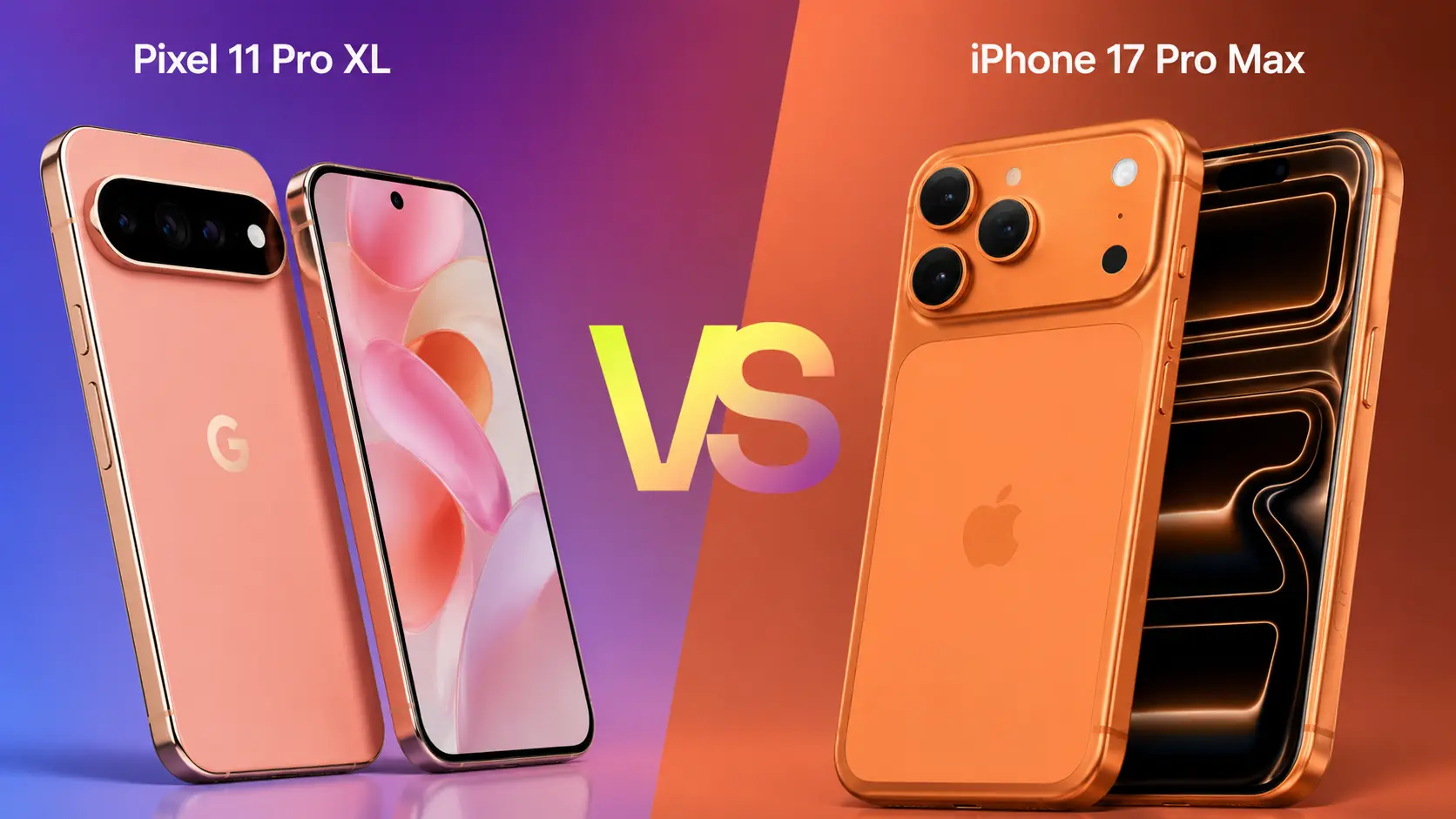
Google’s Pixel 11 Pro XL has arrived as the company’s largest and most feature-packed conventional smartphone, putting it directly against Apple’s iPhone 17 Pro Max in the premium flagship market.
The comparison is especially interesting because the two phones take different approaches to the same problems. Google is leaning heavily into Gemini, computational photography and Android-based AI features, while Apple continues to emphasize the A19 Pro chip, camera controls, video capabilities and the tightly integrated iOS ecosystem.
The Pixel 11 Pro XL starts at $1,299 for 256GB, while the iPhone 17 Pro Max starts at $1,199 for 256GB in the US. Google’s phone is therefore $100 more expensive at the entry level, although both offer larger storage configurations. Google has also made the Pixel 11 series available for purchase from August 20, 2026.
The real question is not simply which phone has the bigger specifications sheet. It is which flagship makes better use of its hardware—and which platform better matches the way you use a phone.
Pixel 11 Pro XL vs iPhone 17 Pro Max: Key specifications
| Feature | Google Pixel 11 Pro XL | Apple iPhone 17 Pro Max |
|---|---|---|
| Display | 6.8-inch OLED | 6.9-inch OLED |
| Refresh rate | Up to 120Hz | Up to 120Hz ProMotion |
| Peak brightness | Up to 3,600 nits | Up to 3,000 nits outdoors |
| Processor | Tensor G6 | A19 Pro |
| Operating system | Android 17 | iOS 26 |
| Rear cameras | 50MP + 48MP + 48MP | 48MP + 48MP + 48MP |
| Telephoto | 5x optical zoom, up to 120x Pro Zoom | 4x telephoto, up to 8x optical-quality zoom |
| Front camera | 42MP | 18MP Center Stage |
| Video | Up to 8K on supported modes | Up to 4K |
| Wired charging | Up to 45W | Up to 40W |
| Storage | 256GB, 512GB, 1TB | 256GB, 512GB, 1TB, 2TB |
| Starting US price | $1,299 | $1,199 |
Google’s Pro models introduce brighter displays, upgraded camera hardware and features such as Magic Capture, Camera Looks and the HiLight notification system. Apple, meanwhile, gives the iPhone 17 Pro Max a 6.9-inch OLED display, A19 Pro processor, ProMotion up to 120Hz and a 2TB storage option.
Display: Google wins the numbers game

The Pixel 11 Pro XL uses a 6.8-inch OLED panel, while Apple’s iPhone 17 Pro Max has a slightly larger 6.9-inch Super Retina XDR display.
Both support refresh rates up to 120Hz, so scrolling, animations and compatible games can look extremely smooth. The more notable difference is brightness.
Google’s Pixel 11 Pro XL is rated at up to 3,600 nits, putting it among the brightest smartphone displays available. The iPhone 17 Pro Max reaches 3,000 nits of peak outdoor brightness, according to Apple’s specifications.
That does not automatically mean the Pixel will look 20% better outdoors. Peak-brightness figures are measured under specific conditions, and everyday visibility also depends on screen reflectivity, automatic brightness and how long the display can sustain high brightness.
Still, for users who frequently use their phones outdoors, Google’s display specification is a meaningful advantage.
Apple’s screen has its own strengths, including Dynamic Island, Always-On display, ProMotion and Apple’s color-management system.
Display verdict: Pixel 11 Pro XL has the stronger headline brightness figure, while the iPhone remains highly competitive in overall display technology.
Performance: Apple still has the advantage in raw power
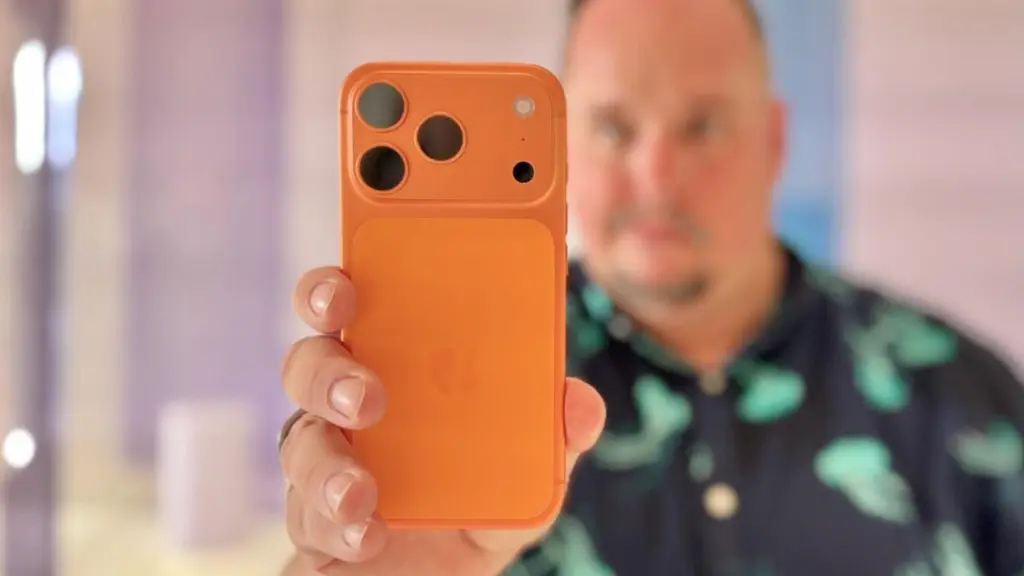
The Pixel 11 Pro XL is powered by Google’s new Tensor G6, while the iPhone 17 Pro Max uses Apple’s A19 Pro.
Google’s strategy with Tensor has never been solely about benchmark scores. The company designs the chip around on-device AI, photography and Google’s software ecosystem. The Pixel 11 series consequently puts considerable emphasis on Gemini and AI-assisted features.
Apple takes a different route. The A19 Pro is designed for high sustained performance, gaming, video processing and demanding professional workloads. Apple says the iPhone 17 Pro models can deliver substantially improved sustained performance compared with the previous generation thanks in part to the A19 Pro and vapor-chamber thermal management.
Early leaked benchmark results for the Pixel 11 Pro XL have also suggested that Tensor G6 does not close the raw-performance gap with Apple’s A19 Pro. Those results should be treated cautiously because benchmark performance can change with software and final retail hardware.
For everyday tasks—messaging, social media, photography, browsing and streaming—both phones should feel fast. The distinction becomes more important for demanding gaming, video editing and sustained workloads.
Performance verdict: iPhone 17 Pro Max is the safer choice for maximum raw processing performance; Pixel 11 Pro XL makes a stronger case through AI-focused hardware and software integration.
Cameras: Google pushes zoom and computational photography
Camera performance is one of the most important reasons to consider either phone.
The Pixel 11 Pro XL features a triple-camera system built around a 50MP main camera, 48MP ultrawide and 48MP telephoto hardware. Google also offers up to 120x Pro Zoom, with computational processing playing a major role at longer distances. The phone has a 42MP front-facing camera.
Apple’s iPhone 17 Pro Max also uses three 48MP rear cameras, paired with Apple’s image-processing and video technologies. The front camera is an 18MP Center Stage camera, which supports Apple’s newer framing features for photos and video calls.
Google’s biggest software addition is Magic Capture. The feature is designed to capture video while also intelligently selecting high-quality moments from the footage, potentially making it easier to get usable still images from moving subjects. Google has also introduced Camera Looks, which gives users more control over the visual character of photos.
Apple’s strength remains video. The iPhone 17 Pro Max supports advanced professional recording features, including ProRes RAW and Genlock, making it particularly relevant to creators who want to use a smartphone as part of a serious video workflow.
Camera verdict: Pixel is particularly compelling for AI-assisted photography and long-range zoom; iPhone remains the stronger proposition for professional-oriented video and Apple’s broader camera workflow.
Battery and charging: Pixel has the bigger battery, but capacity isn’t everything
The Pixel 11 Pro XL is reported with a 5,115mAh battery and supports up to 45W wired charging. The phone also supports Qi2 wireless charging.
Apple does not list the iPhone 17 Pro Max’s battery capacity on its technical specification page. Instead, Apple provides battery-life figures, with the company rating the phone for up to 39 hours of video playback on its current US specification page.
That distinction matters. Battery capacity alone cannot establish which phone lasts longer. Processor efficiency, modem behavior, display brightness, software optimization and individual usage all affect endurance.
Apple also supports fast charging, with the iPhone 17 Pro Max able to reach 50% in around 20 minutes using a 40W or higher adapter, according to Apple.
Battery verdict: Pixel has the larger published battery capacity and faster wired charging specification, but Apple’s official endurance figures make the iPhone a strong competitor.
AI is where the two phones really separate
The biggest difference between these phones may not be their cameras or displays. It is the software philosophy behind them.
Google has made Gemini a central part of the Pixel experience. The Pixel 11 generation introduces deeper AI functions, including improved voice interaction, translation, image tools and features designed to make AI useful inside everyday phone tasks.
The new HiLight system is another example of Google’s approach. The RGB notification light integrated into the camera area can provide visual notifications, including contact-related alerts, without requiring the user to turn the phone face-up.
Apple’s approach is more tightly tied to Apple Intelligence and the wider iOS ecosystem. The iPhone 17 Pro Max can use Apple Intelligence features across supported apps, while the device also benefits from Apple’s integration with services such as iMessage, FaceTime and the company’s broader hardware ecosystem.
For someone already using a Mac, Apple Watch or AirPods, the iPhone can offer advantages that do not show up in a specification table.
Android users, meanwhile, may prefer Google’s more aggressive AI integration and greater flexibility.
Price and storage could make the decision harder
Google’s $1,299 starting price makes the Pixel 11 Pro XL more expensive than the $1,199 iPhone 17 Pro Max at the base 256GB level.
The Pixel 11 Pro XL is available with 256GB, 512GB and 1TB configurations. Apple’s Pro Max goes further with a 2TB option.
The price difference also needs to be viewed alongside promotions. Google’s launch offers have included gift-card incentives and trade-in promotions, while Apple’s iPhones frequently receive carrier and retailer discounts.
That means the actual price paid by a buyer can be considerably different from the advertised starting price.
“Sources Used“
The Verge — Pixel 11 preorder and release information
Apple — iPhone 17 Pro and iPhone 17 Pro Max Technical Specifications
Apple — iPhone 17 Pro and Pro Max announcement
The Verge — Google Pixel 11 series hands-on and features
The Verge — Pixel 11 series specifications and pricing comparison
Tom’s Guide — Pixel 11, Pixel 11 Pro and Pixel 11 Pro XL hands-on
TechRadar — Pixel 11 Pro XL hands-on impressions
Which flagship should you buy?
There is no universal winner because Google and Apple are targeting slightly different priorities.
Choose the Pixel 11 Pro XL if you want Google’s Android experience, deeper Gemini integration, an exceptionally bright display, long-range computational zoom, a large battery and Google’s latest AI photography features.
Choose the iPhone 17 Pro Max if you prioritize raw performance, professional video tools, Apple’s ecosystem, long-term integration with other Apple devices and a proven flagship platform.
The Pixel 11 Pro XL is arguably the more adventurous phone. Google is using AI as a reason to change how people interact with the camera, notifications and everyday tasks. Apple’s approach is more conservative but highly polished, with the A19 Pro, camera system and iOS ecosystem forming a tightly integrated package.
The most important takeaway is that the Pixel’s higher price does not automatically make it the better flagship. Likewise, Apple’s lower starting price does not make the iPhone the obvious winner. The decision increasingly comes down to Android and Gemini versus iOS and Apple Intelligence, with cameras, performance and ecosystem considerations determining which side makes more sense for each buyer.
“Must Read”
iPhone 18 May Get 12GB RAM for Advanced Siri AI: What Buyers Need to Know
iPhone 18 Pro Launch Date: सितंबर में लॉन्च के पीछे मांग से ज्यादा बड़ी है पूरी सप्लाई चेन की रणनीति
Google Tensor G6: Pixel 11 का नया चिपसेट AI, कैमरा और पावर एफिशिएंसी पर क्यों दे रहा है जोर?