


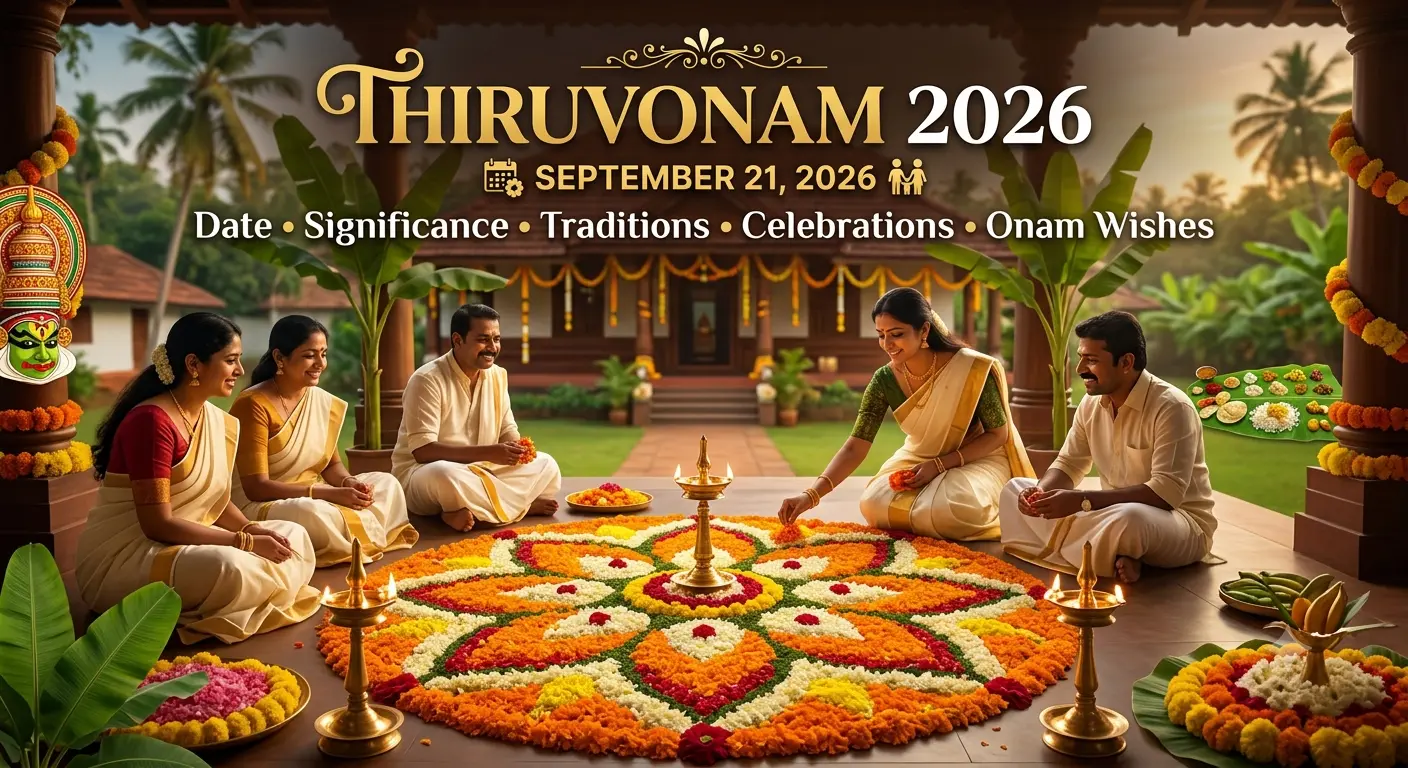
Thiruvonam 2026 is being celebrated across Kerala and by Malayali communities around the world on Wednesday, August 26, 2026. It is the most important day of the traditional ten-day Onam celebrations and is associated with the annual homecoming of the legendary King Mahabali.
The day brings together Kerala’s distinctive traditions, including colourful Pookalam, the grand vegetarian Onasadya, traditional games, cultural performances, temple observances and family gatherings. Kerala Tourism describes Thiruvonam as the culmination of the ten-day Onam festivities and highlights its themes of joy, unity and prosperity.
Thiruvonam 2026: Quick Facts
- Festival: Thiruvonam / Thiru Onam
- Date: August 26, 2026
- Day: Wednesday
- State most closely associated with the festival: Kerala
- Festival: Onam
- Main traditional symbols: Pookalam, Onasadya, traditional games and cultural performances
- Legend associated with the festival: King Mahabali
- Festival significance: Harvest, gratitude, prosperity, unity and the legendary return of Mahabali
Kerala Tourism’s 2026–27 digital event calendar identifies August 26, 2026, as Thiruvonam, the zenith of the ten-day Onam festivities.
What Is Thiruvonam?
Thiruvonam is the most auspicious and significant day of the Onam festival in Kerala. It marks the culmination of the traditional ten-day celebrations that begin with Atham.
According to Kerala Tourism, Onam is a festival associated with the homecoming of King Mahabali. Homes are decorated with floral carpets, families prepare Onasadya, and people participate in traditional celebrations during the festive period.
For many Malayali families, Thiruvonam is a time to come together, share a festive meal and celebrate values such as prosperity, harmony and togetherness.
Why Is Onam Celebrated?
Onam is traditionally associated with the legend of King Mahabali, a beloved ruler remembered for his generosity and prosperous reign.
The traditional story says that Mahabali’s popularity and power became a concern to the gods. Lord Vishnu appeared before him in the form of Vamana and tested the king’s generosity. Mahabali ultimately offered himself to fulfil Vamana’s request.
The legend further holds that Mahabali was granted permission to return and visit his people once every year. Onam is therefore traditionally celebrated as the time of his homecoming.
Kerala Tourism’s account of the festival identifies the return of Mahabali as a central part of the Onam tradition.
The Story of King Mahabali and Vamana
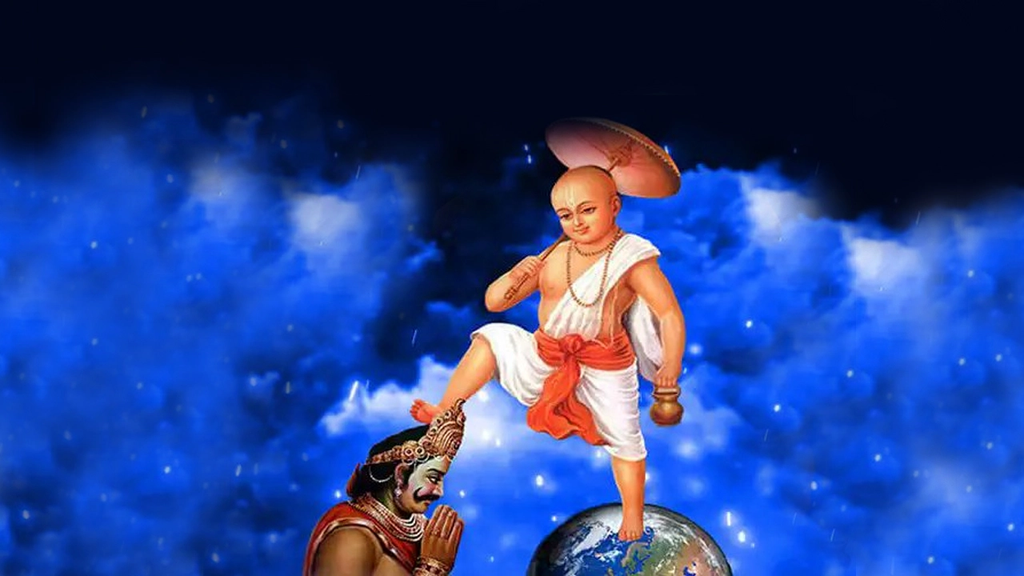
The story of Mahabali is one of the best-known traditions connected with Onam.
Mahabali is remembered in Kerala’s cultural tradition as a generous and respected ruler. According to the traditional narrative, Lord Vishnu appeared as Vamana, a dwarf Brahmin, and asked Mahabali for three paces of land.
Mahabali agreed.
Vamana then assumed a cosmic form and covered the earth and heavens in two steps. When there was no place remaining for the third step, Mahabali offered his own head.
The story concludes with Mahabali being sent to the netherworld while receiving permission to return to his people once a year.
This legendary homecoming is one of the reasons Onam remains deeply connected with ideas of generosity, equality, prosperity and the bond between a ruler and his people.
What Is Pookalam?
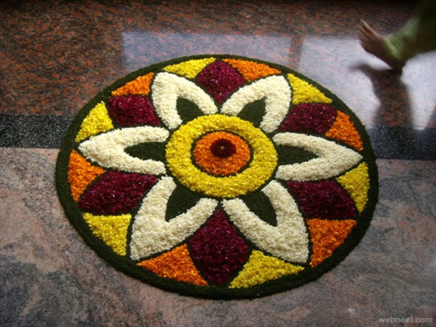
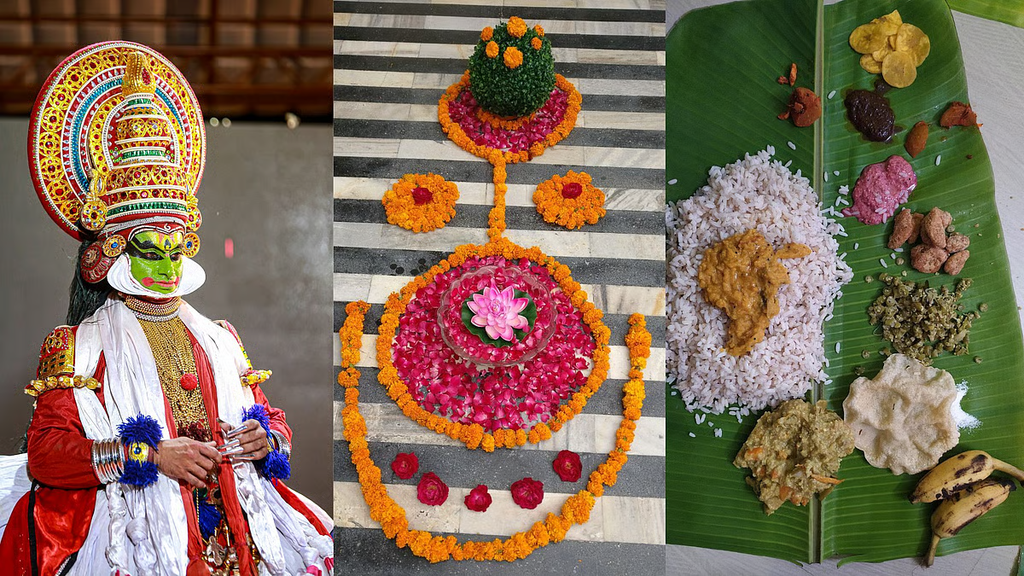
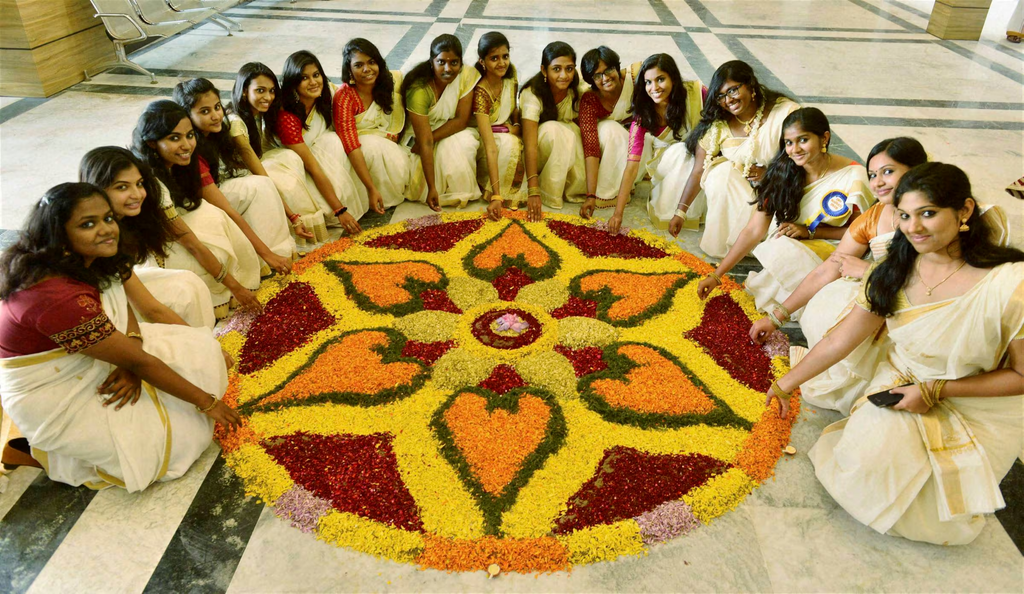
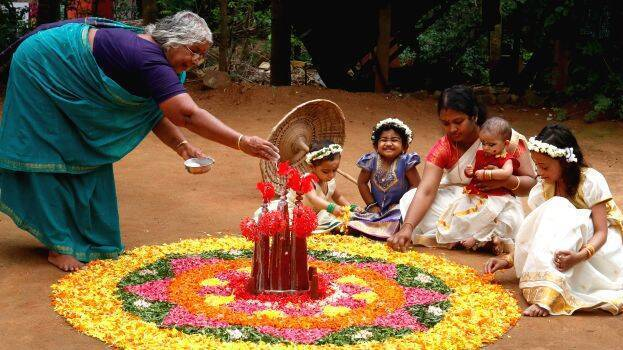
Pookalam is a traditional floral carpet created using colourful flowers during the Onam season.
Families and communities arrange flowers in decorative patterns outside homes and other spaces. The practice is especially prominent during the days leading up to Thiruvonam.
Pookalam is one of the most recognisable visual symbols of Onam and is traditionally associated with welcoming King Mahabali.
Kerala Tourism specifically identifies Pookalam as one of the important traditions of the ten-day festival.
What Is Onasadya?
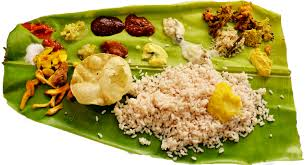
Onasadya is the traditional vegetarian feast associated with Onam.
The elaborate meal is traditionally served on a banana leaf and features a variety of vegetarian preparations. For many families, preparing and sharing Onasadya is one of the central experiences of Thiruvonam.
The feast is more than a meal: it represents hospitality, celebration and the tradition of bringing people together.
Kerala Tourism describes Onasadya as a grand vegetarian feast prepared during the Onam season.
How Is Thiruvonam Celebrated in Kerala?
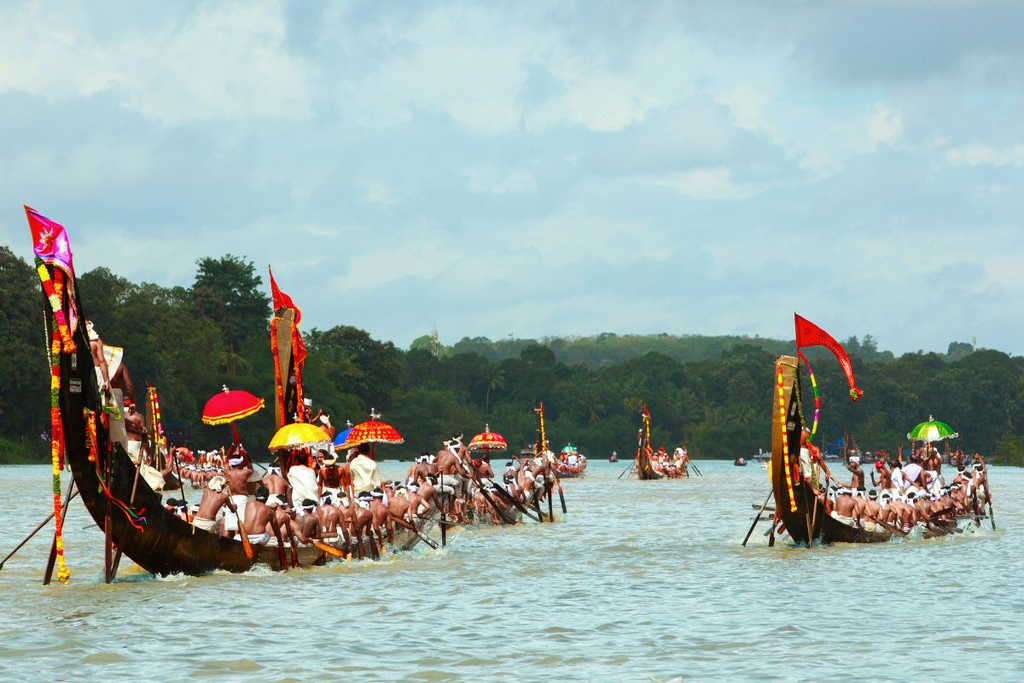
Thiruvonam celebrations combine family traditions, cultural activities and religious observances.
Common elements include:
- Creating colourful Pookalam designs
- Wearing traditional or new clothes
- Preparing and sharing Onasadya
- Visiting temples
- Participating in traditional games
- Watching cultural performances
- Organising community celebrations
- Spending time with family and friends
- Exchanging Onam greetings and gifts
In 2026, celebrations across Kerala include cultural programmes and traditional activities, while temples are also witnessing festive observances. News On AIR reported special poojas at prominent temples including Sabarimala, Aranmula and Guruvayur.
Onam Beyond Kerala: A Global Celebration
Although Onam is deeply rooted in Kerala, its celebrations extend far beyond the state.
Malayali communities around India and overseas continue to celebrate the festival through cultural associations, community gatherings, traditional meals, floral decorations and cultural programmes.
The global nature of the festival was also highlighted by Prime Minister Narendra Modi in his 2026 Onam message, in which he described Onam as a vibrant festival celebrated with enthusiasm around the world.
Onam 2026 Greetings From India’s Leaders
Thiruvonam 2026 has also been marked by greetings from India’s national leadership.
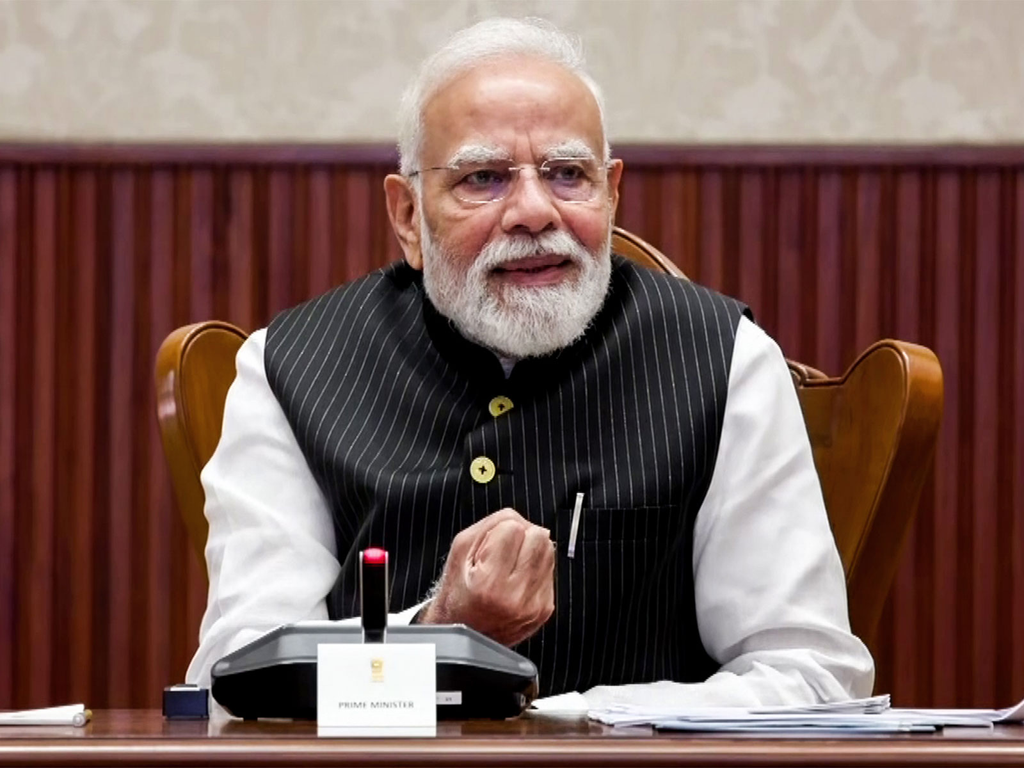
Prime Minister Narendra Modi
Prime Minister Narendra Modi extended Onam greetings on August 26, 2026, describing it as a vibrant festival celebrated not only in India but around the world. He expressed the hope that the festival would strengthen happiness, togetherness and prosperity in society.
President Droupadi Murmu
President Droupadi Murmu extended greetings to citizens, particularly people from Kerala living in India and abroad, on the eve of Onam.
Her message highlighted Onam as an occasion to express gratitude to nature for the arrival of the new harvest and emphasised the festival’s connection with India’s cultural heritage and unity in diversity.
Why Is Onam Called a Harvest Festival?
Onam is traditionally associated with the agricultural cycle and the arrival of the new harvest.
The festival provides an opportunity to express gratitude for nature’s bounty while celebrating prosperity and community.
President Murmu’s 2026 Onam message specifically described the festival as an occasion to express gratitude to nature for the arrival of the new harvest.
What Are the Main Traditions of Onam?
The major traditions associated with Onam include:
| Tradition | What it represents |
| Pookalam | Floral decoration and festive welcome |
| Onasadya | Community, hospitality and celebration |
| Traditional clothing | Festive identity and cultural heritage |
| Temple observances | Religious and spiritual traditions |
| Traditional games | Community participation and recreation |
| Cultural programmes | Kerala’s performing arts and heritage |
| Family gatherings | Togetherness and shared celebration |
| Boat races | One of Kerala’s best-known festive traditions |
Kerala Tourism notes that Onam celebrations can include Pookalam, swings, Onasadya and cultural traditions, while official descriptions of Thiruvonam also highlight traditional games and performances.
What Makes Thiruvonam 2026 Special?
Thiruvonam 2026 brings together the traditional and contemporary dimensions of Onam.
The day is being celebrated across Kerala with family gatherings, floral decorations, festive meals, temple observances and cultural activities. At the same time, Malayali communities outside Kerala continue to keep the traditions alive through celebrations in India and overseas.
The combination of heritage, food, family, art and community makes Thiruvonam one of Kerala’s most distinctive cultural celebrations.
Thiruvonam 2026: Key Takeaways
- Thiruvonam 2026 falls on August 26, Wednesday.
- It is the culmination of the traditional ten-day Onam festivities.
- The festival is closely associated with the legendary homecoming of King Mahabali.
- Pookalam is one of the most recognisable Onam traditions.
- Onasadya is the traditional vegetarian feast associated with the festival.
- Onam is traditionally connected with the harvest and gratitude towards nature.
- The festival is celebrated by Malayali communities in Kerala, across India and around the world.
- The values associated with Onam include togetherness, prosperity, harmony and cultural heritage.
Frequently Asked Questions
When is Thiruvonam 2026?
Thiruvonam 2026 is on Wednesday, August 26, 2026. Kerala Tourism’s 2026–27 event calendar lists August 26 as Thiruvonam, the culmination of the ten-day Onam festivities.
What is the significance of Thiruvonam?
Thiruvonam is the most significant day of the Onam festival and is traditionally associated with the annual homecoming of King Mahabali. It is also connected with harvest, prosperity, gratitude, unity and togetherness.
Who is King Mahabali?
King Mahabali is the legendary ruler at the centre of the traditional Onam story. He is remembered for his generosity and prosperous reign, and Onam is traditionally associated with his annual return to visit his people.
What is Pookalam?
Pookalam is a decorative floral carpet created using flowers during the Onam season. It is one of the most recognisable traditions of the festival.
What is Onasadya?
Onasadya is the traditional vegetarian feast associated with Onam. It typically features multiple dishes and is traditionally served on a banana leaf.
Is Onam celebrated outside Kerala?
Yes. Onam is celebrated by Malayali communities across India and around the world. The Prime Minister’s 2026 Onam message also noted that the festival is celebrated worldwide with enthusiasm.
Why is Onam called a harvest festival?
Onam is traditionally associated with the arrival of the harvest and gratitude towards nature. President Droupadi Murmu highlighted this aspect in her 2026 Onam message.
What are the main Onam celebrations?
Major celebrations include Pookalam, Onasadya, traditional games, cultural programmes, family gatherings, temple observances and other community activities.
What is the main message of Onam?
Onam is widely associated with happiness, togetherness, prosperity, harmony, gratitude and Kerala’s rich cultural heritage.
Final Thoughts
Thiruvonam 2026 is more than a festival date—it is a celebration of Kerala’s cultural identity, traditions and spirit of togetherness.
From the colourful Pookalam and elaborate Onasadya to the legend of King Mahabali and celebrations among Malayalis around the world, Onam connects generations with a shared cultural heritage.
As Kerala and Malayali communities worldwide celebrate Thiruvonam, the festival continues to carry enduring themes of happiness, harmony, prosperity, gratitude and togetherness.