



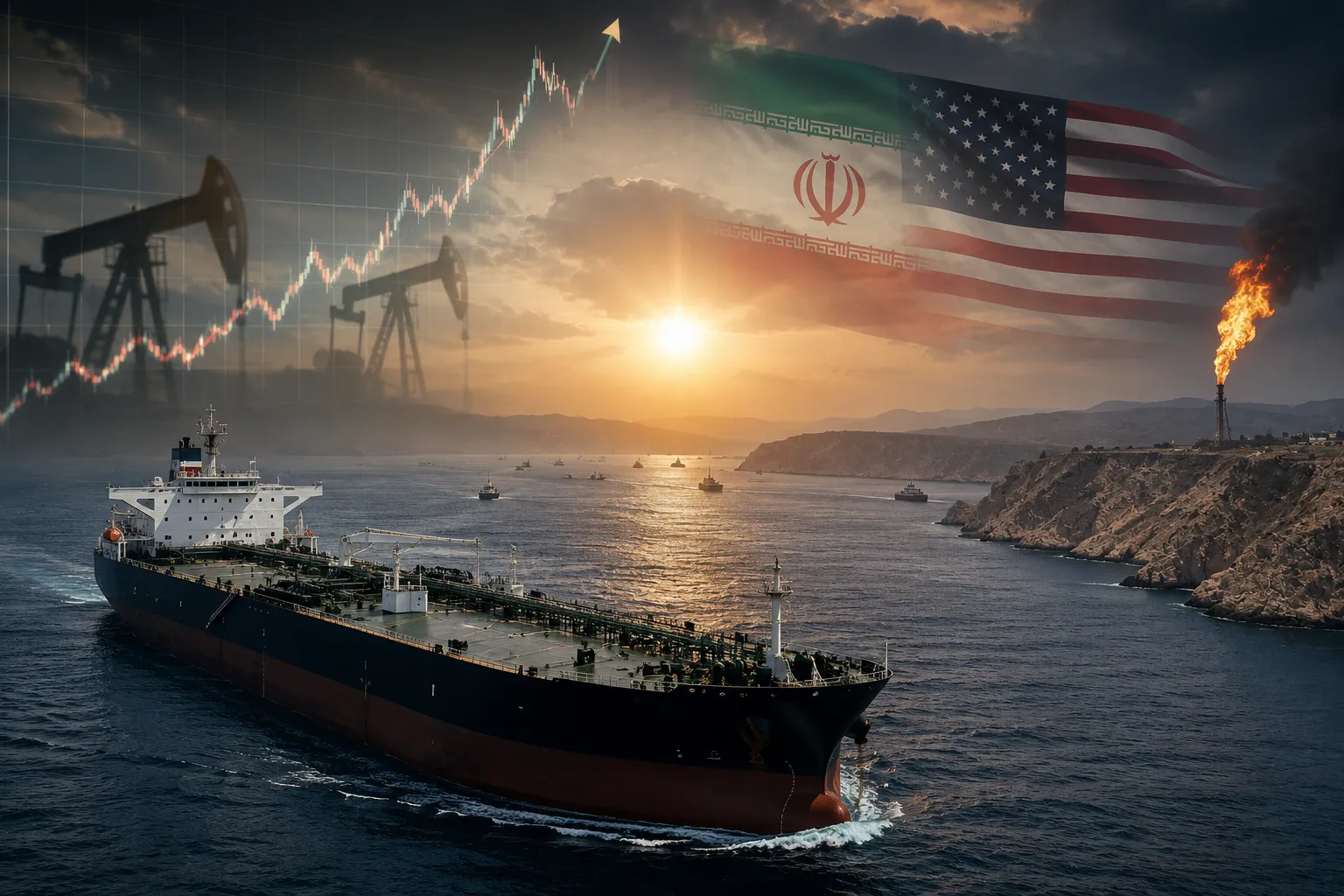
Oil prices are rising today because renewed US-Iran military tensions have increased fears of disruption to crude shipments through the Strait of Hormuz. Brent crude moved back above $90 a barrel on August 31 after US forces struck Iranian launchers on Larak Island and Iran retaliated with attacks on US positions in Jordan.
Reuters reported Brent crude futures at $90.32 a barrel, up 2.52%, in one of its latest market updates, while WTI was at $85.41, up 2.41%. Prices have been volatile as traders assess whether the renewed conflict will actually interfere with physical oil supplies.
The important point is that oil is not rising simply because the US and Iran exchanged strikes.
Markets are reacting to the possibility that the conflict could threaten one of the world’s most important oil-shipping routes.
That route is the Strait of Hormuz.
https://www.investing.com/news/commodities-news/oil-jumps-more-than-2-after-us-attack-on-irans-larak-island-4882075
Why Are Oil Prices Rising Today?
The immediate trigger is the renewed US-Iran confrontation around the Strait of Hormuz.
US forces struck two Iranian launchers on Larak Island on August 30, according to US officials. Washington said the launchers were being prepared to deploy rockets carrying sea mines into the Strait.
Iran subsequently retaliated with missile attacks against US positions in Jordan, according to Iranian reports and regional officials.
For oil traders, the concern is straightforward:
More conflict → greater shipping risk → potential supply disruption → higher oil-risk premium.
The market does not need an immediate physical shortage for prices to rise.
Traders often price in the possibility of future disruption before it actually happens.
https://apnews.com/article/iran-strait-hormuz-strike-united-states-6b098da673ac3161a266ee459d5eff44
Why Is Brent Crude Above $90?
Brent crossed back above $90 because traders are assigning a higher geopolitical risk premium to crude.
Brent is the major international benchmark used to price a large share of globally traded oil.
When the risk of supply disruption increases, buyers may be willing to pay more for future barrels.
Reuters reported Brent climbing more than 2% following the renewed US-Iran fighting, with the benchmark reaching $90.32 in one update.
Other market updates showed Brent moving around the $90 level during the session, demonstrating how quickly prices were changing.
So the $90 level is important not because $90 itself changes the physical oil market, but because it reflects a sharp reassessment of geopolitical risk.
What Does the Strait of Hormuz Have to Do With Oil Prices?
The Strait of Hormuz is the central reason this geopolitical development matters to global oil markets.
The waterway connects the Persian Gulf with the Gulf of Oman and the Arabian Sea.
Major oil producers in the Gulf rely on the maritime route to reach international buyers.
That means any serious disruption could affect the global balance between oil supply and demand.
The US-Iran conflict has already reduced normal maritime activity through the Strait, according to AP reporting.
The latest concern is that the military confrontation could make commercial shipping even more difficult.
Why Would Sea Mines Push Oil Prices Higher?
Sea mines are particularly concerning because they can threaten ships without requiring a direct attack on every vessel.
If mines are deployed into shipping routes, vessels could face:
- Higher insurance costs
- Longer waiting times
- Security restrictions
- Rerouting
- Higher freight costs
- Reduced willingness to transport oil through the area
Even before a tanker is damaged, shipping companies may become more cautious.
That can reduce the amount of oil moving through a critical route and increase the market’s perception of supply risk.
This is why the US strike on Larak Island had consequences far beyond the island itself.
Is There Actually an Oil Supply Shortage?
Not necessarily—not yet.
This distinction is important.
The current price increase reflects a combination of geopolitical risk and fears of future supply disruption, rather than proof that the world has suddenly run out of crude.
Oil prices can rise because traders expect a shortage.
If the Strait remains operational and tanker traffic continues normally, some of that risk premium could eventually disappear.
But if the conflict causes a sustained reduction in shipments, the situation would become much more serious.
That is the scenario oil markets are watching.
What Happens If the Strait of Hormuz Is Seriously Disrupted?
A prolonged disruption could have consequences well beyond crude prices.
The potential chain reaction would look like this:
Strait disruption → fewer oil shipments → tighter global supply → higher Brent prices → higher fuel costs → inflation pressure.
Countries that import large quantities of oil would be particularly exposed.
Higher crude prices can eventually affect:
- Petrol
- Diesel
- Aviation fuel
- Shipping
- Manufacturing
- Chemicals
- Plastics
- Agriculture
- Electricity costs in some markets
The impact would therefore extend beyond the energy sector.
Why Does $90 Matter to Investors?
The $90 level is a psychologically important threshold.
When crude moves through a major round number, investors and traders often pay closer attention to whether the move is temporary or the beginning of a larger trend.
A sustained move above $90 could signal that markets expect geopolitical risks to remain elevated.
But one day above $90 does not automatically mean oil will stay there.
The next direction depends on what happens to:
- Strait of Hormuz shipping
- US-Iran military activity
- Iranian oil exports
- Global inventories
- OPEC+ production
- Demand growth
- Diplomatic negotiations
Will Oil Prices Keep Rising?
They could, but it depends primarily on whether the conflict produces an actual and sustained disruption to oil flows.
There are two broad scenarios.
Scenario 1: Conflict remains limited
If the US-Iran confrontation does not expand and commercial shipping continues, the geopolitical risk premium could decline.
In that case, Brent could retreat from the $90 area as traders refocus on supply, demand and inventories.
Scenario 2: Strait disruption worsens
If attacks continue, mines are deployed, tanker traffic is disrupted or major infrastructure is damaged, the market could price in a much larger supply risk.
That could push Brent substantially higher.
The difference between these two scenarios is therefore not simply the number of missiles fired.
It is whether physical oil supply is actually affected.
Why Is the Oil Market So Sensitive to Iran?
Iran occupies an unusually important position in the global energy system.
It is a major oil producer and is located directly beside the Persian Gulf and Strait of Hormuz.
That gives the conflict two potential channels through which it can affect prices:
Iranian production: attacks or sanctions can affect how much Iranian crude reaches the market.
Shipping routes: military escalation can affect how easily Gulf oil reaches international buyers.
The second risk is particularly important right now.
The Larak Island strike was connected to alleged preparations to mine the Strait, making shipping security the immediate market concern.
What Is the Difference Between Brent and WTI?
Brent and WTI are two major crude-oil benchmarks.
Brent crude
Brent is the primary international benchmark and is widely used to price crude traded around the world.
Because of its global relevance, Brent is particularly sensitive to international geopolitical events and shipping disruptions.
WTI
West Texas Intermediate is a major US crude benchmark.
WTI is more closely associated with the US domestic oil market, although global developments can strongly affect it as well.
During the latest escalation, both benchmarks rose, but Brent’s international role makes it particularly important for understanding the global impact of the Strait of Hormuz risk. Reuters reported Brent at $90.32 and WTI at $85.41 in one late market update.
Could Higher Oil Prices Increase Petrol and Diesel Prices?
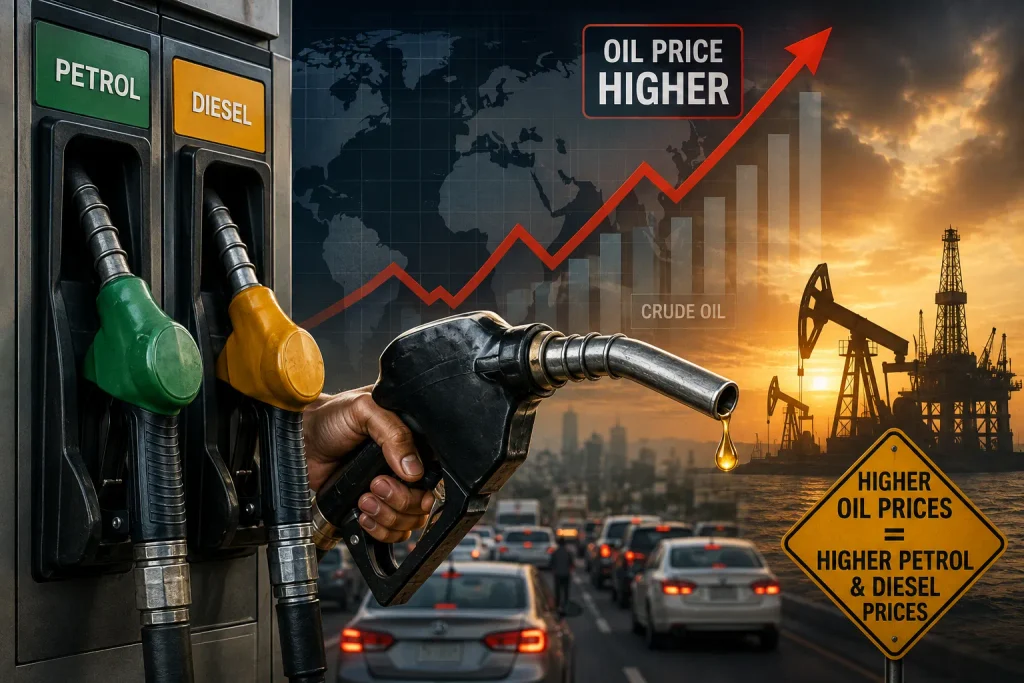
Yes, potentially—but not immediately and not by the same amount everywhere.
Retail fuel prices depend on more than the international crude benchmark.
They can also reflect:
- Currency exchange rates
- Refining costs
- Taxes
- Transportation costs
- Local government policies
- Fuel-market competition
For countries that import much of their crude, a prolonged increase in international oil prices can put upward pressure on domestic fuel prices.
It can also increase the cost of transporting goods.
What Does Higher Oil Mean for Inflation?
Higher oil prices can create inflation through several channels.
The first is direct: fuel becomes more expensive.
The second is indirect: transportation becomes more expensive.
Trucks, ships, airlines and industrial companies all consume energy.
When their costs rise, some businesses pass those costs to consumers.
That can create a broader inflationary effect.
This is why central banks monitor major oil-price shocks closely.
If oil remains elevated for a long period, it can complicate interest-rate decisions by increasing inflation pressure.
What Does This Mean for India?
India is particularly sensitive to global crude prices because it imports a large share of the oil it consumes.
A sustained increase in Brent can therefore affect India’s import bill, trade balance, currency pressures and domestic fuel economics.
For readers looking specifically at the broader global oil-price and petrol/diesel trend, HNN24x7’s related coverage is useful:
Global Oil Prices, Petrol & Diesel Trends 2026
This is the strongest internal-link placement because the current article explains the immediate geopolitical oil shock, while the linked article can cover the broader price trend and consumer impact.
What Should Oil Traders Watch Next?
The next major oil-market signals will be less about headlines and more about physical supply.
1. Strait of Hormuz shipping
Are tankers continuing to move normally?
If traffic declines sharply, oil prices could face additional upward pressure.
2. Iranian military activity
Any further attempt to mine the Strait could significantly increase the market’s risk premium.
3. US military response
Additional US strikes could raise fears of a wider regional conflict.
4. Oil infrastructure
Any attack on terminals, pipelines, refineries or export facilities could have a direct effect on physical supply.
5. OPEC+ response
Producers could potentially increase output to offset some supply losses, depending on spare capacity and policy decisions.
6. Diplomatic developments
A ceasefire or renewed negotiations could quickly remove some of the geopolitical premium from oil.
Could Oil Fall Back Below $90?
Yes.
The $90 level is not a permanent floor.
Oil could fall below it if:
- The conflict de-escalates
- Strait shipping remains operational
- No major oil infrastructure is damaged
- Iranian exports continue
- Global demand weakens
- Inventories rise
- OPEC+ increases supply
That is why readers should avoid treating a single day’s price movement as a guaranteed long-term trend.
The market is currently pricing risk, not certainty.
Why Oil Prices Are Rising Today: The Simple Explanation
The simplest answer to “why oil prices are rising today” is:
Renewed US-Iran fighting has increased the risk that oil shipments through the Strait of Hormuz could be disrupted.
That risk has pushed traders to demand a higher price for crude.
Brent’s return above $90 reflects this concern. Reuters reported the benchmark up more than 2% in the latest trading, while other market reports showed Brent around or above the $90 threshold.
But the next move depends on whether the geopolitical risk becomes a real supply disruption.
If shipping continues, prices could stabilize or retreat.
If the Strait becomes significantly disrupted, the oil market could become much tighter.
FAQ
Why are oil prices rising today?
Oil prices are rising because renewed US-Iran military tensions have increased concerns about possible disruptions to crude shipments through the Strait of Hormuz. Brent crude moved above $90 following the latest escalation.
Why is Brent crude above $90?
Brent moved above $90 as traders priced in a higher risk of disruption to oil shipments following renewed US-Iran fighting around the Strait of Hormuz.
Did the US-Iran conflict cause oil prices to rise?
The renewed conflict was a major catalyst for the latest move because it increased concerns about shipping and supply risks around the Strait of Hormuz.
Will oil prices keep rising?
They could if the conflict causes an actual disruption to oil production or shipping. If the situation stabilizes and oil flows continue normally, some of the geopolitical risk premium could disappear.
What happens if the Strait of Hormuz is disrupted?
A major disruption could reduce the amount of oil reaching international markets, increase shipping costs and push crude prices significantly higher.
Why is the Strait of Hormuz important for oil?
The Strait is a critical maritime route connecting major Gulf oil producers with global markets. Any serious disruption can therefore affect global oil supply and prices.
Could Brent crude fall below $90 again?
Yes. If tensions ease, shipping remains operational and supply remains adequate, Brent could move back below $90.
How do higher oil prices affect India?
Higher crude prices can increase India’s import costs and potentially put pressure on domestic fuel prices, inflation and the country’s trade balance.
What should investors watch next?
The most important indicators are Strait of Hormuz shipping activity, further US-Iran military action, Iranian oil exports, damage to energy infrastructure, OPEC+ supply decisions and diplomatic developments.
The Bottom Line
The latest oil-price surge is fundamentally a geopolitical risk story.
The US strike on Iranian launchers on Larak Island, Iran’s retaliation and the renewed threat around the Strait of Hormuz have made traders more concerned about the security of global oil shipments.
Brent crude moving above $90 is therefore an important warning signal—but it is not proof that a global oil shortage has already begun.
The critical question for the days ahead is:
Will the conflict remain contained, or will it begin to disrupt the physical flow of oil through the Strait of Hormuz?
That answer will likely determine whether the current move above $90 becomes a temporary geopolitical spike or the beginning of a much larger oil-price shock.